Galapagos Adventure - Day 4 - June 17
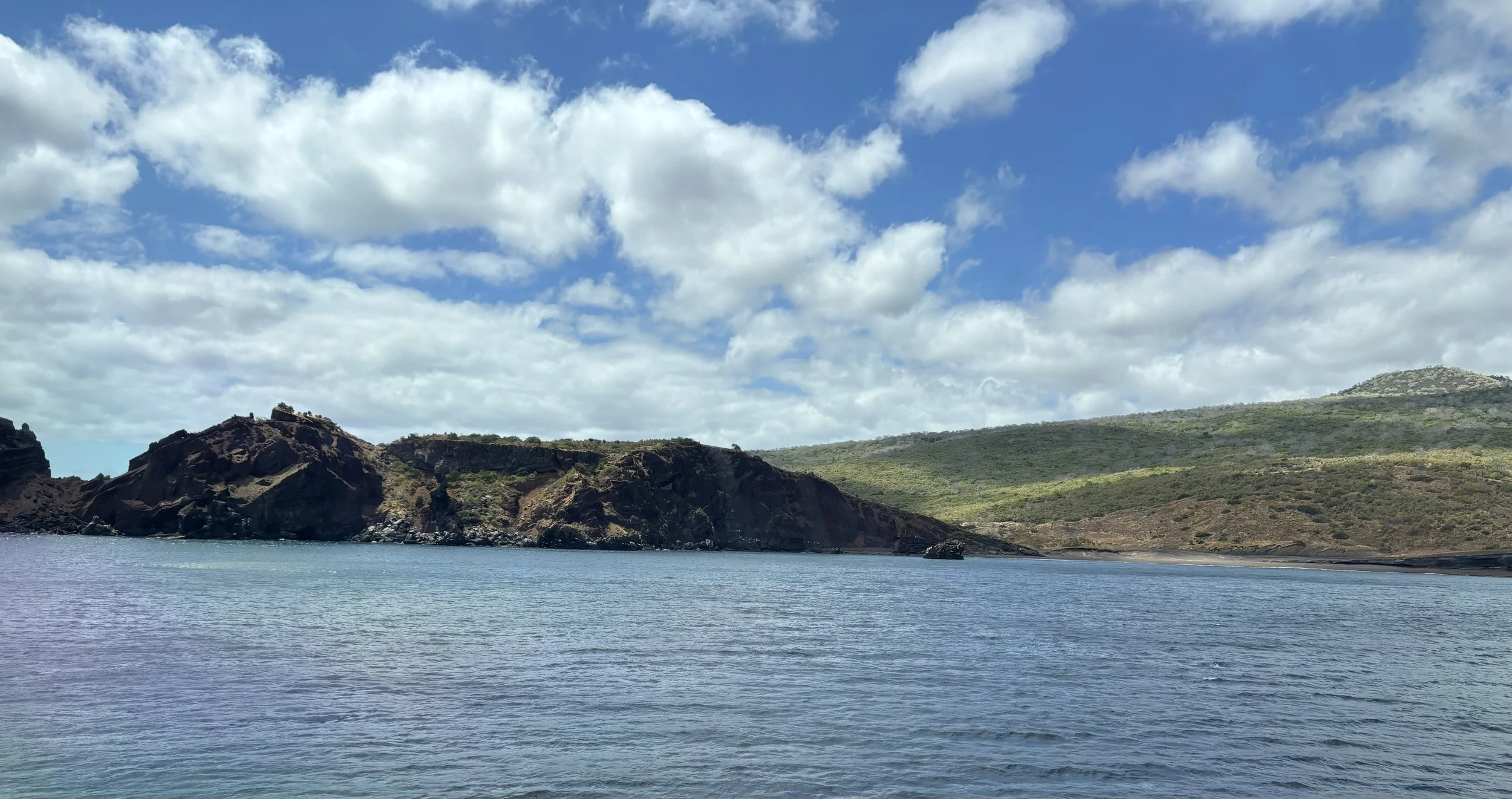
We awoke to a stunning view of Buccaneer Cove on Santiago Island. This is the island that once had a population of 30,000 goats.
At 6:30 am we were in line to get our snorkeling gear. There is a good supply of newer masks, snorkels, fins, buoyancy vests and wet suits. We each have a gear bag with our room number on it to keep track of it all.
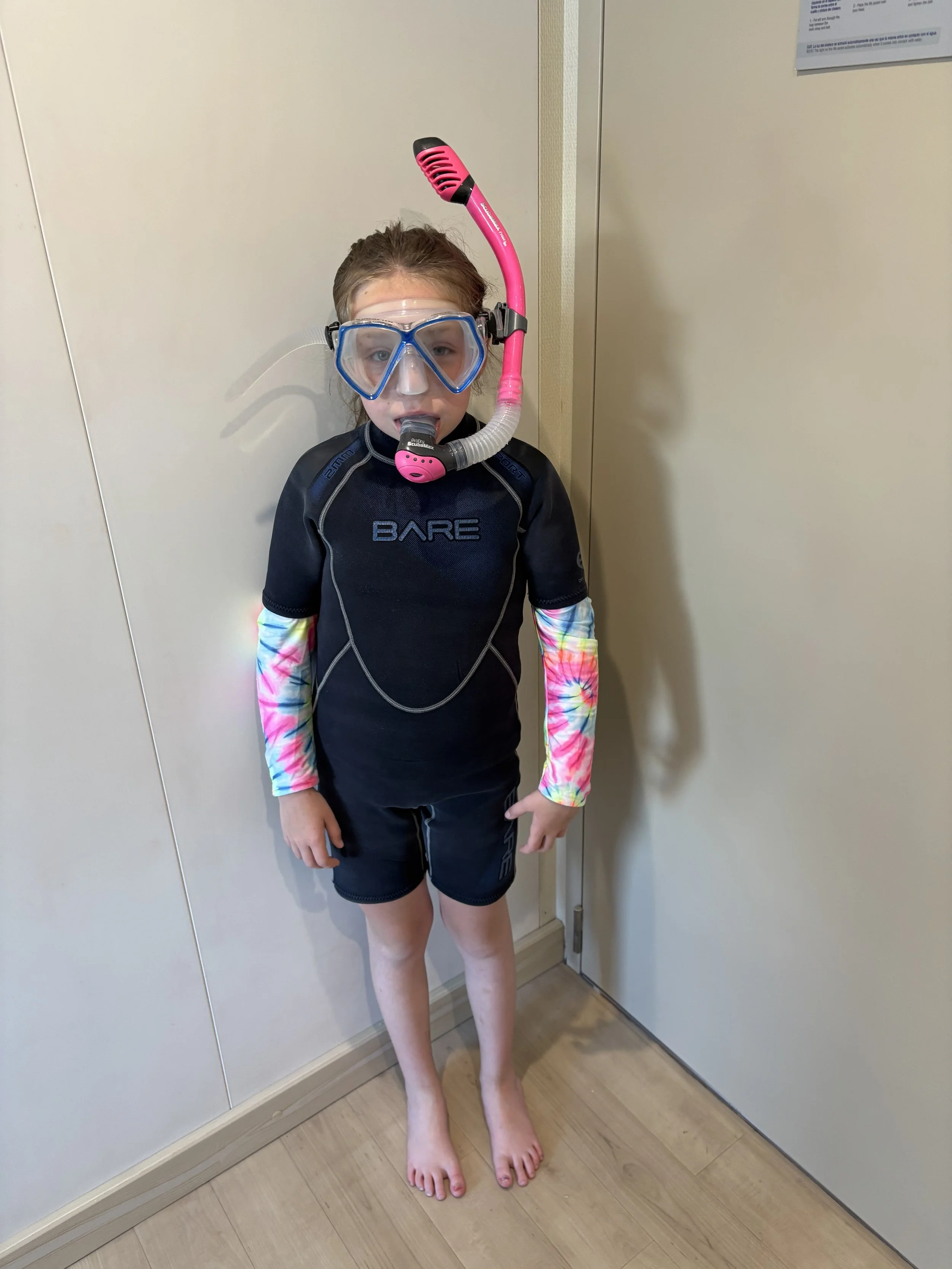
Eleanor is trying on her snorkeling gear.
There is a full range of activities planned for today including a panga ride around the island, deep water snorkeling, a tour of the ships bridge, beach snorkeling and a two hour mountain hike. I am tired just writing about them.

This is the reason we are wearing a wet suit. Our swimming pool at our condo is maintained at 88°f.
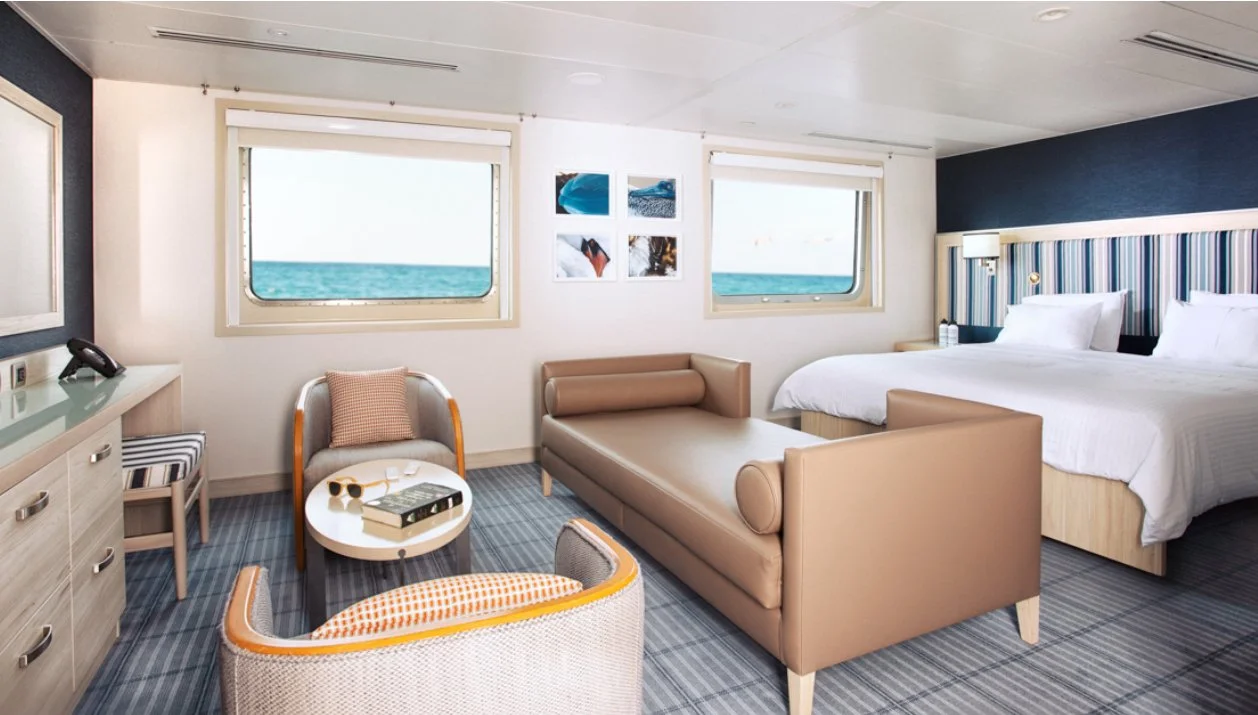
Our accommodations onboard the ship are excellent. We have a suite with an adjoining double room. The suite has a large sitting area with a sofa and chairs and desk. One slightly unusual thing is no locks on the cabin doors. It really does make life easier to not be searching for room keys all the time.
The ship has a science center lounge at the bow of the ship. Most of the group meetings are held there. There is one restaurant. We have our own table of four for each meal. Breakfast and lunch are buffets and dinner is preordered at lunch. There is one bar which is on our deck level three. There are also two hot tubs. No swimming pool onboard because the Pacific Ocean is all around us.
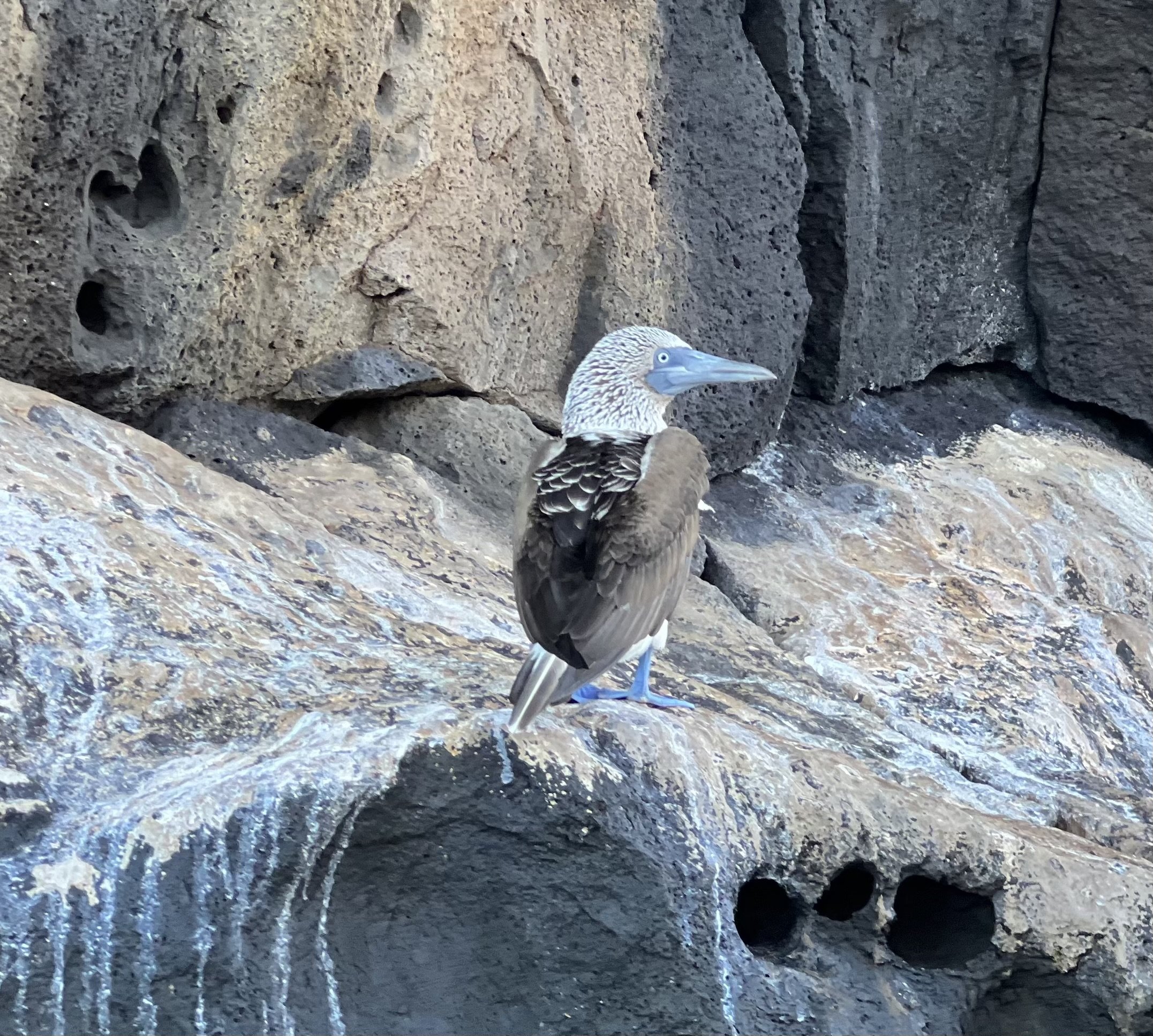
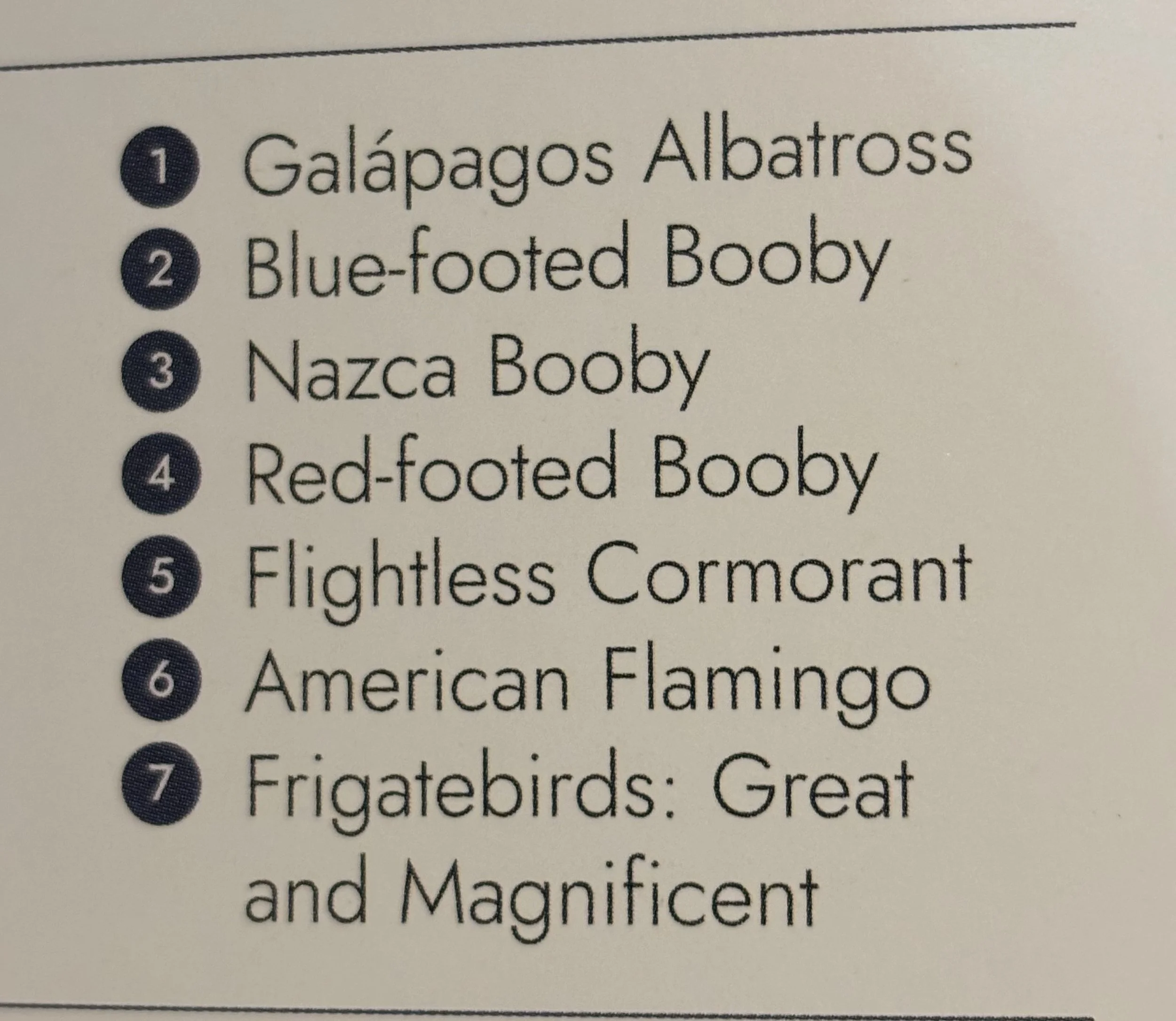
The panga ride went all the way around Santiago Island. It was an amazing sight with lots of birds and animals making their appearance. We were fortunate to have a very calm day. The pangas hold 12 passengers each which is not crowded. This blue footed booby was one of our first bird sightings. The blue-footed booby is one of three booby species. There are also the Nazca booby and the red-footed booby.
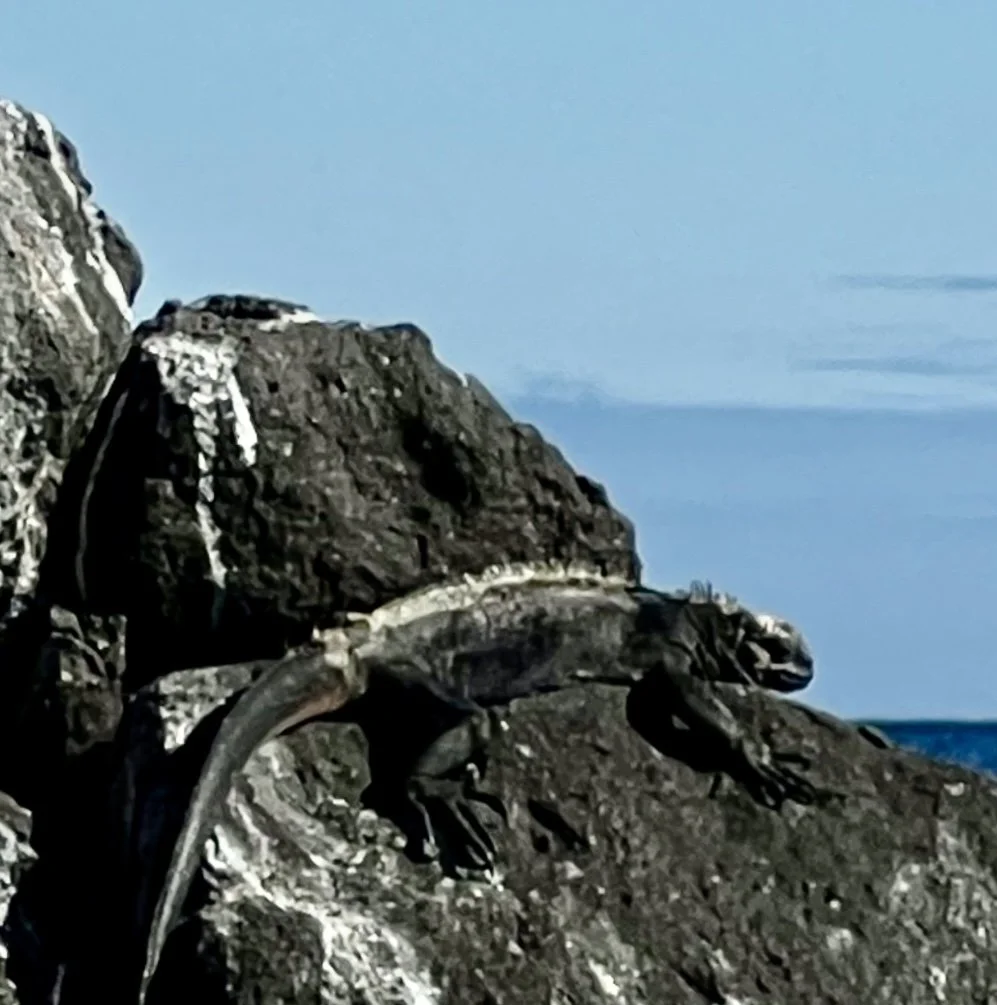
This large marine iguana blends in well with his surroundings. The critical adaptation of this iguana is its reduced heartbeat and constriction of blood vessels near their skin to avoid temperature and oxygen loss when exposed to colder ocean currents. They live to be approximately 40 years old.
Our morning snorkeling adventure produced a vast variety of fish including white tipped sharks, parrot fish and clouds of sardines. By far the most fish I have ever seen while snorkeling.
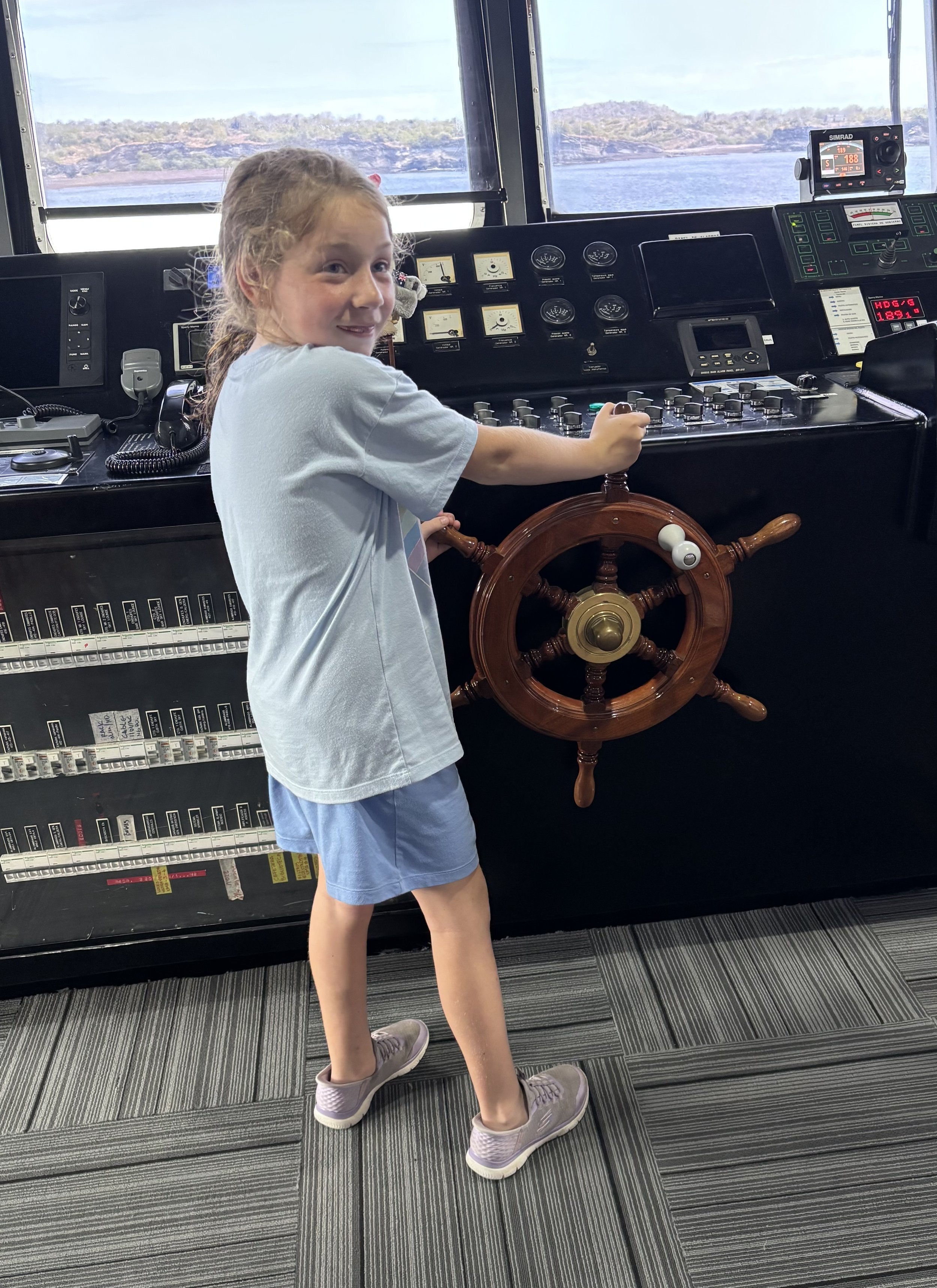
In the afternoon we had a tour of the bridge. The second mate explained the ship’s navigation systems and Eleanor manned the helm.
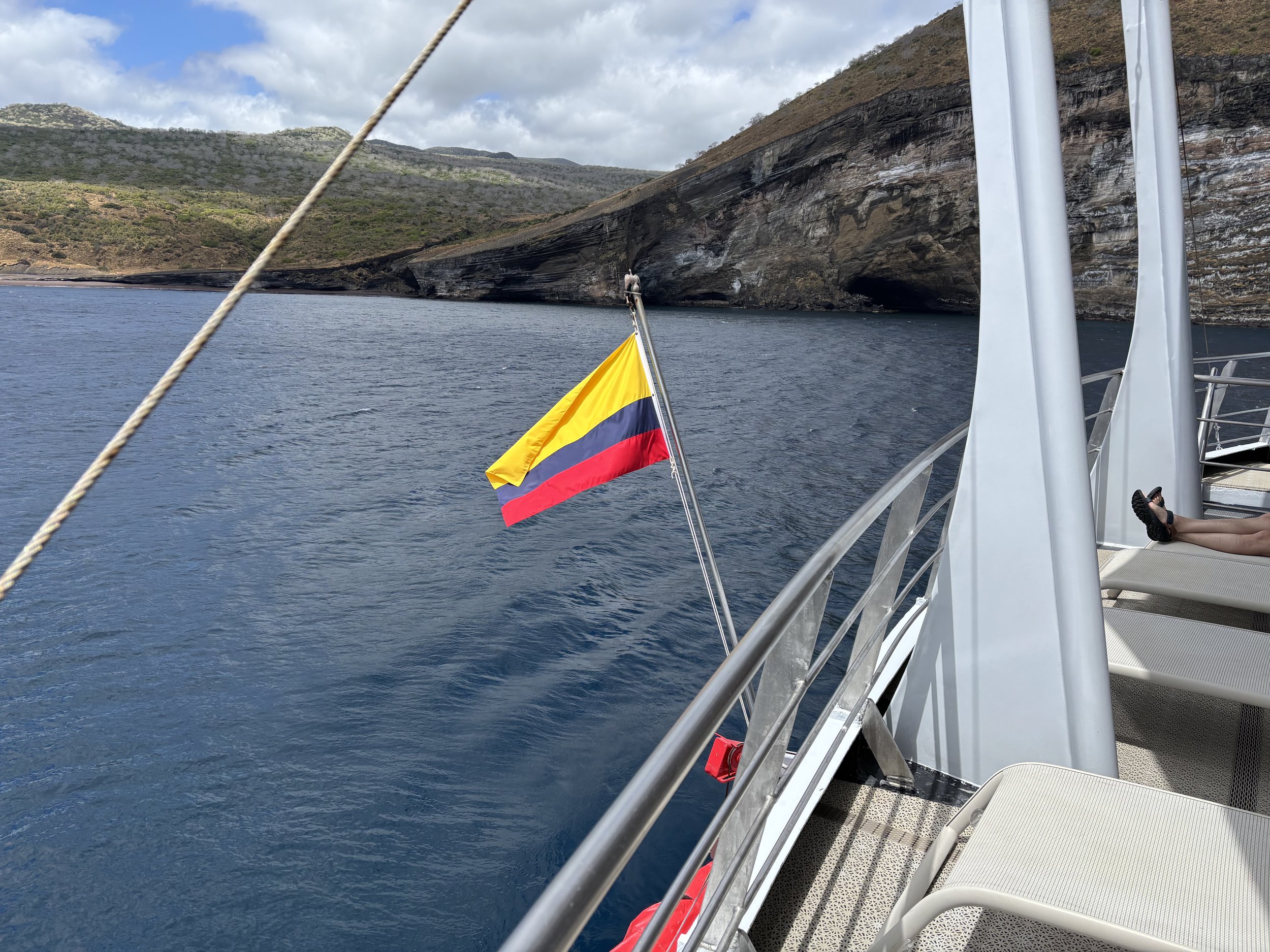
The national flag of Ecuador flying off the stern of our ship.
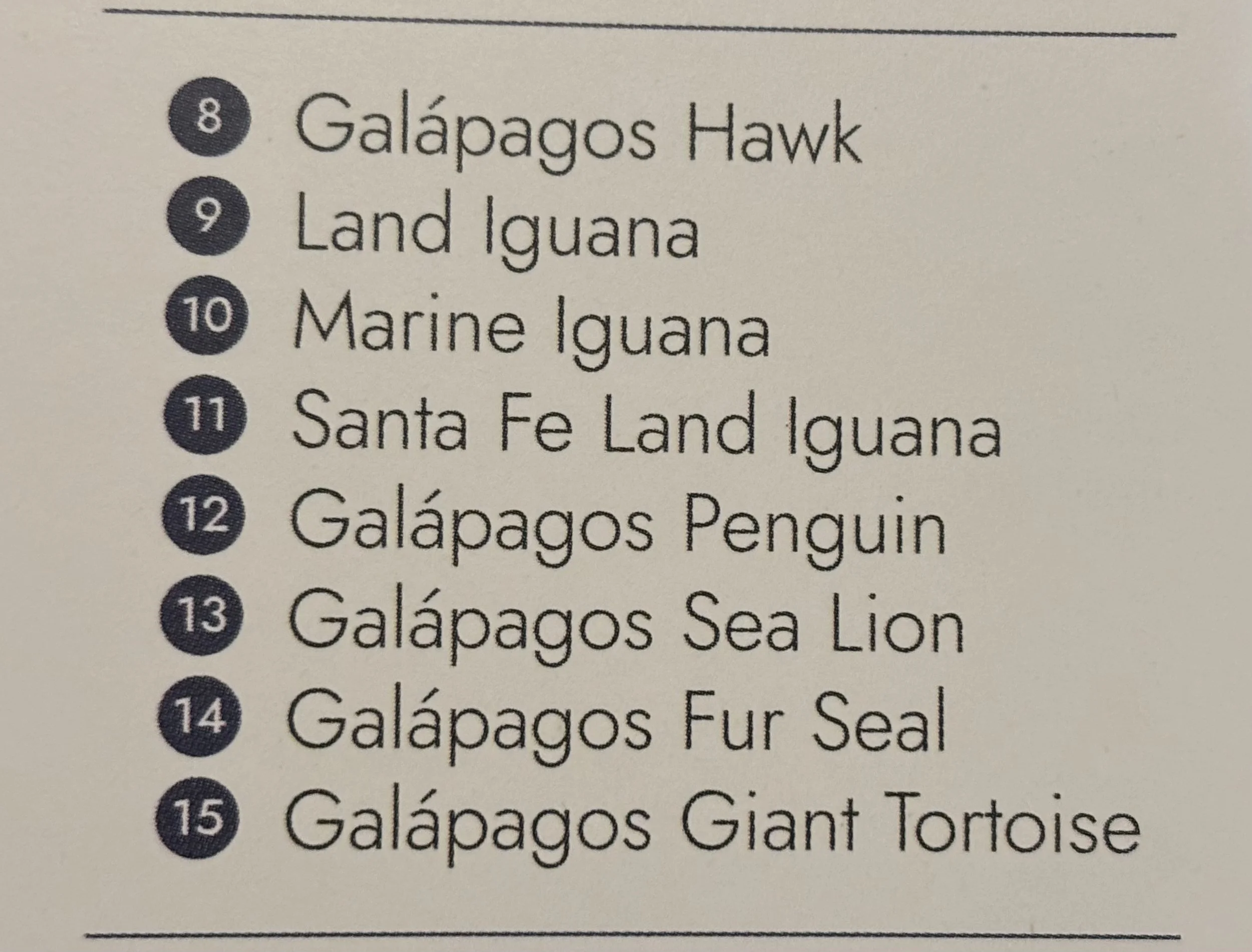
In the afternoon we went on a nature hike and were not disappointed. In addition to the marine iguana we saw the land iguana.
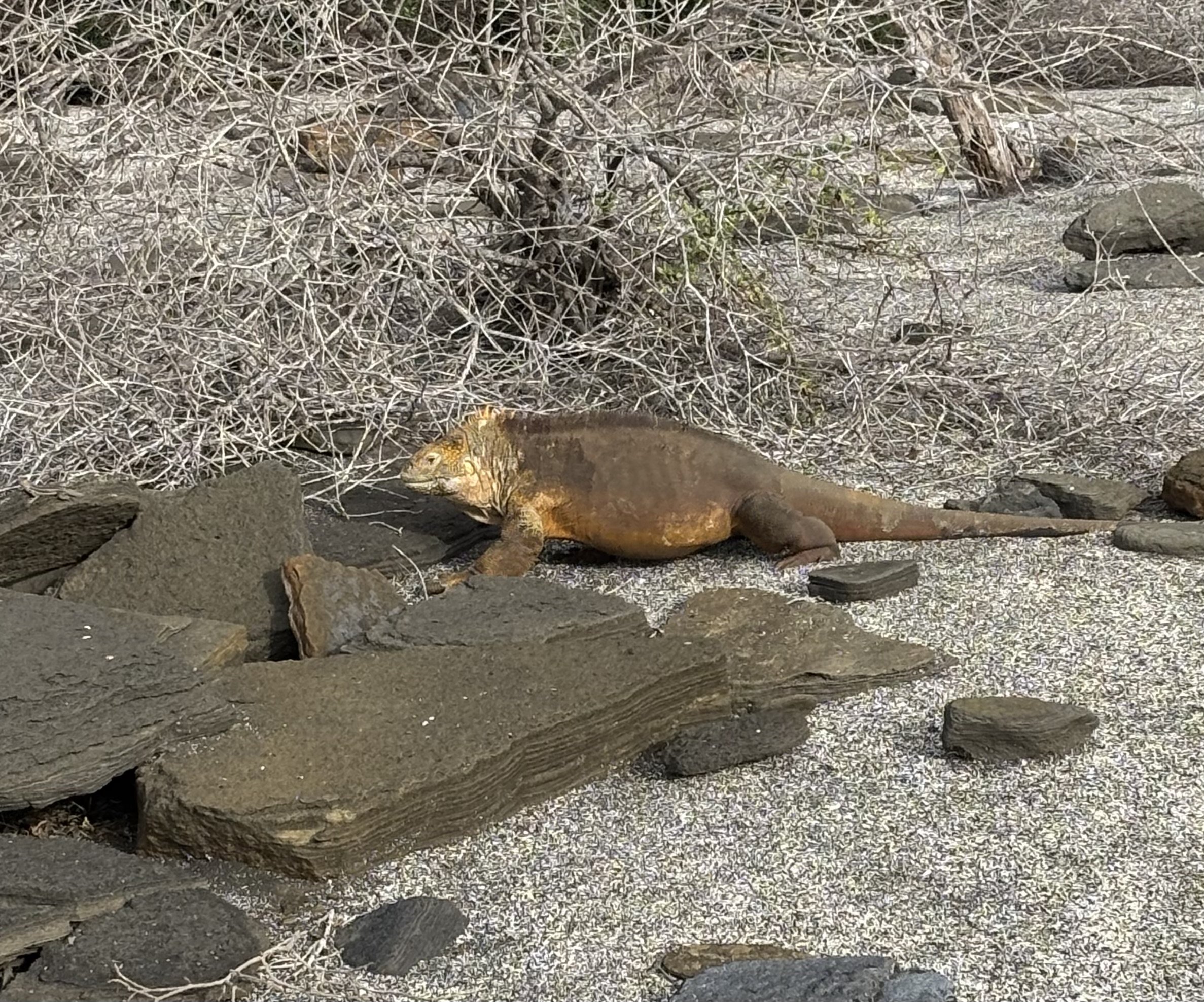
The land Iquana is an herbivore and can survive long periods of time without water. They can survive by eating cactus. Their life expectancy is 50 - 60 years.
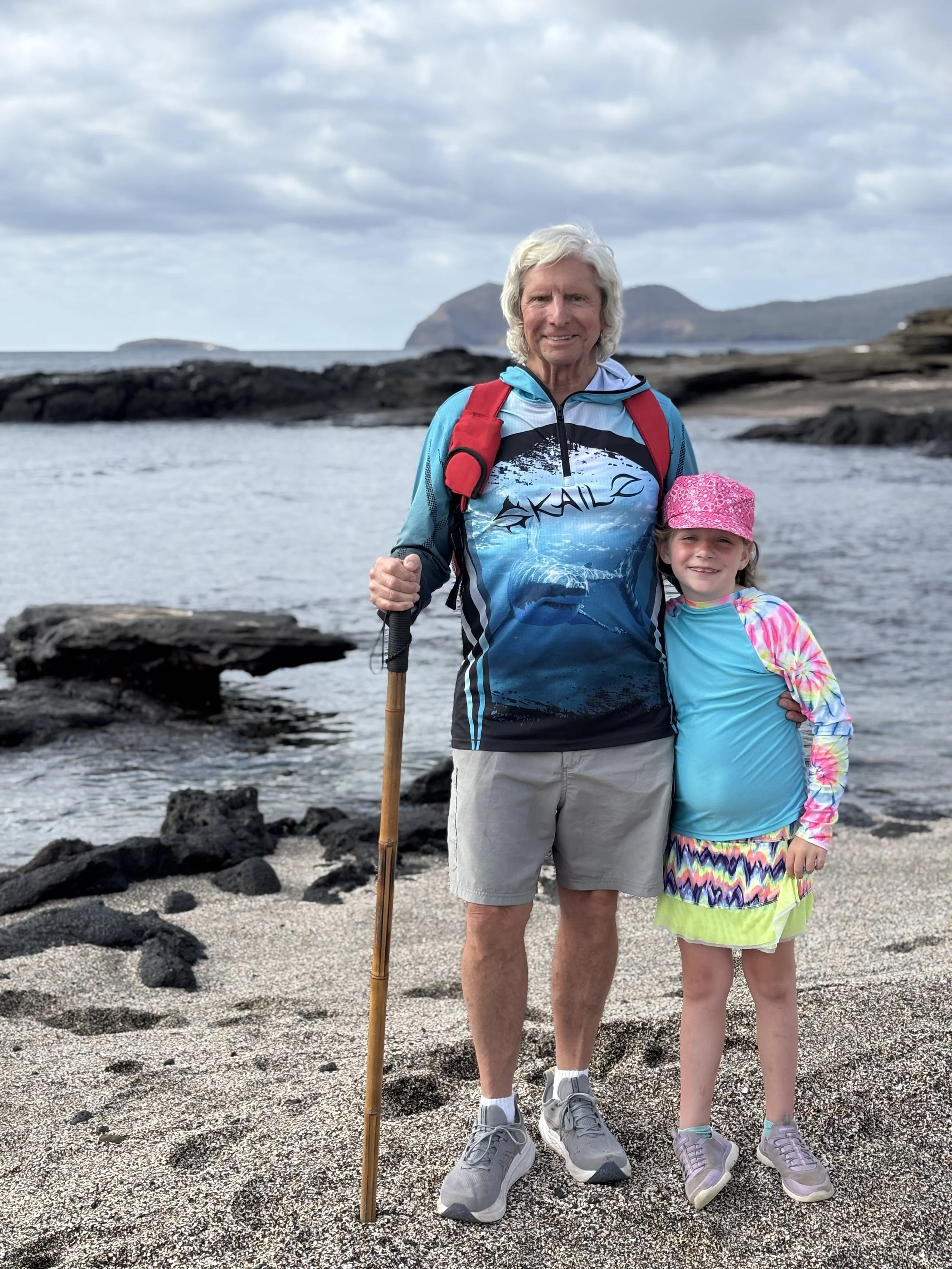
One of the photos that makes it all worthwhile. Look for this one on our Christmas card.
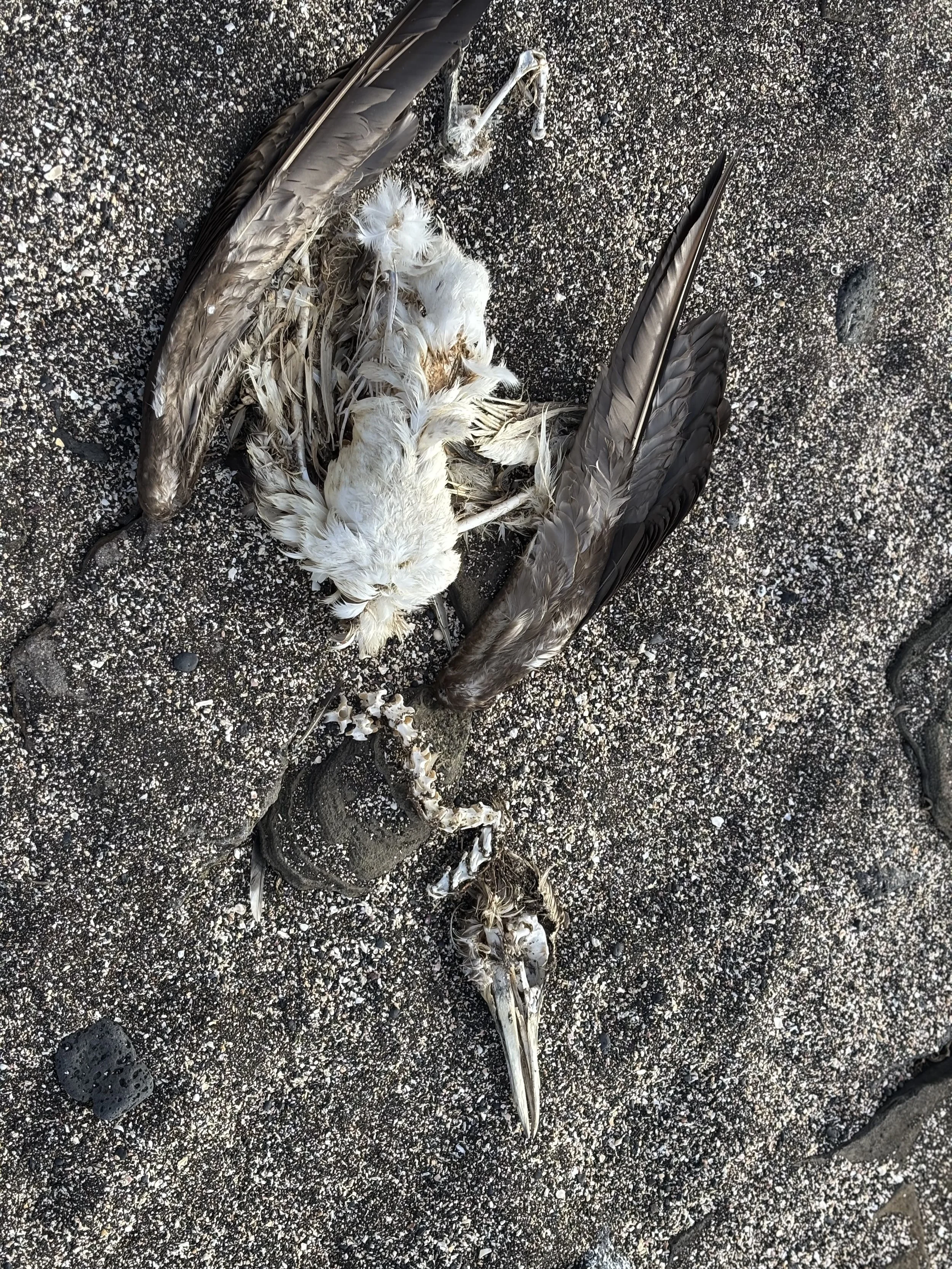
The circle of life. This juvenile blue-footed booby met his doom. Perhaps he was the victim of a Galapagos Hawk.
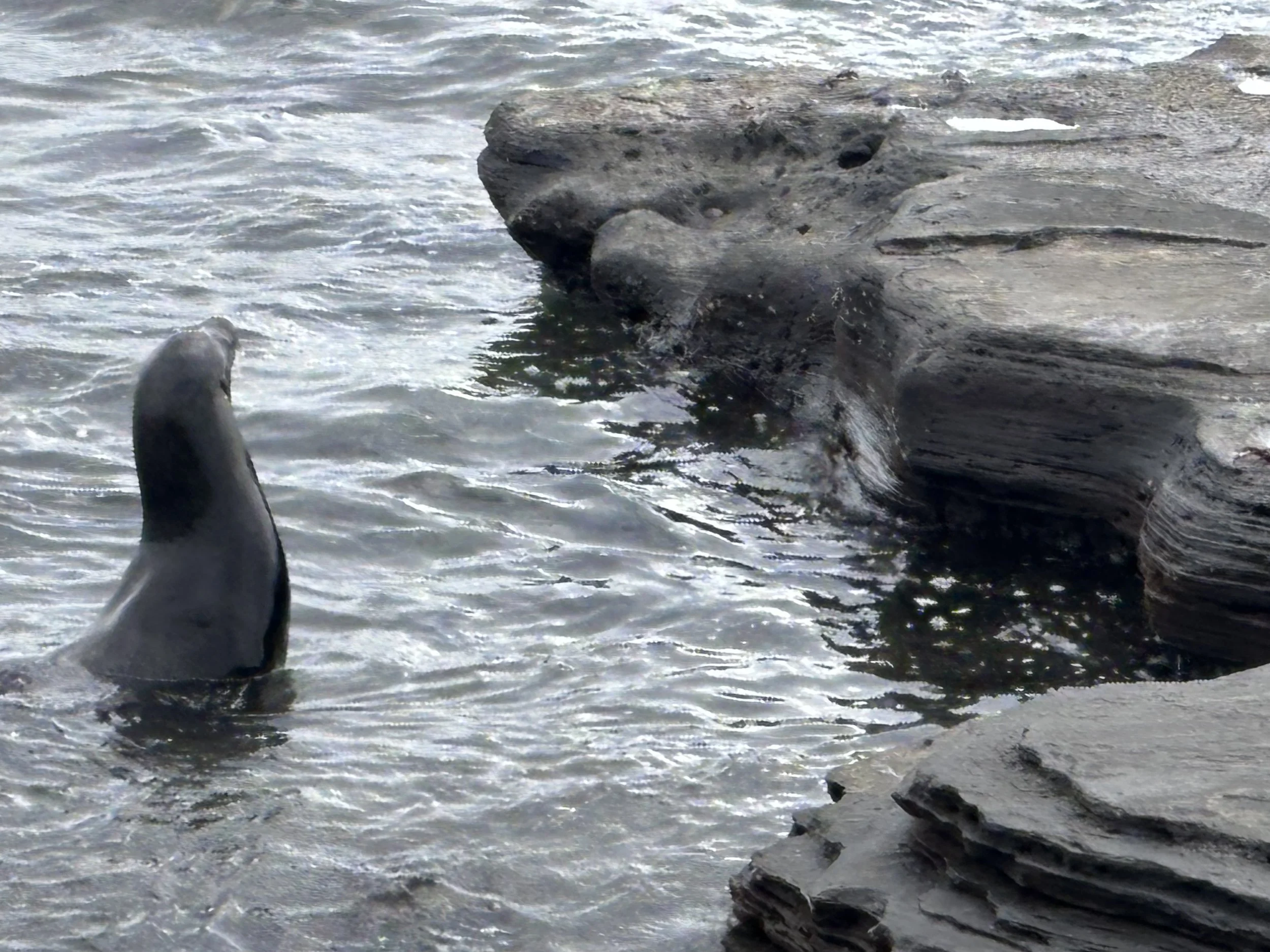
This sea lion came up to say hello. It is difficult to distinguish sea lions from fur seals at a distance. The fur seal has a face like a bear and the sea lion looks more like a dog.
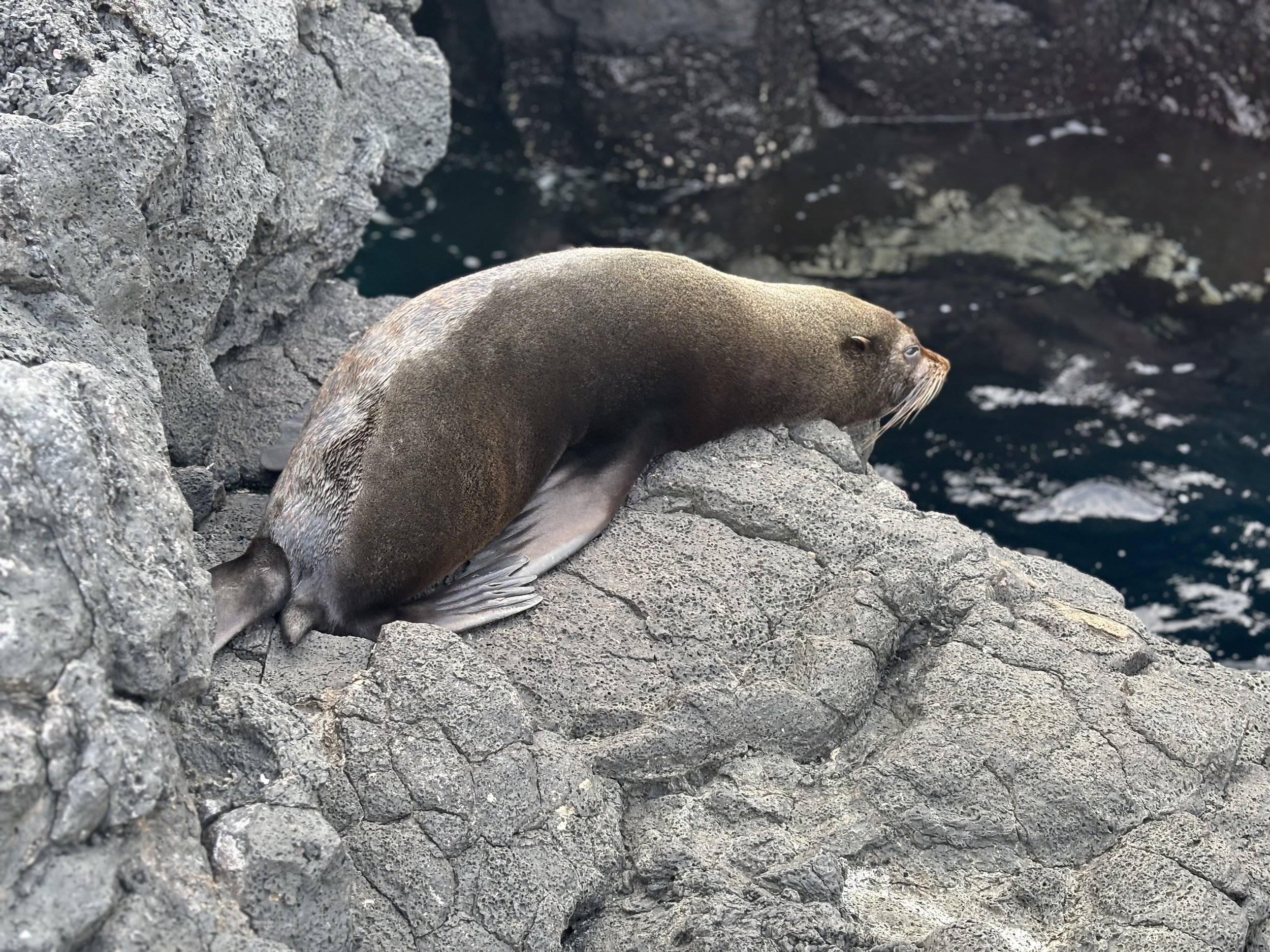
This fur seal was sleeping on the rocks. The fur seal was hunted almost to extinction in the 1800’s.
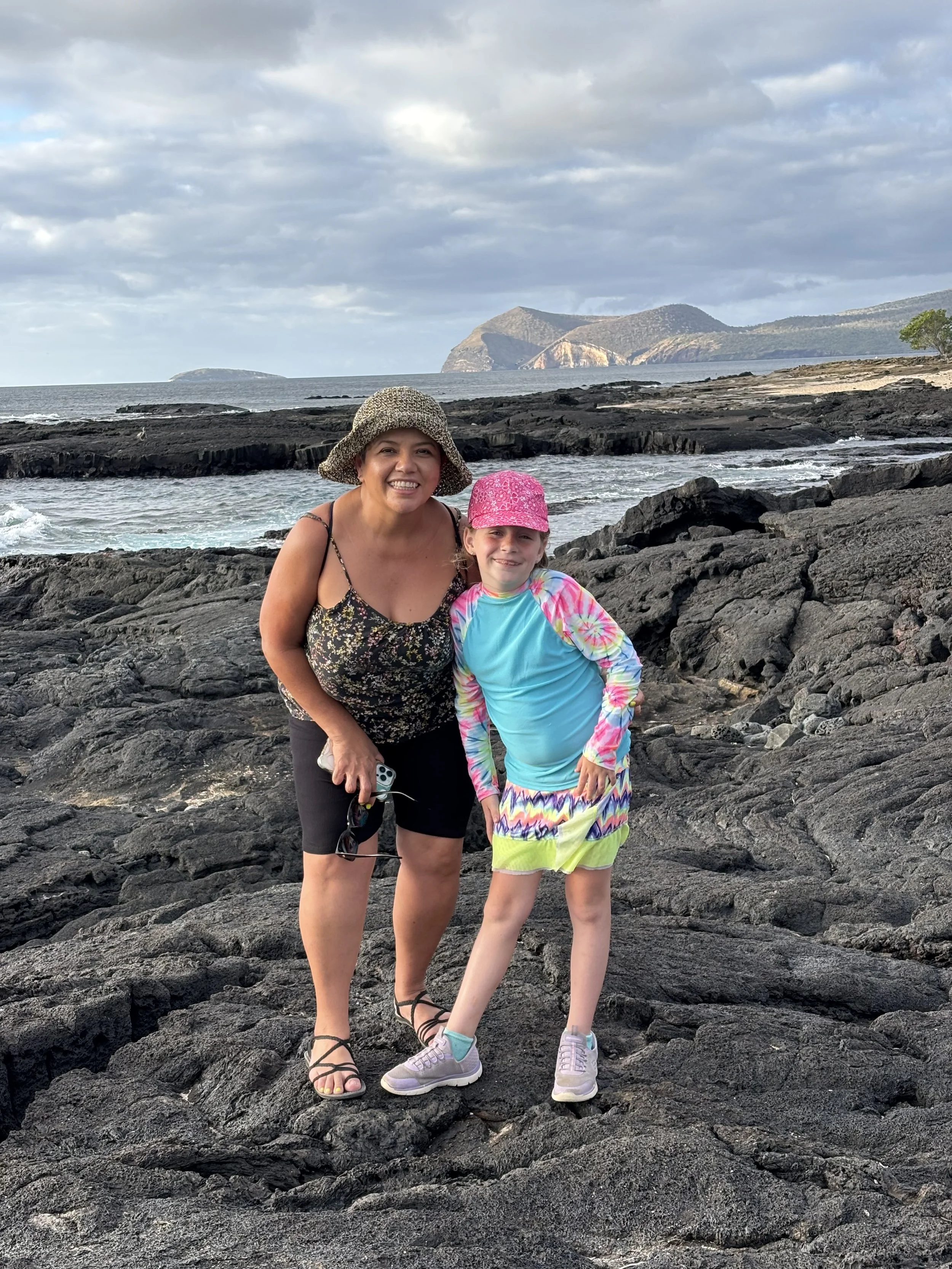
Eleanor makes friends wherever she goes. Here she is posing with our Tauck tour director Wendy Rodriguez.
Just when you think the tours cannot start any earlier tomorrow the breakfast is at 5:40 am and the panga departure for a wet landing and nature hike is 6:00 am. When will I be back? I will go.
Here is the list of the Big Fifteen in the Galapagos. We have already seen several animals and birds on the list. Let’s see how many we can check off.