
Galapagos Adventure - Day 6 - June 19
As the sun rose over the Pacific Ocean we entered a harbor created by the caldera (rim) of a volcano. This is a very safe harbor with a small entrance and protection all around. We are on Genovesa ( Tower ) Islsnd. This Island is a bird sanctuary and home to thousands of birds. This will be a great opportunity to identify more of the birds on our Galapagos Big Fifteen list. As of today we have seen eight of the Big Fifteen. This includes the Blue-footed booby, American Flamingo, Galapagos Hawk, Land Iguana, Marine Iquana, Galápagos Penguin, Galapagos Sea Lion and Galapagos fur seal.
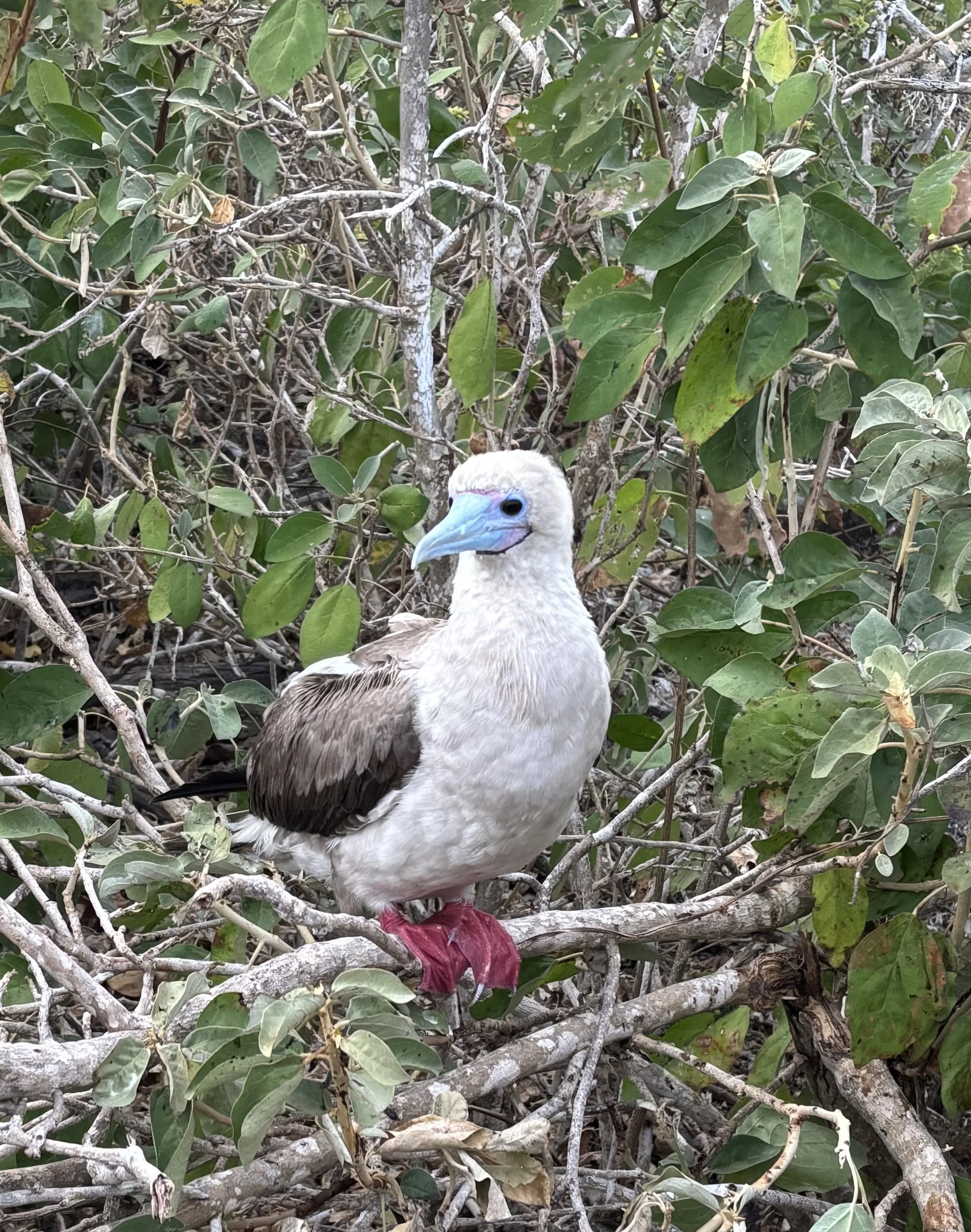
We had our panga ride at 7:30 am to the steps for a dry landing. As we climbed up the wall of the caldera we could hear the call of the red-footed booby. Their call is very loud and sounds like a gasoline engine.
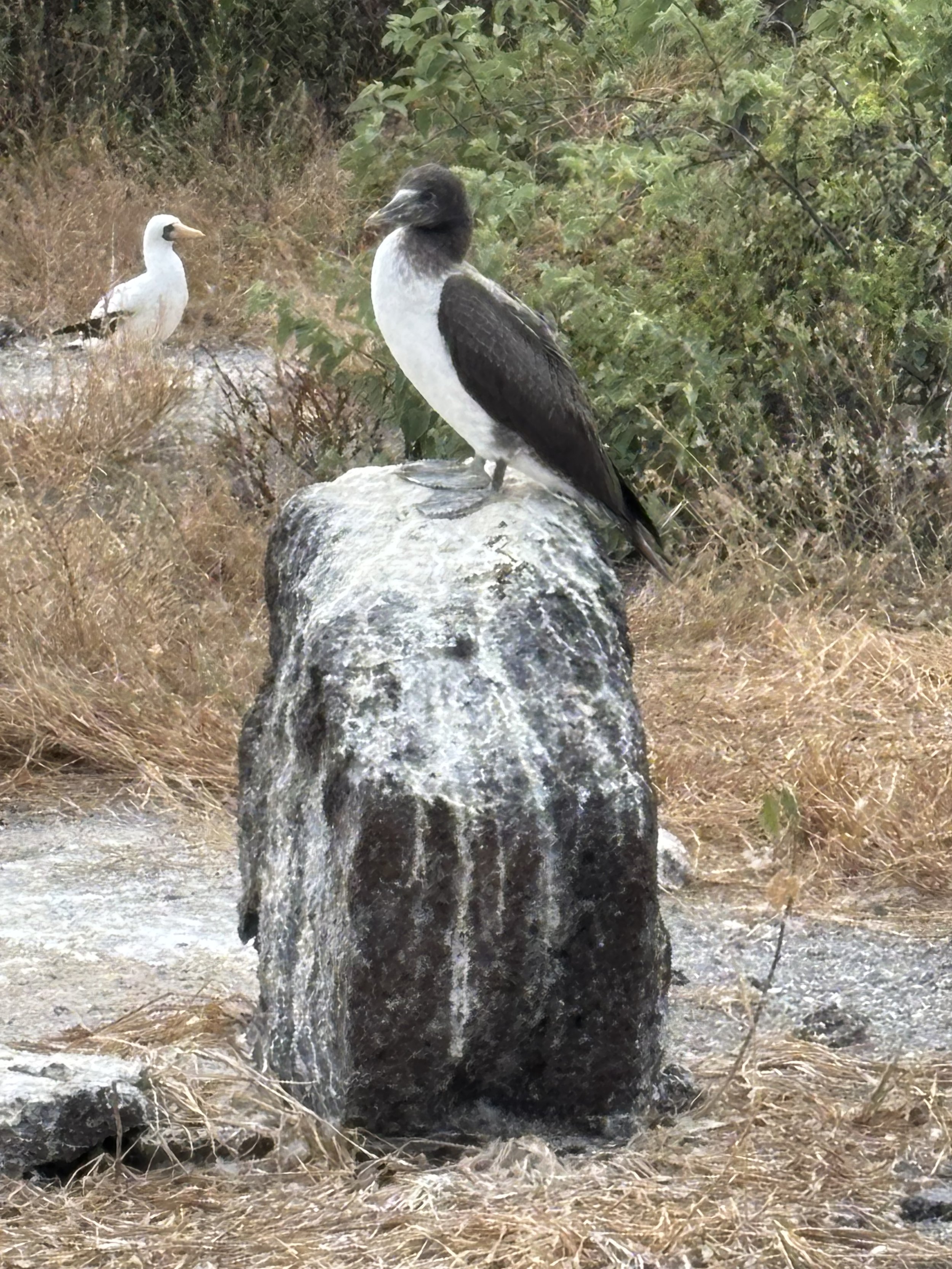
Next we came across a Nunca Booby sitting on a rock covered in Galapagos snow. The Nunca Booby does not make a good neighbor. They are extremely territorial and aggressive. Hatchlings regularly commit siblicide by pushing the smaller brother or sister out of the nest.
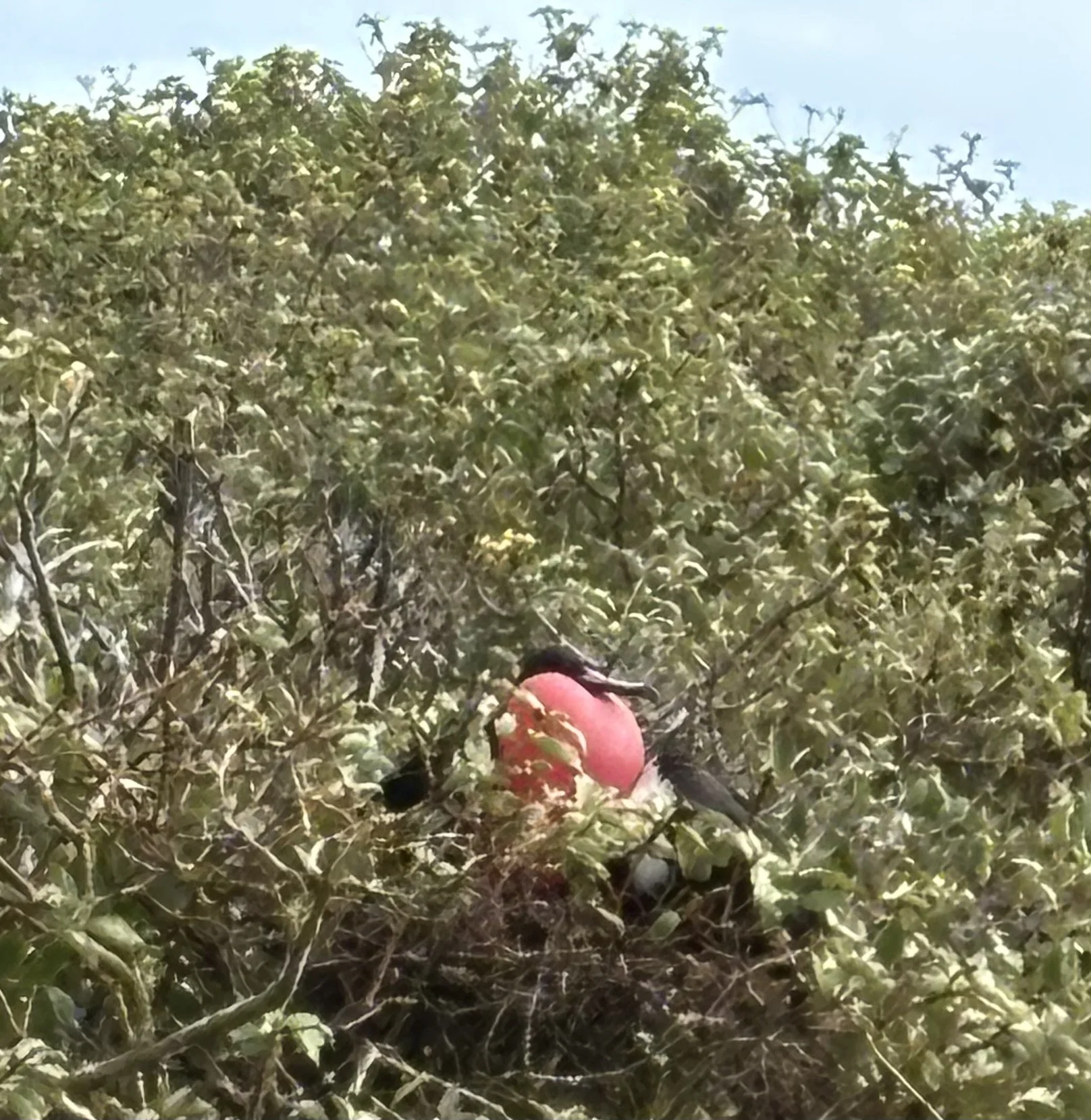
The male Frigate bird puffs out its chest in a display of machismo to attract a mate.
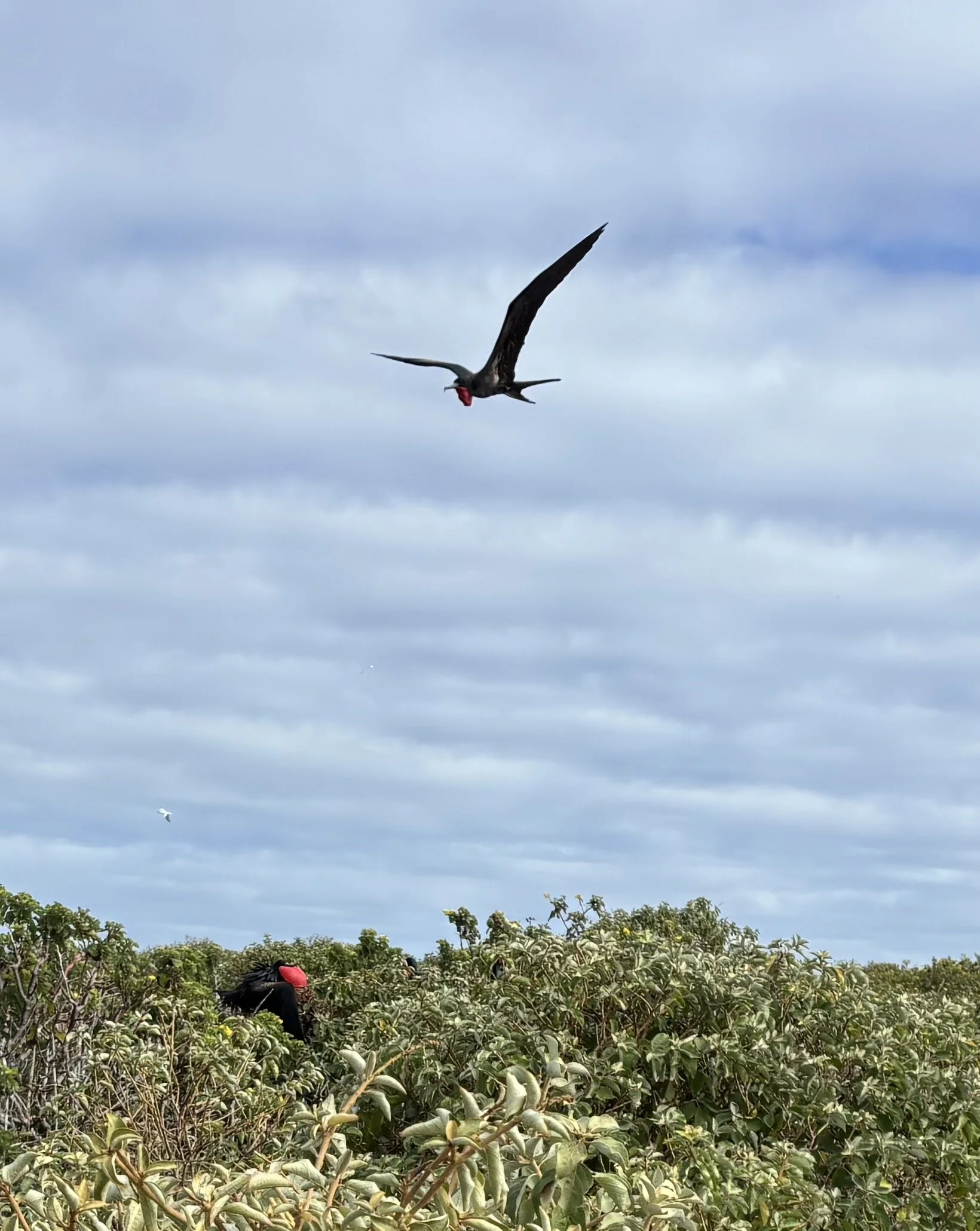
Here is a Frigate bird soaring overhead in search of food.
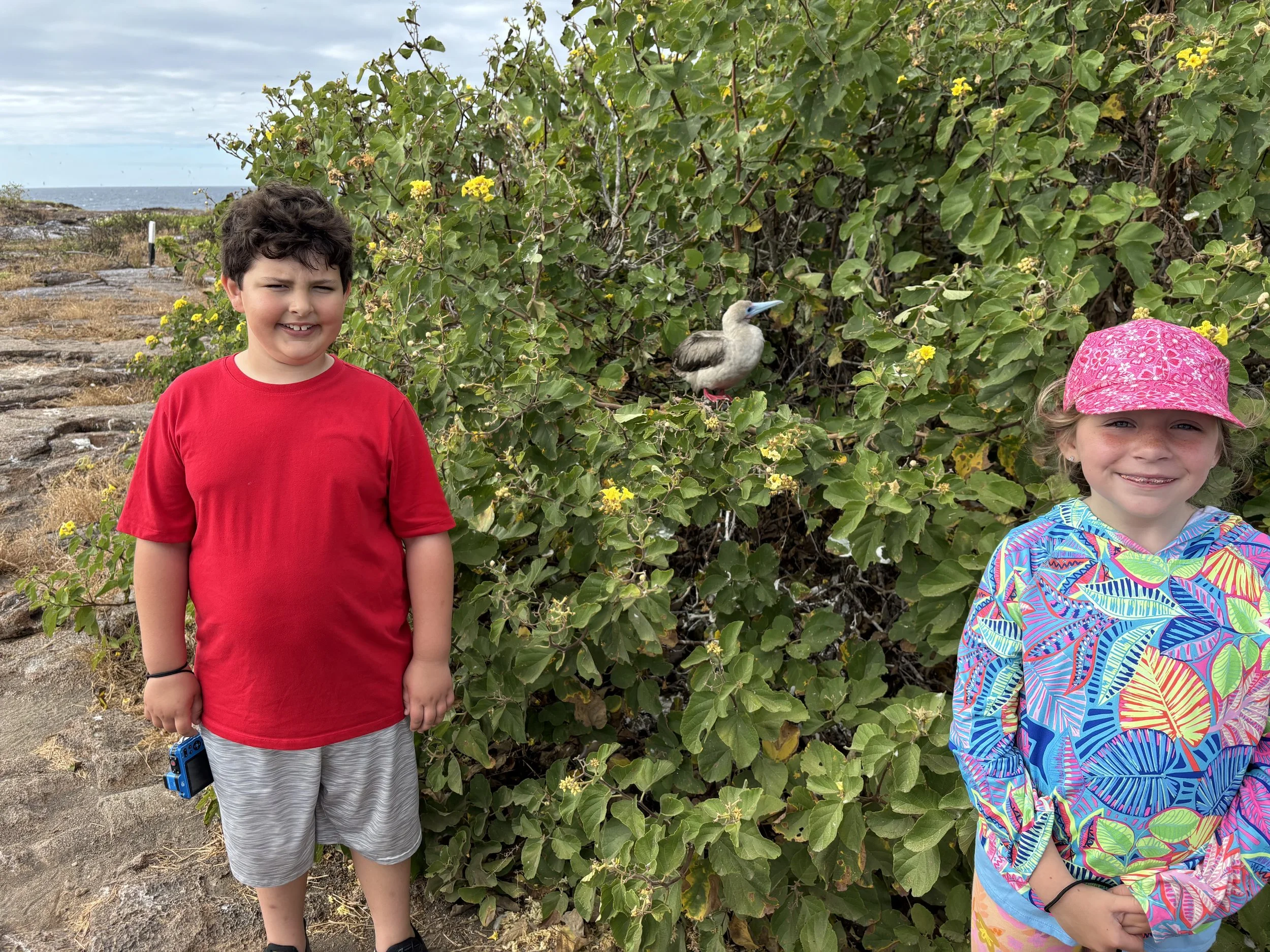
Jackson and Eleanor posing with a red-footed booby.
After our morning visit to Genovesa Island we saw three more birds on our Big Fifteen list - Red-footed booby, Nunca booby and Frigate bird. That brings our total up to eleven out of fifteen. Tomorrow we will see the giant tortoise.
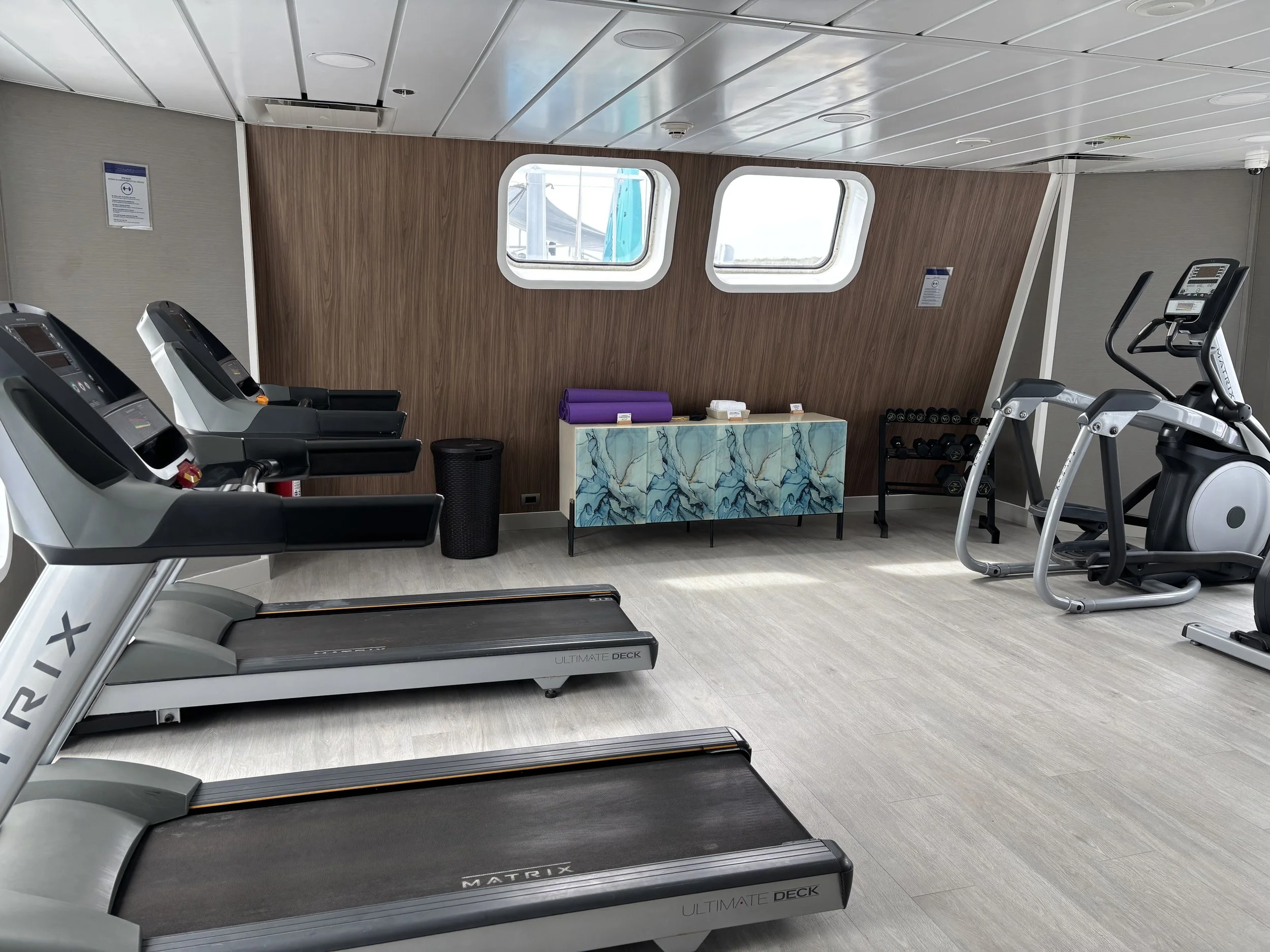
This is least utilized space on the ship. I have yet to see a single passenger in the health club.
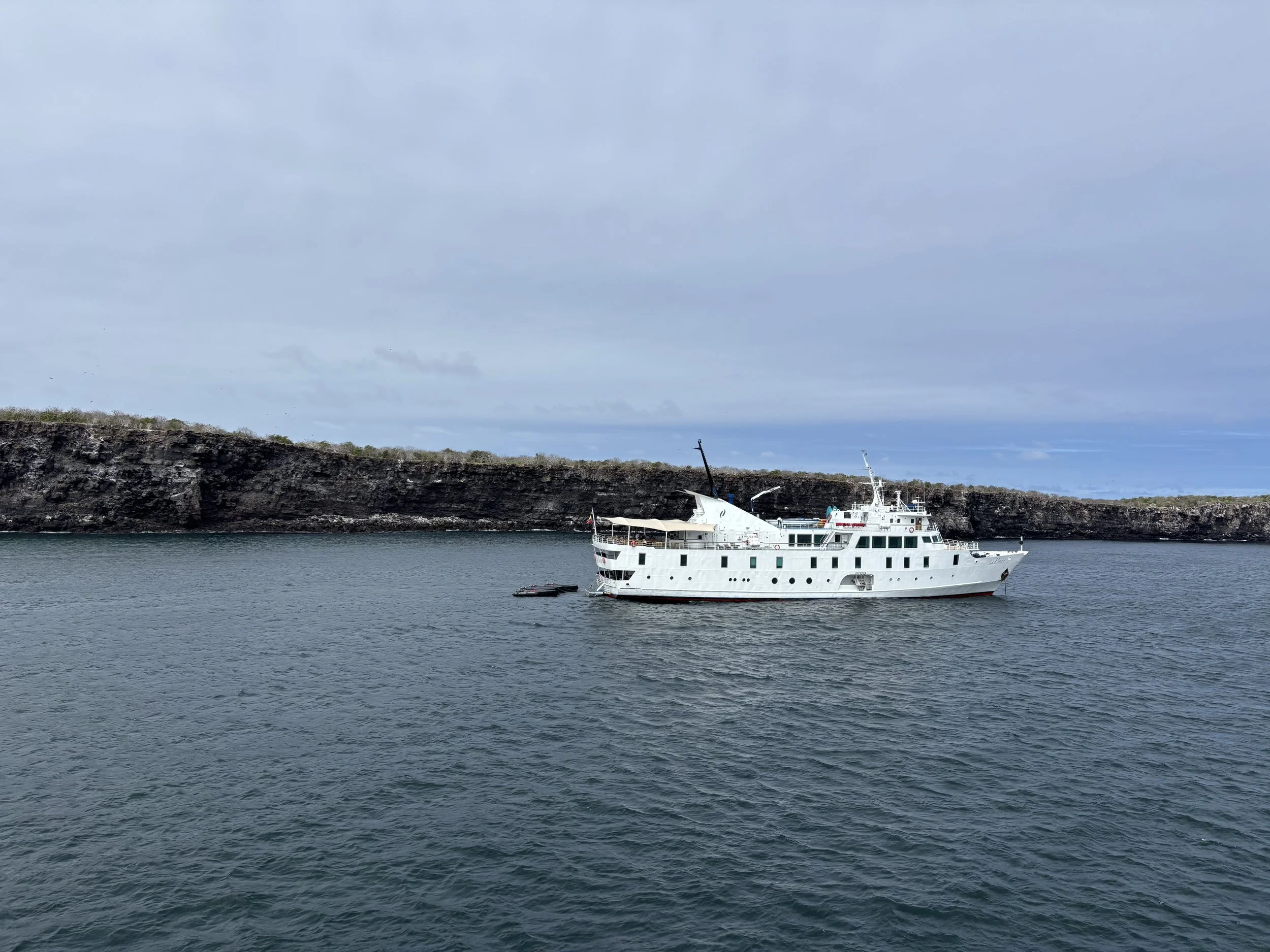
Here is a view of the Genovesa caldera and our sister ship La Pinta. The original Pinta was built in Spain in 1441 and sailed as part Colombus’s fleet in 1492.
There was a change of plans for the afternoon deep water snorkeling activity. The waves were 3 - 5 feet so the captain limited the event to persons over 18 years old. Our grandchildren did not get to swim with the hammer head sharks.
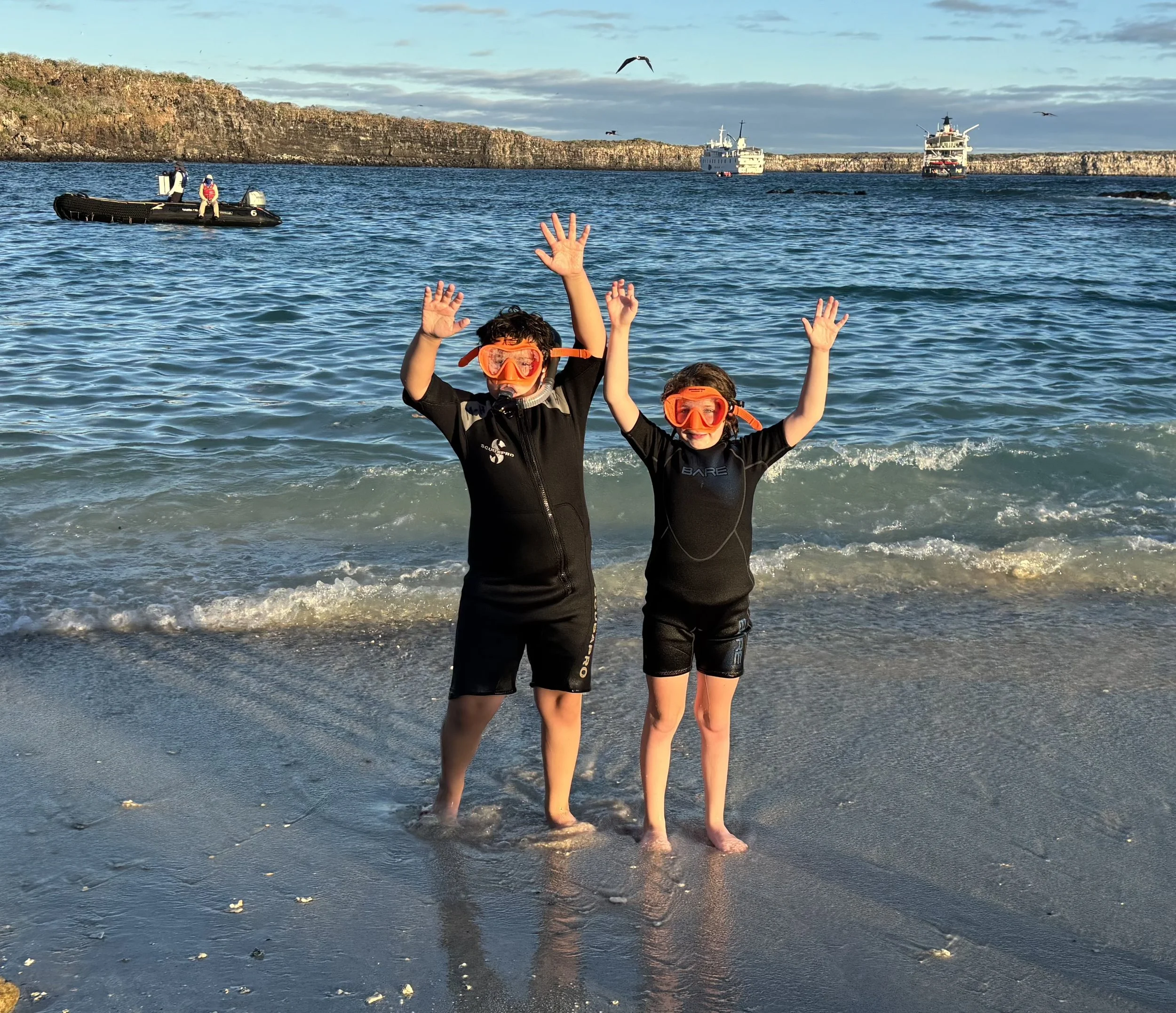
However, in the afternoon there was a beach walking tour and snorkeling event. The kids negotiated saying they had seen enough birds and wanted to snorkel. That made sense to me. We had 1.5 hours to snorkel. It takes 30 minutes to get into our wet suits and snorkel gear and get in the water.
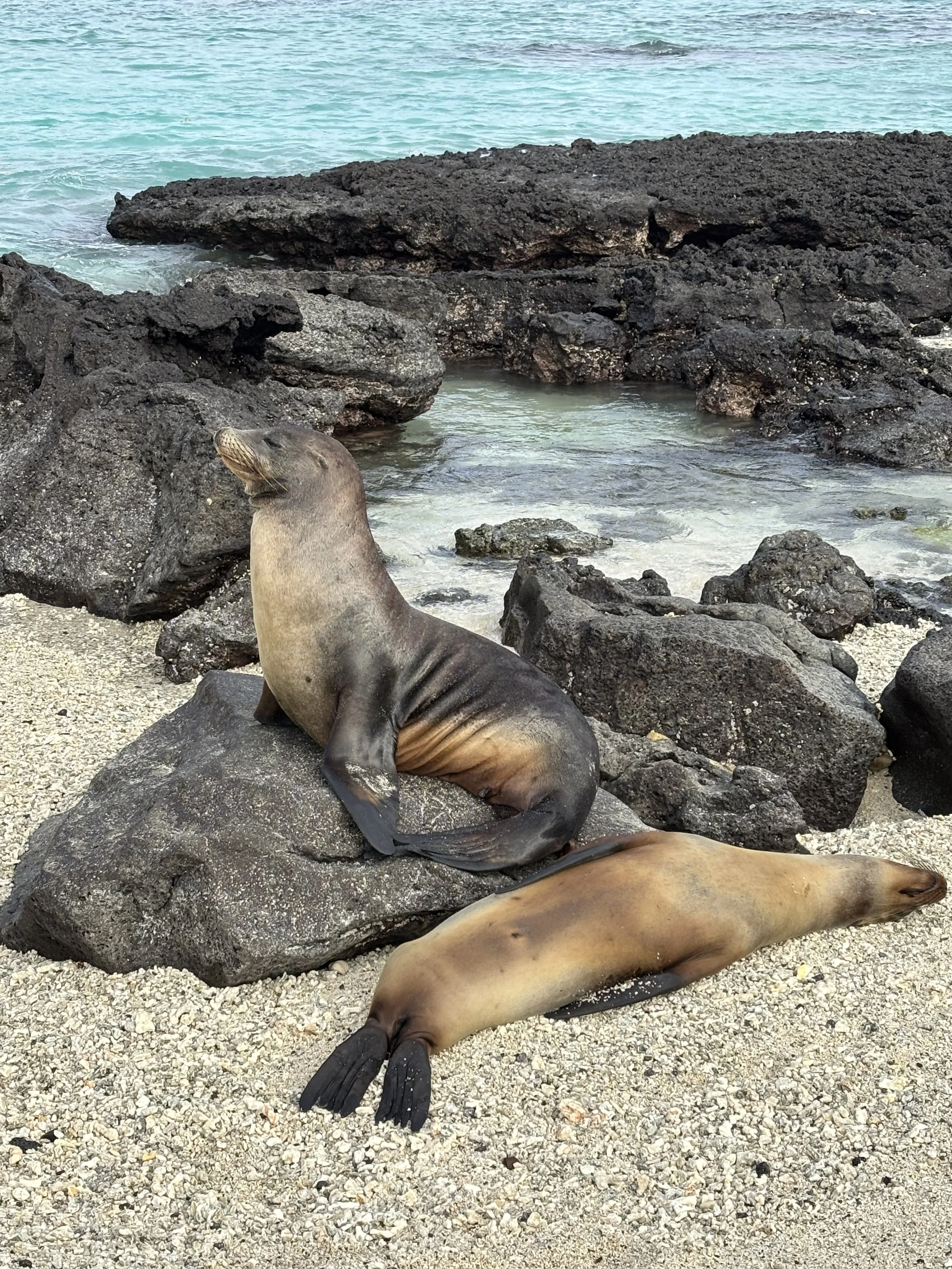
The beach was littered with a dozen or more sea lions. The six foot rule applies. The naturalists don’t have to enforce it. The sea lions are territorial and will bark and chase you if you get too close.
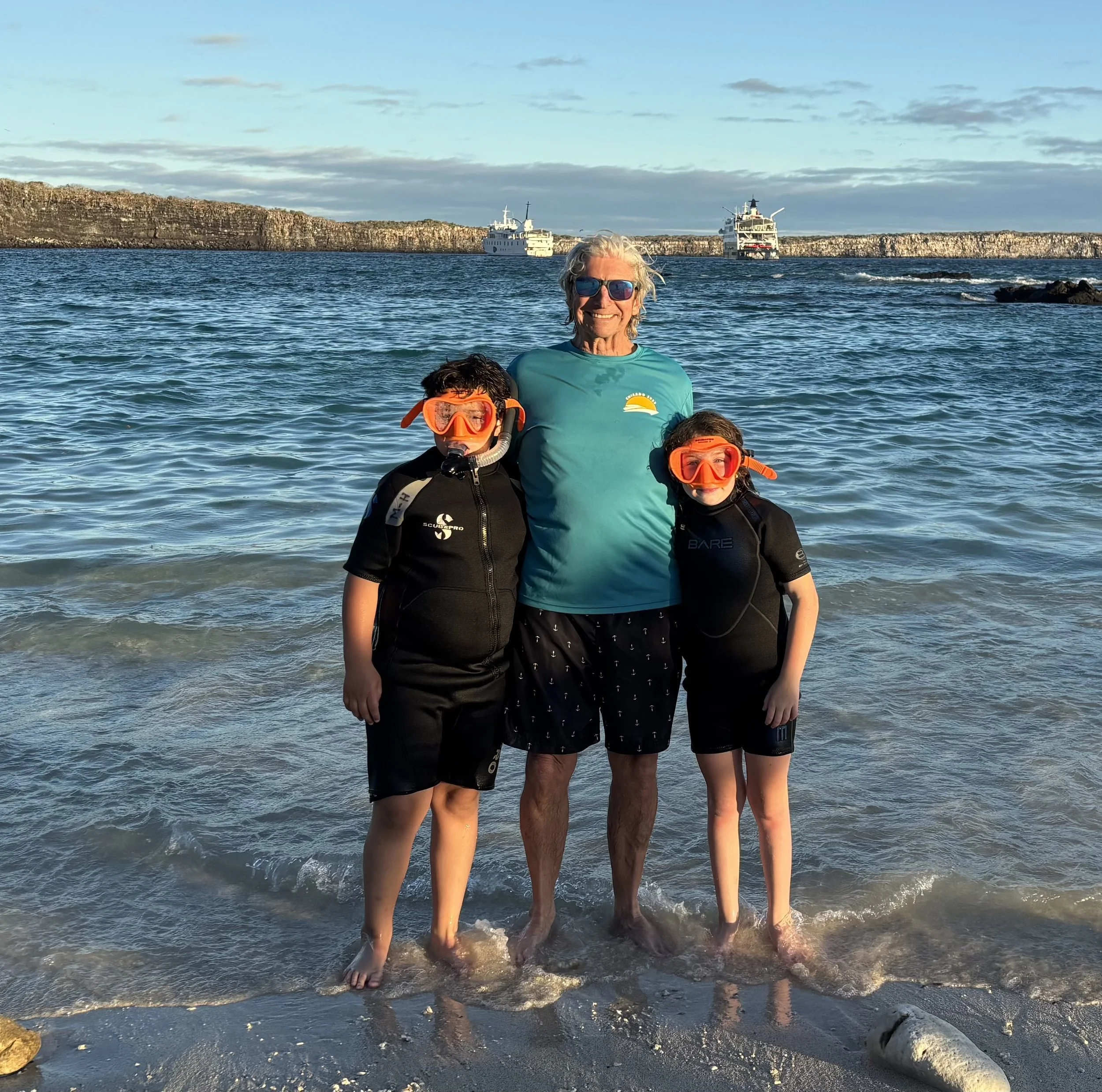
We snorkeled with the group and were joined by several juvenile sea lions. Four of them swam circles around us and between us. It was a surreal experience. Then we looked up and there were hundreds of sea birds flying above us. It was a magical last day in the Galapagos.
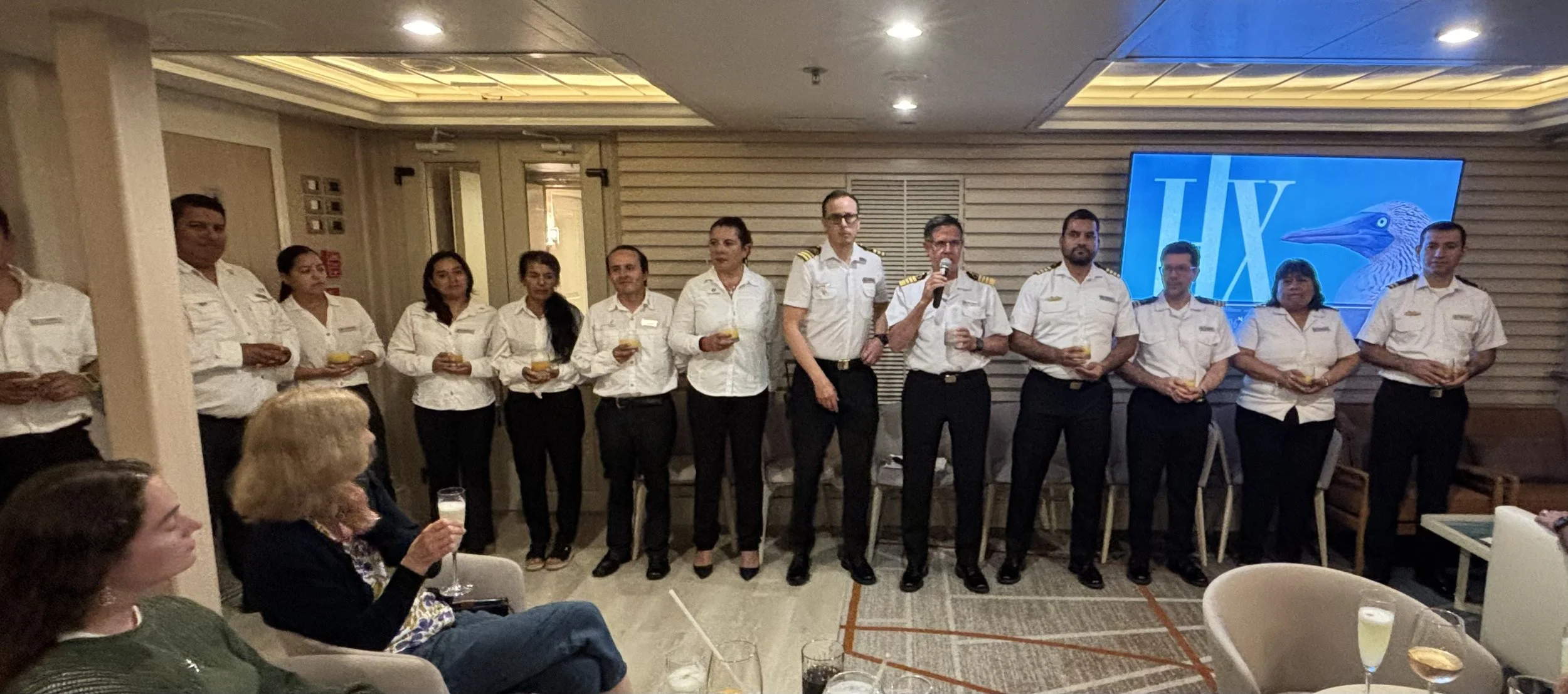
Back on the ship we had a farewell get-together with captain and crew. They did a great job with everything onboard. The captain’s message was tell your friends about our ship. We had two suggestions for their survey - install an elevator and include black beans when you serve rice.
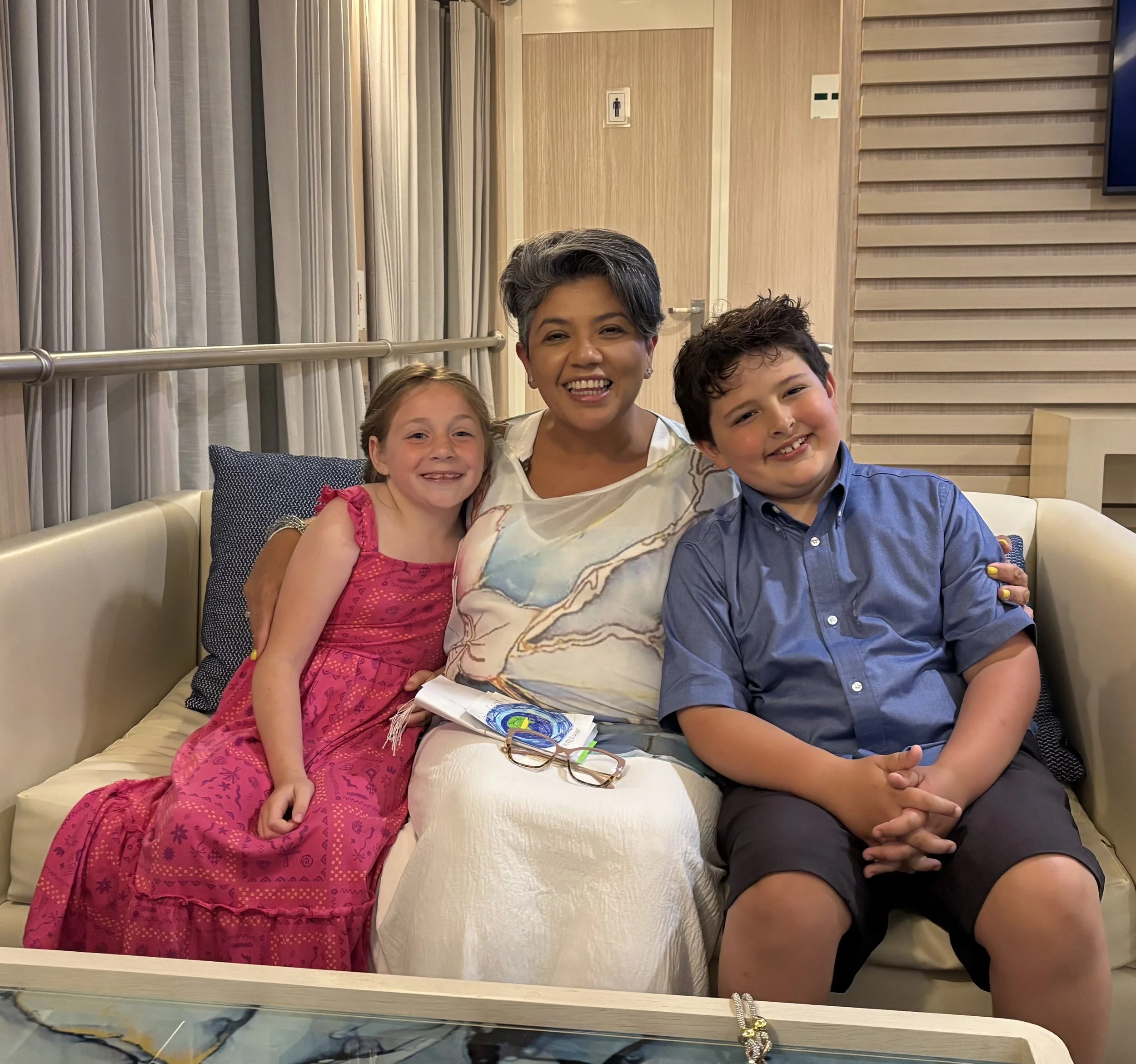
The kids designed and wrote a thank you card for Wendy Rodriguez our Tauck tour director. She was so loving and caring with the children. We were a bit of challenge and she helped us every step along the way.
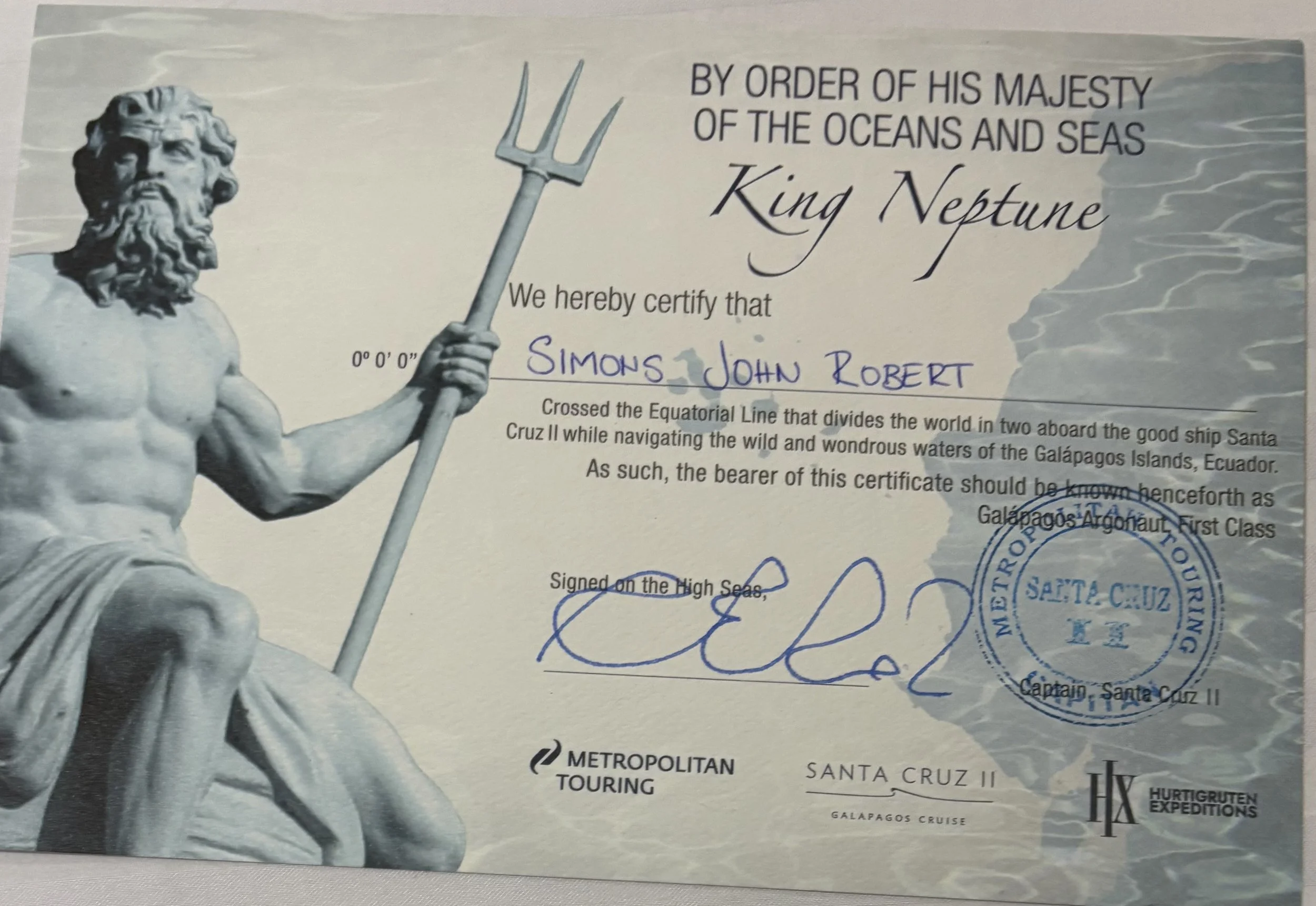
We each received a certificate commentating the fact the we had crossed the equator onboard the Santa Cruz II. This helped ease the pain of having breakfast at 5:45 am and departing the ship at 6;45 am. There will be time enough to sleep when we get home. Wait until you find out our departure time from the hotel on Saturday morning.
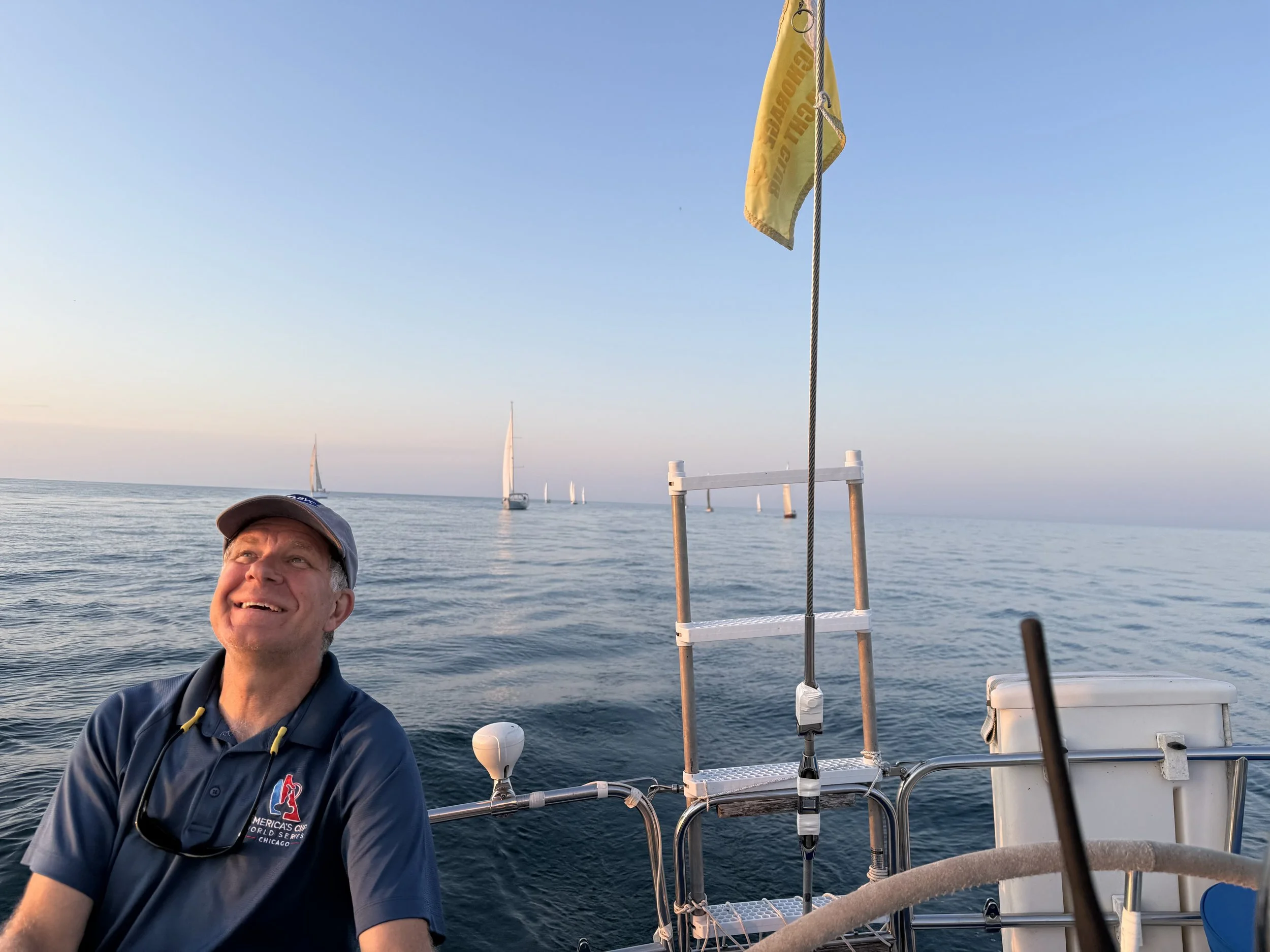
One a side note. Congratulations to Rich Chapman and the crew of Blue Heaven. Rich helmed Blue Heaven to our third first place finish of the season. Well done!
The answer to yesterday’s trivia question - there are 360 meridians. One for each degree on the compass.