
Panama Canal Cruise 2020 - Day 5
A Man A Plan A Canal Panama. This is a palindrome. A phrase that is spelled and pronounced the same backwards and forwards.
Today is the day we will transit the Panama Canal from east to west which is from the Caribbean to the Pacific.
It is 8:00 am on February 29, 2020. Leap Year! The winds are blowing 20 mph from the north which is directly on our stern. Captain Richard and the canal pilot decided to tie up on the pier in front of the lock to wait for our turn to enter the lock. This will be easier than keeping the ship straight in the channel. We will enter the first of three locks we will transit to rise up 75’ to Gatun Lake. The ship in the lock next to us is being lowered down to the level of the Caribbean. The water from the east bound lock is being used to raise us up.
Gatun Lake is a man made lake. It was the decision by the US to flood the countryside to create a navigable route between the seas. The French had attempted to build a sea level canal similar to the Suez Canal. The French rushed their geography and hydrology study during the dry season and started construction immediately on January 1, 1880 with disastrous results. They dug the channel too steep and during the rainy season more material eroded into the canal than they had excavated. During the period of the French construction from 1880 - 1889 more than 22,000 workers were estimated to have died from disease particularly malaria and yellow fever. The French did not know that mosquitos carried malaria. They thought the disease was caused by bad (mal) air (aria) from rotting vegetation. The French kept these statistics quiet to avoid recruiting problems. The US took over construction in 1904 and completed construction in 1914. An additional 5,609 workers killed bringing the total death toll to 27,500. Control of the Panama Canal was turned over to the Panamanians on December 31, 1999.
Regarding the ship size for the old locks the largest size is called Panamax. Because that is the largest vessel that can fit in the old lock. The maximum size is 295 meters 1,000 feet long, 32 meters or 100 feet wide and 12 meters or 36 feet deep. There are two swinging gates at the lock entrance . Each gate weighs 700 tons. The old locks do not recycle the water because the fresh water mixes with sea water and cannot be returned to the lake.
In the old locks the ships are moved by electric locomotives called mules. The mules weigh 45 tons and cost $2 million each. The mules keep the ship in the center of the lock so they do not touch the sides. In the new locks tug boats are used fore and aft to keep the ships in the center of the locks.
I am starting to get a better understanding of the pricing for the lock transit. A Panamax ship that maximizes the cube of the old locks which is 1,000’ long and 100’ wide and 36’ deep pays $200,000. A ship half the length of a Panamax ship which is 500’ will pay $100,000.
We have all heard and used the word buccaneer. It is derived from the French word boucane for a wooden frame for smoking meat. The name boucanier is French for hunters who used to smoke meat from feral cattle and pigs on Hispaniola. English colonists anglicized the word to buccaneer. Many buccaneers found piracy to be more lucrative than smoking meat.
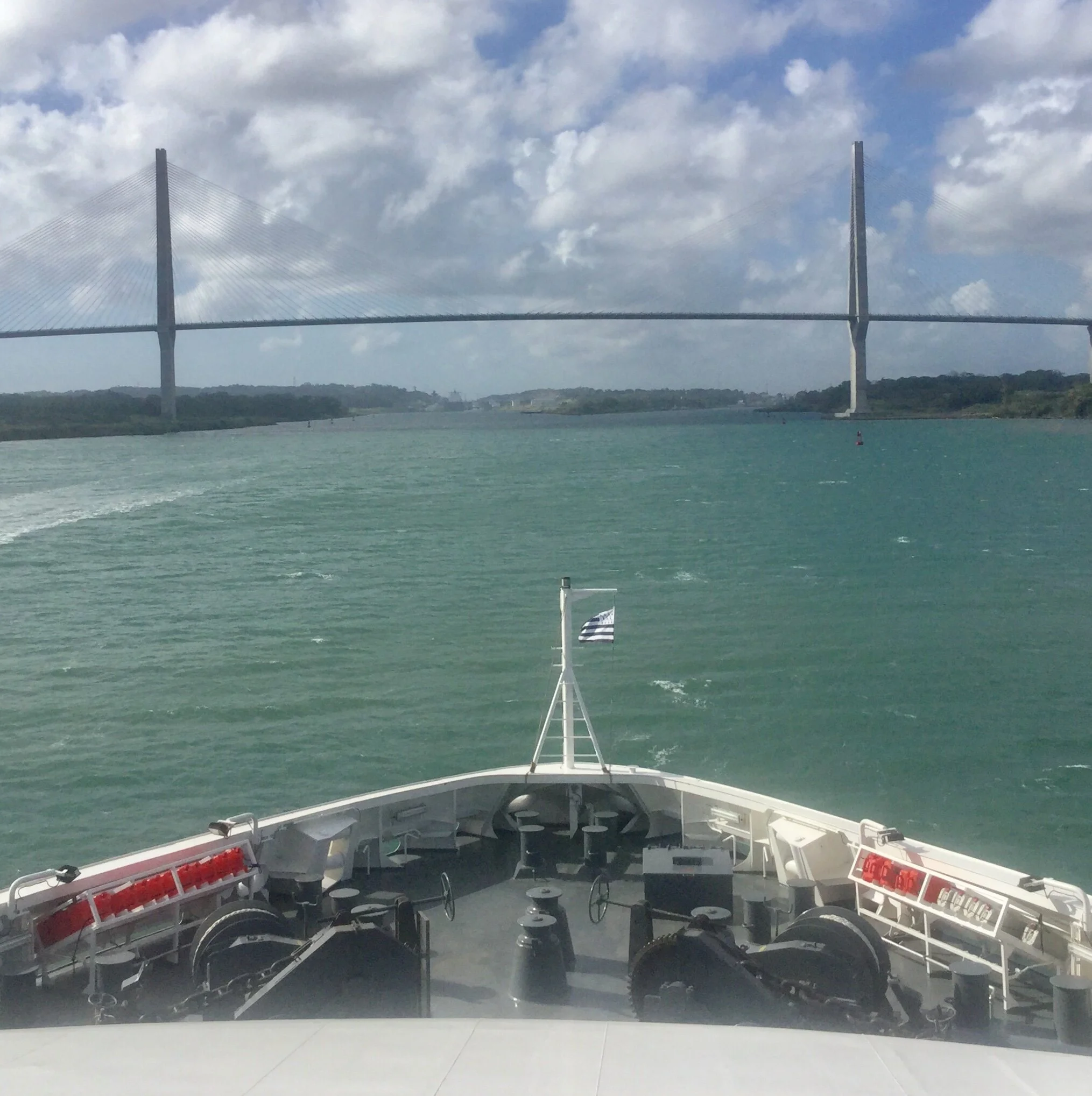
Approaching the Centennial Bridge at the entrance to the Gatun locks
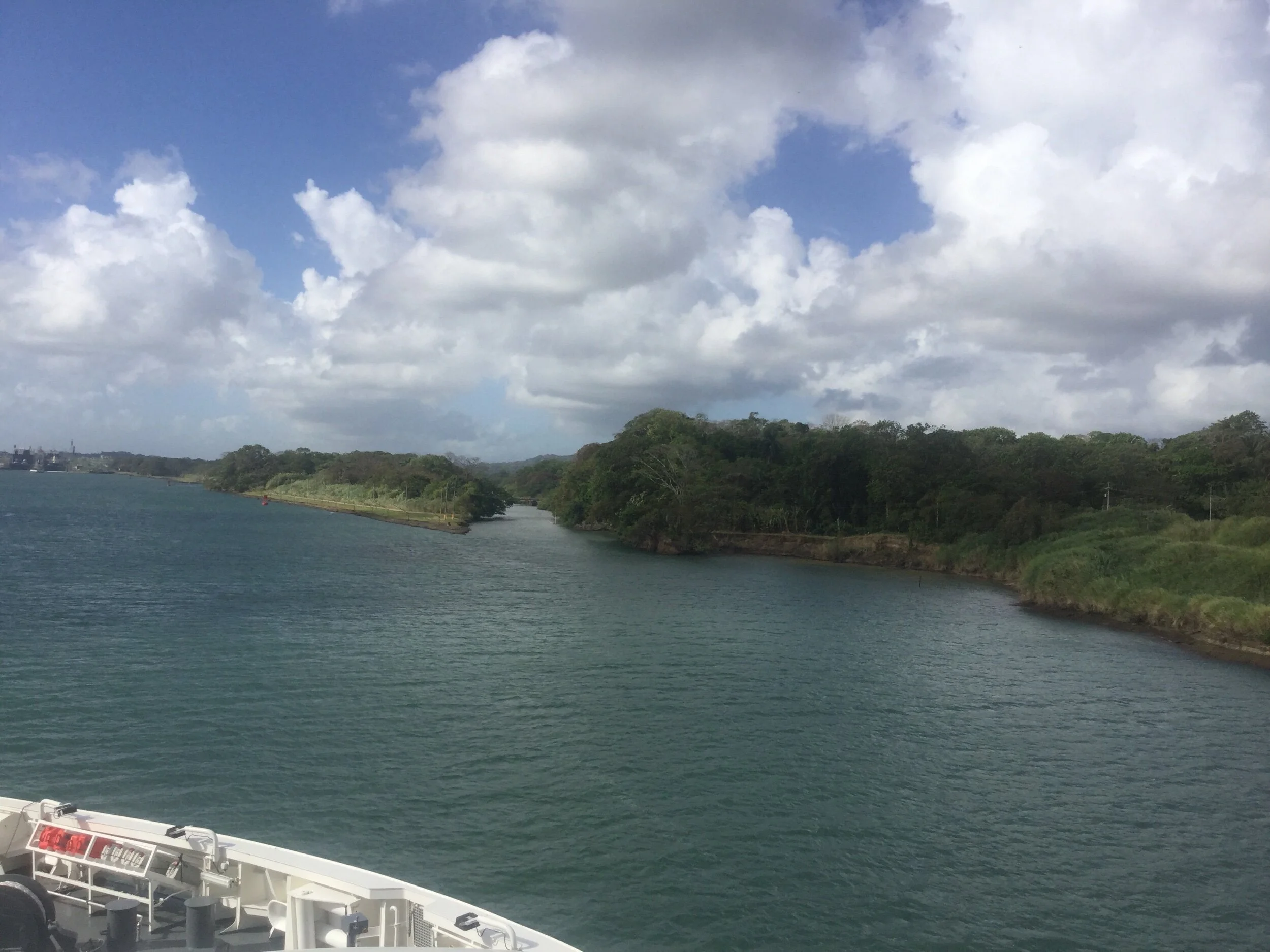
A view of the canal dug by the French
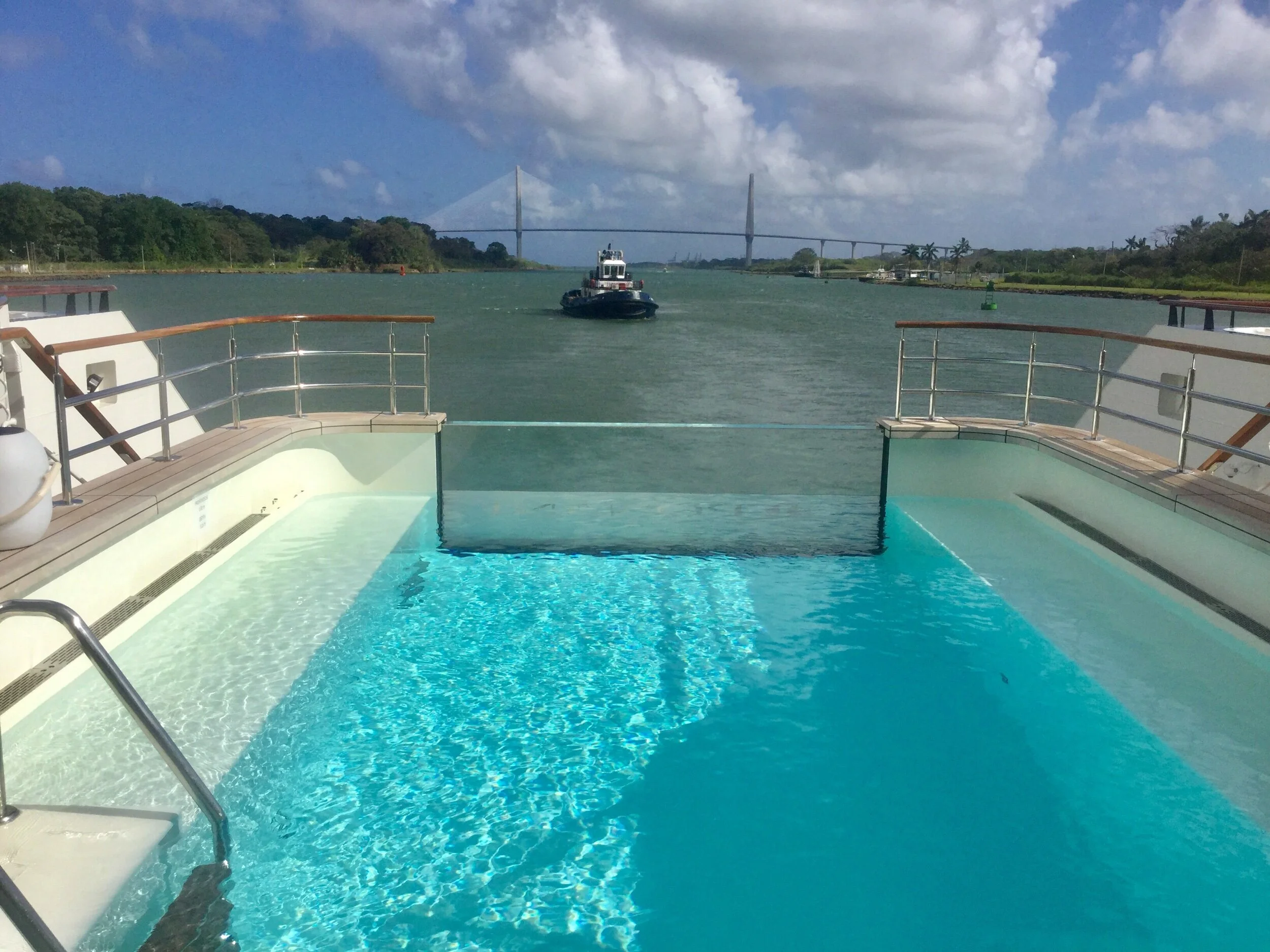
Tug boat following behind in case we require assistance.
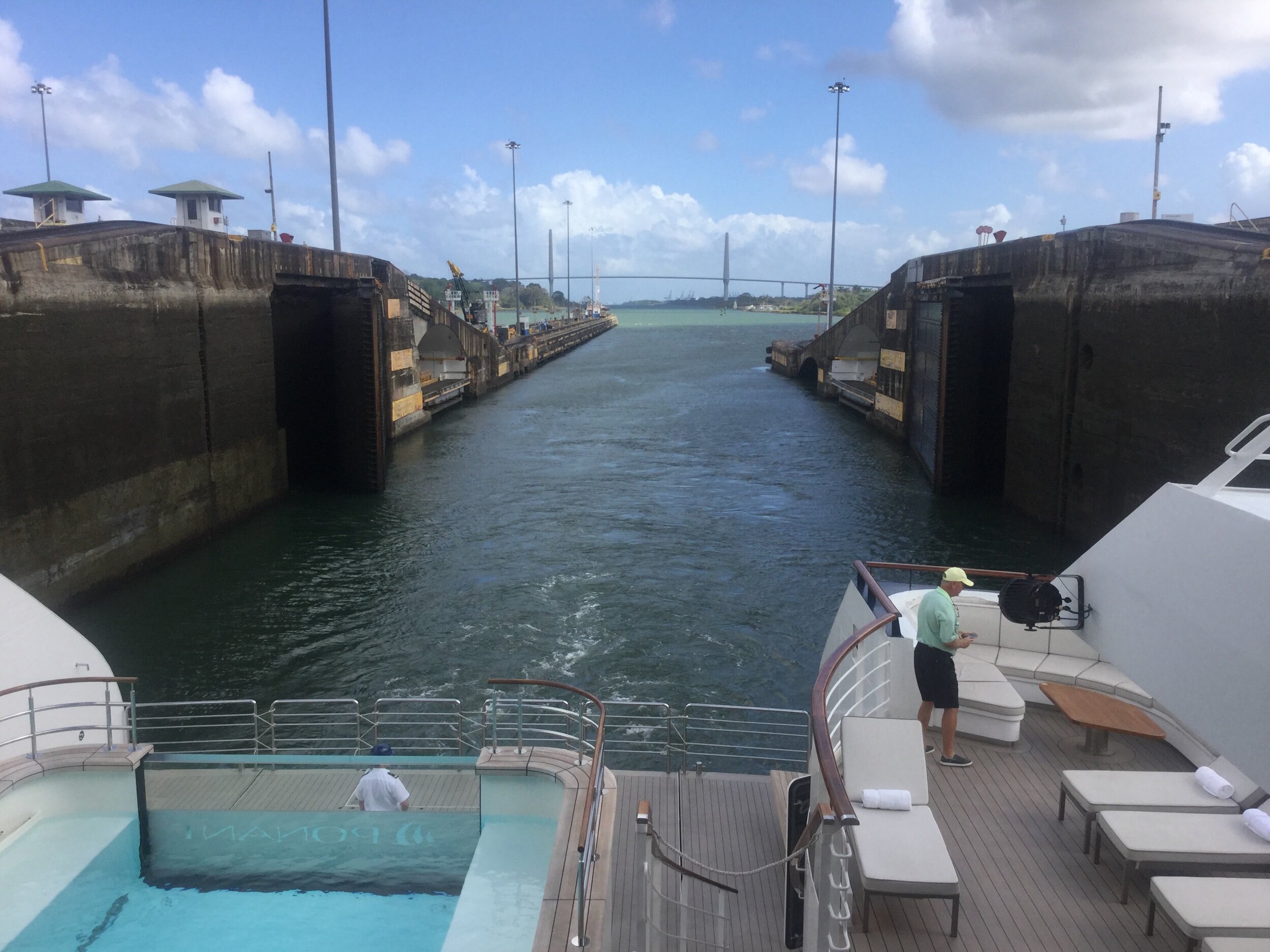
Inside the Gatun lock
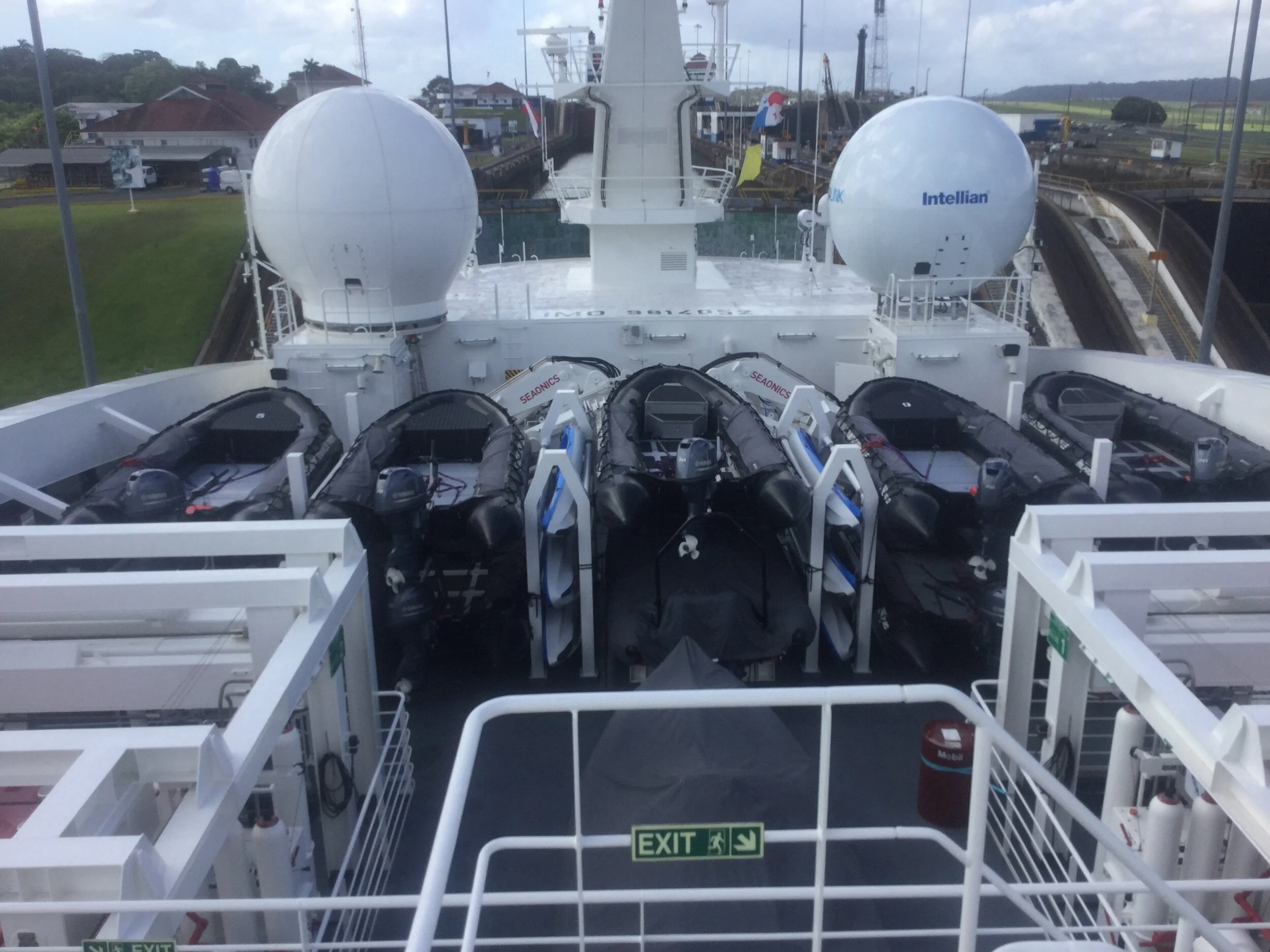
We found where they store the RIBs and kayaks.
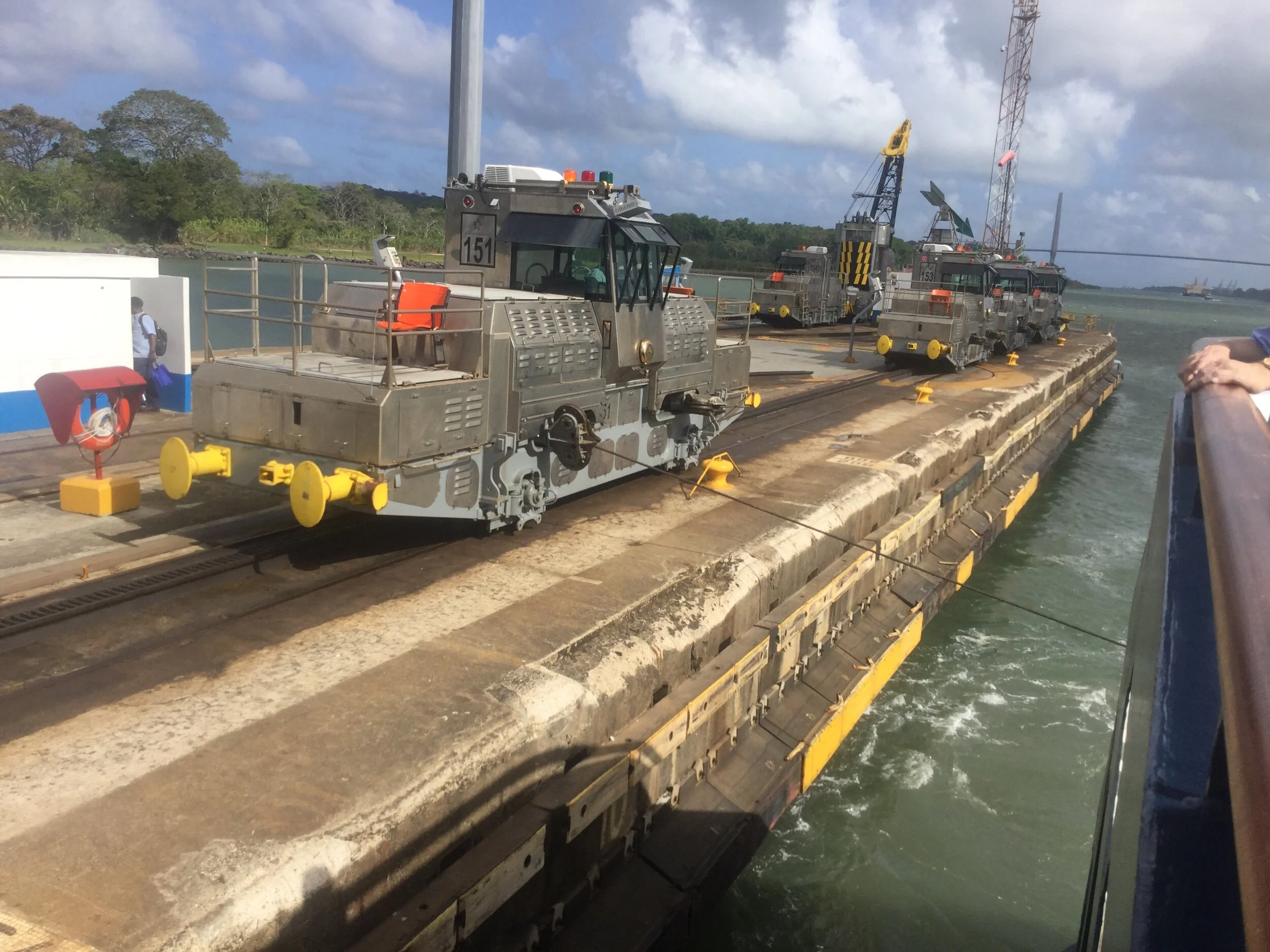
This is a mule that pulls us into and out of the locks.
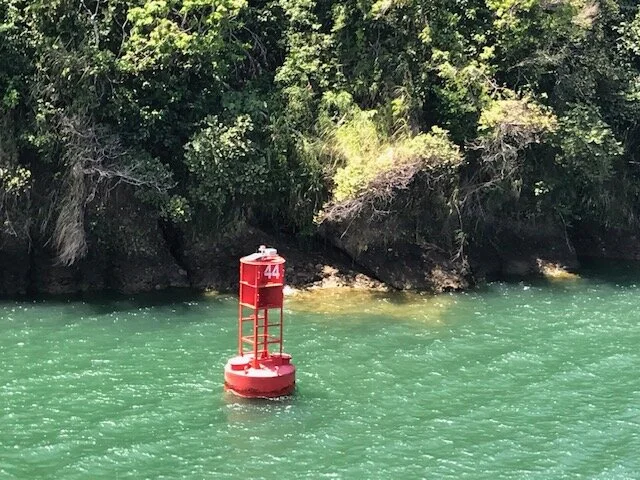
Stay on the left side of the channel markers. Not much room on the other side.
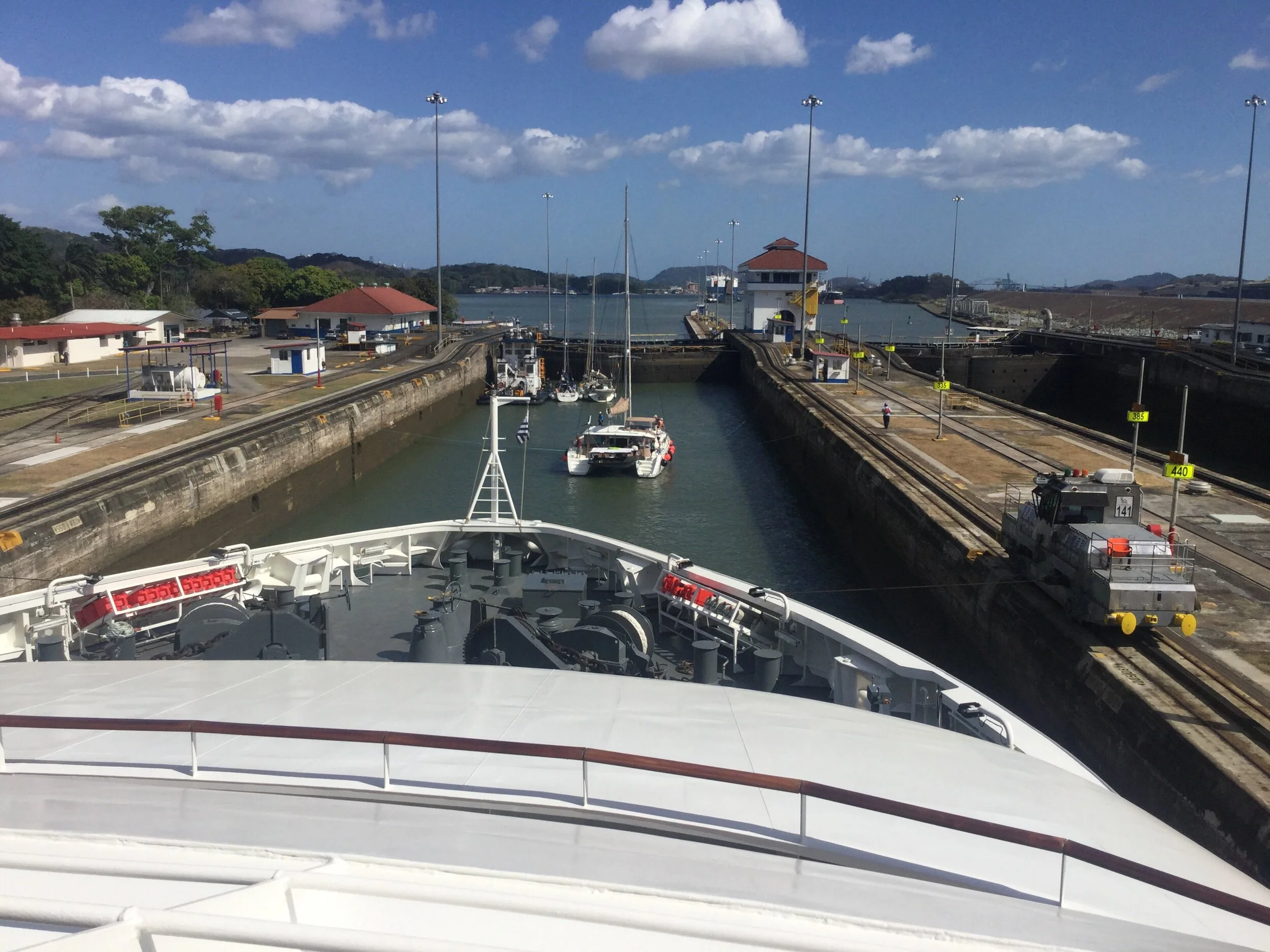
We shared the lock with several pleasure craft.