
Kenya and Tanzania - Day 3
Today is the day we have traveled half way around the world to experience. Today is Safari day. We had breakfast at the hotel. It was a wonderful buffet. For some reason I always spell buffet as Buffett before I correct myself. The grounds of the hotel are cultivated along with the roofs of most of the buildings. Much of the food served in their restaurants is grown on premises.
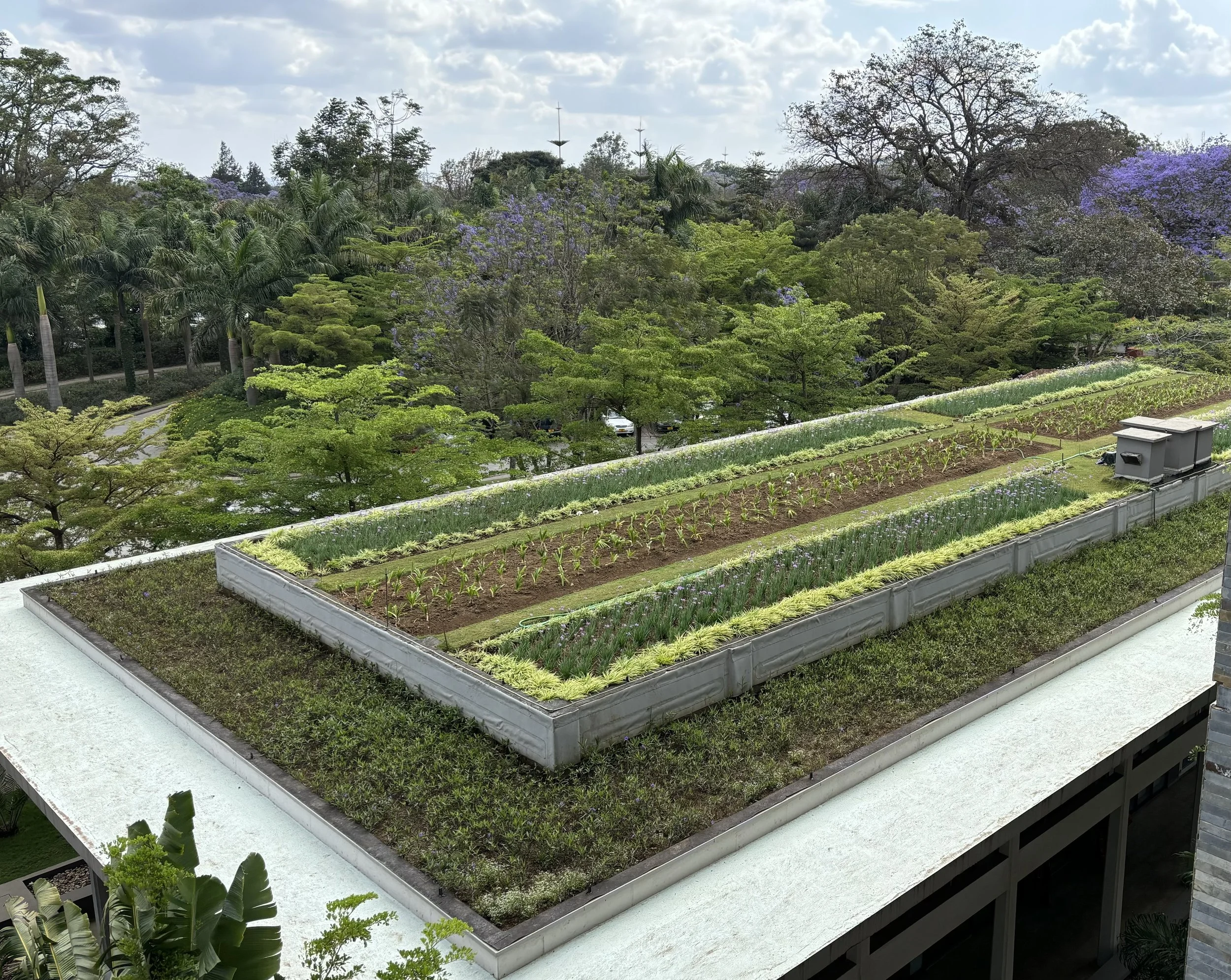
This is one of the many rooftop gardens where the hotels grows its own sustainable food.
We met our tour director Taryn Hottman. She is a Canadian that doesn’t like hockey. There was a brief organizational meeting on Saturday night to review the details of the next two weeks. The prime directive of the trip is “do not drink the tap water!” Do not brush your teeth with tap water. Do not rinse your toothbrush in tap water and do not open your mouth in the shower. I was familiar with this policy when I traveled for business in places like Indonesia, Malaysia and Cambodia. I would brush my teeth with Perrier or whatever water was in the mini bar.
The hotel provides large bottles of water in the room. There is also a caution against ice in drinks and salad greens washed in tap water. The ice and salads on the five star hotels are safe to consume.
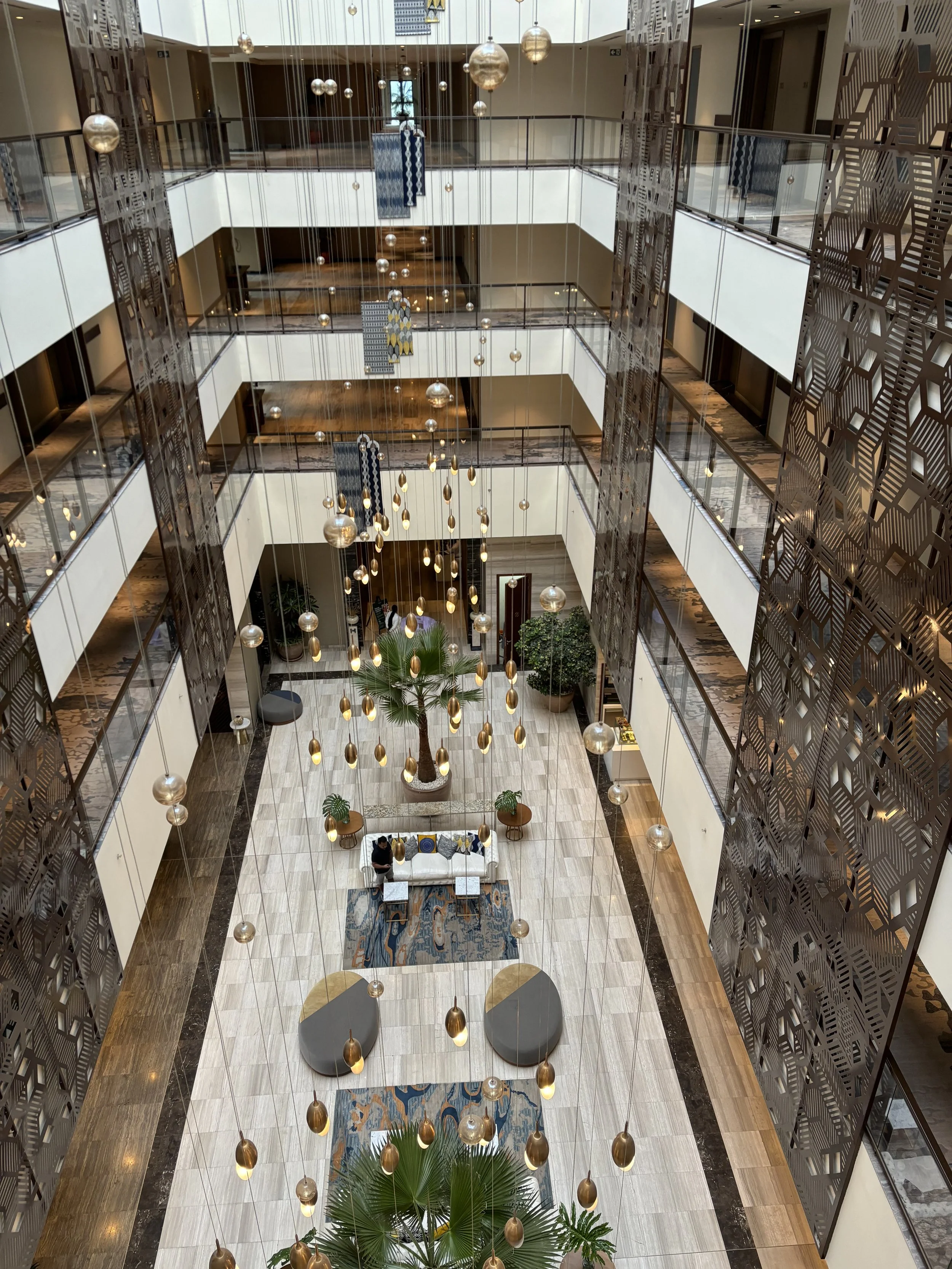
This is the atrium of the Grand Melia Hotel. We had a good visit here.
Tanzania has over 120 indigenous tribes. The top three tribes are the Maasai, Sukuma People and Chagga. All of the tribes coexist peacefully. Intermarriage is common. Each tribe has unique traditions including their own brand of beer. The Maasai prefer living in arid areas to avoid conflict with other tribes. The Chagga are the richest tribe because they cultivate the rich farmland at the base of Mount Kilimanjaro.
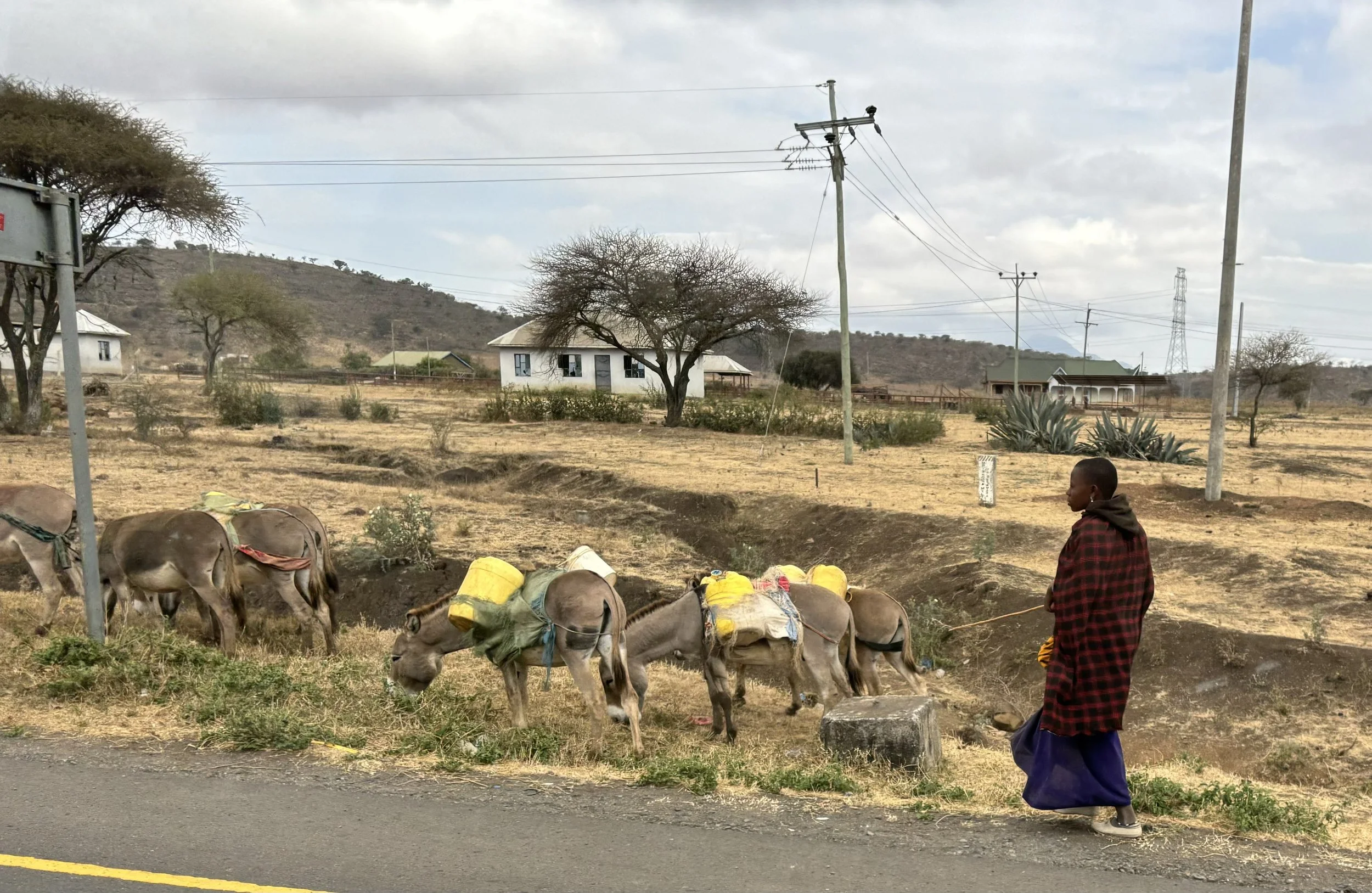
This is a Maasai woman using donkeys to bring water to her home.
We started our safari at 8:30 am with a 2.5 hour drive from Arusha to Lake Manyara game preserve. The lake is severely flooded and causing many areas with bigger animals to be isolated by flood waters. We were told this will be our practice safari and not to have high expectations.
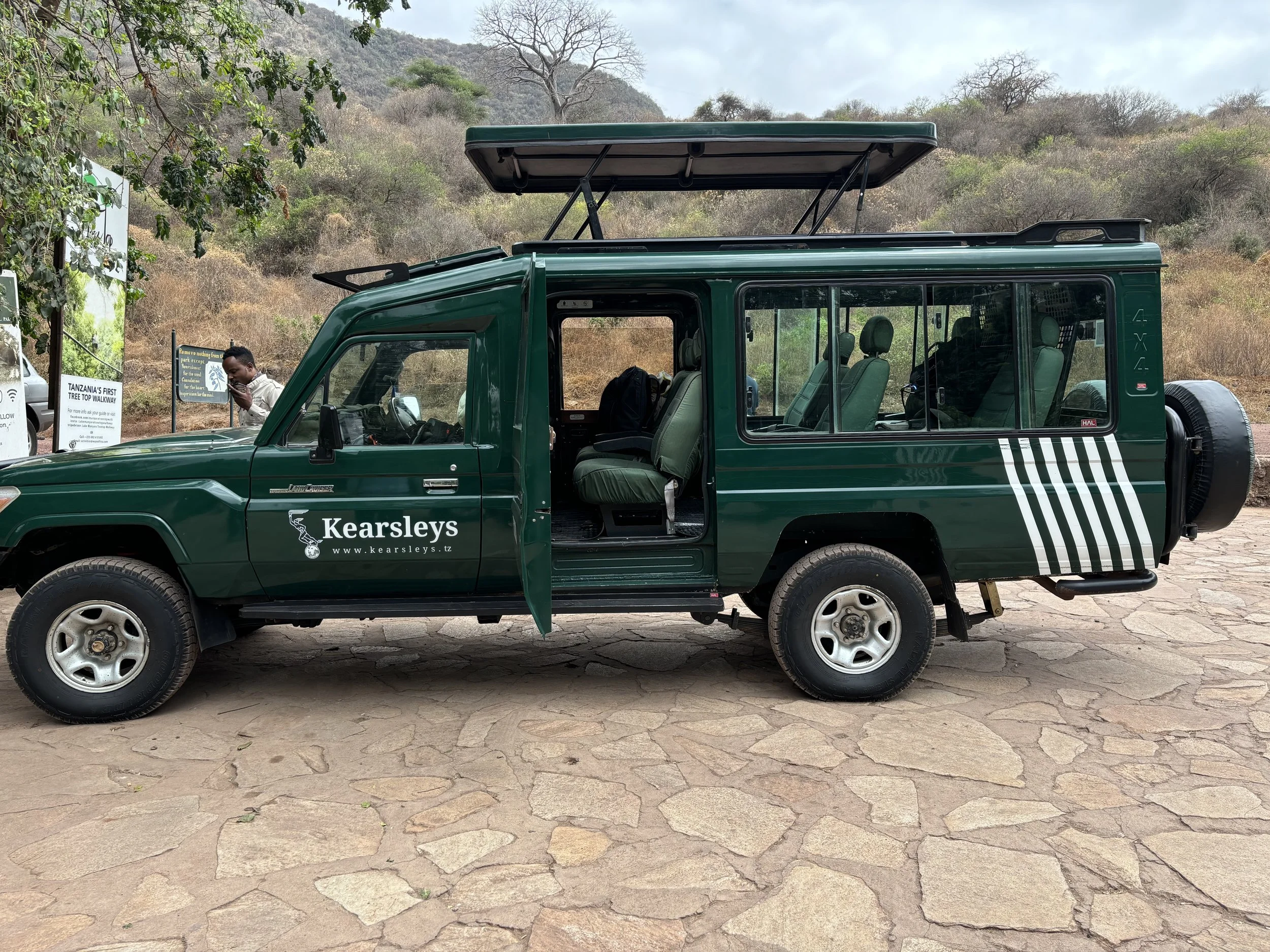
This is our safari vehicle. It is a Toyota Land Cruiser.
We checked in at the Lake Manyara park headquarters and entered the park. We had our five vehicles and were dozens more on the narrow roads going in both directions. Lots of dust. Our first animal siting was a blue monkey followed by a troop of baboons. Then we came across several gazelles and had an elephant almost bump into our vehicle. That was very close up. We saw many more troops of baboons.
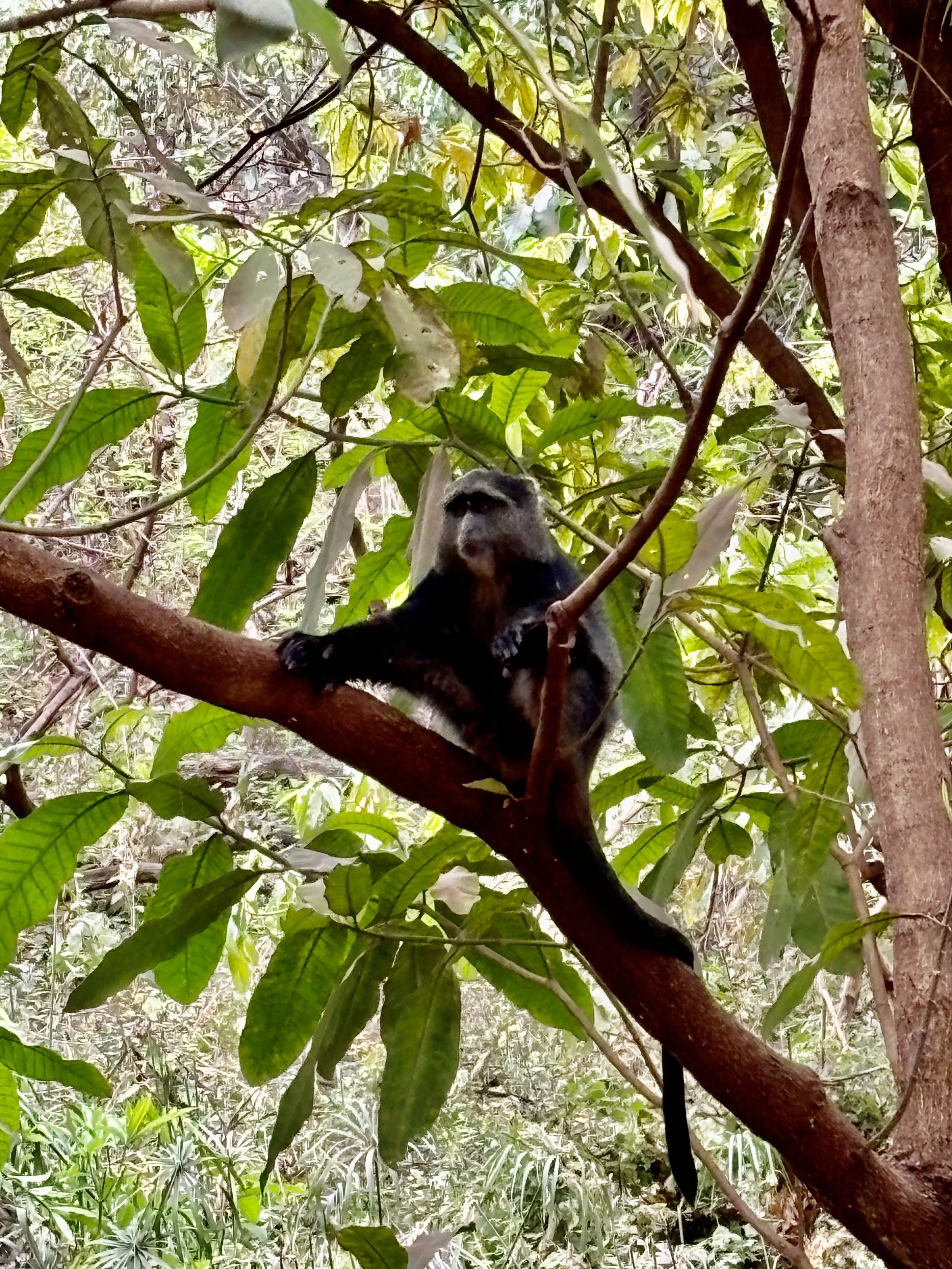
The first animal we saw was a blue monkey. Blue monkeys like to eat red bananas.
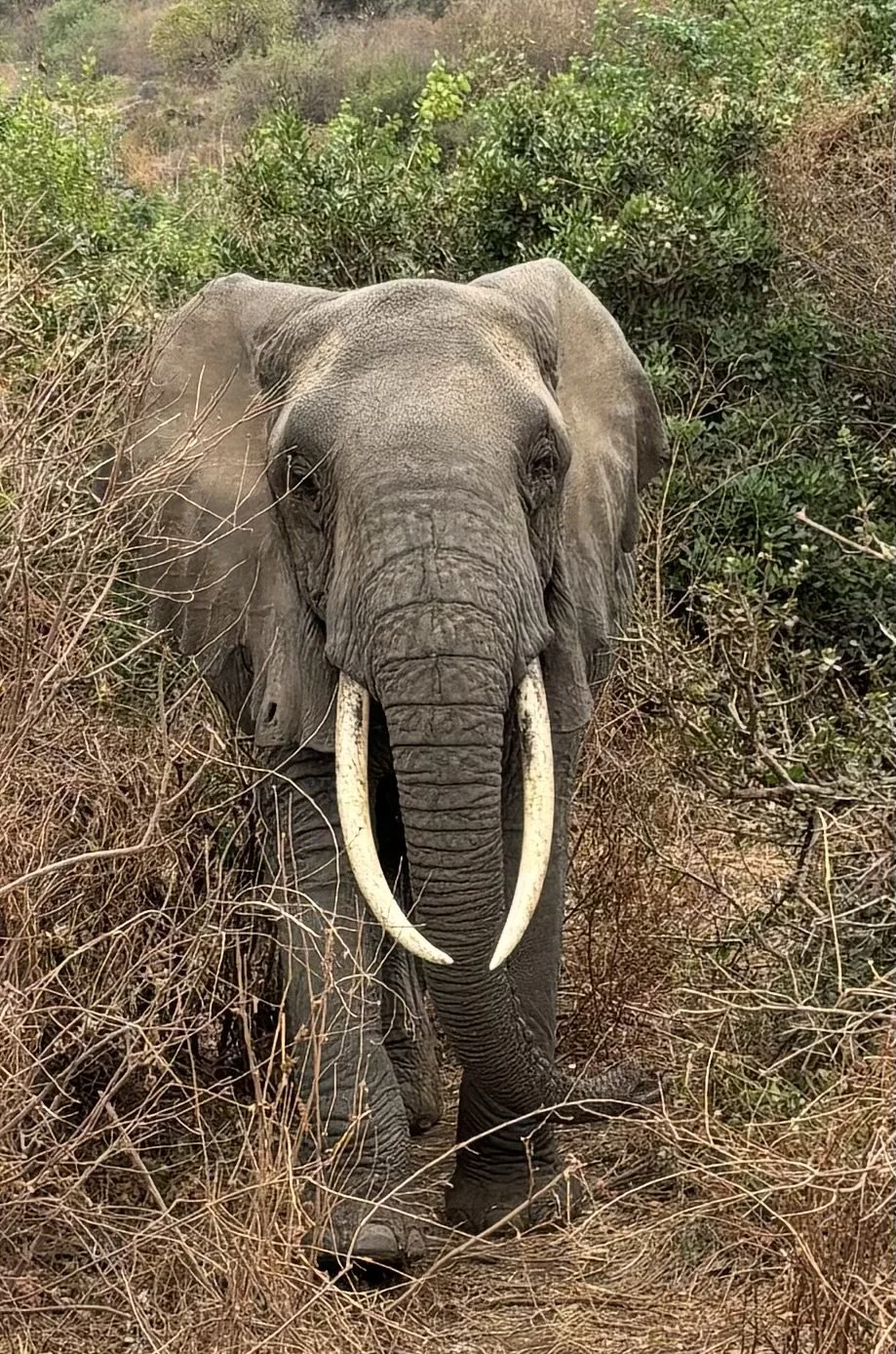
Our first siting of the Big Five animals was an elephant that almost bumped into our vehicle.
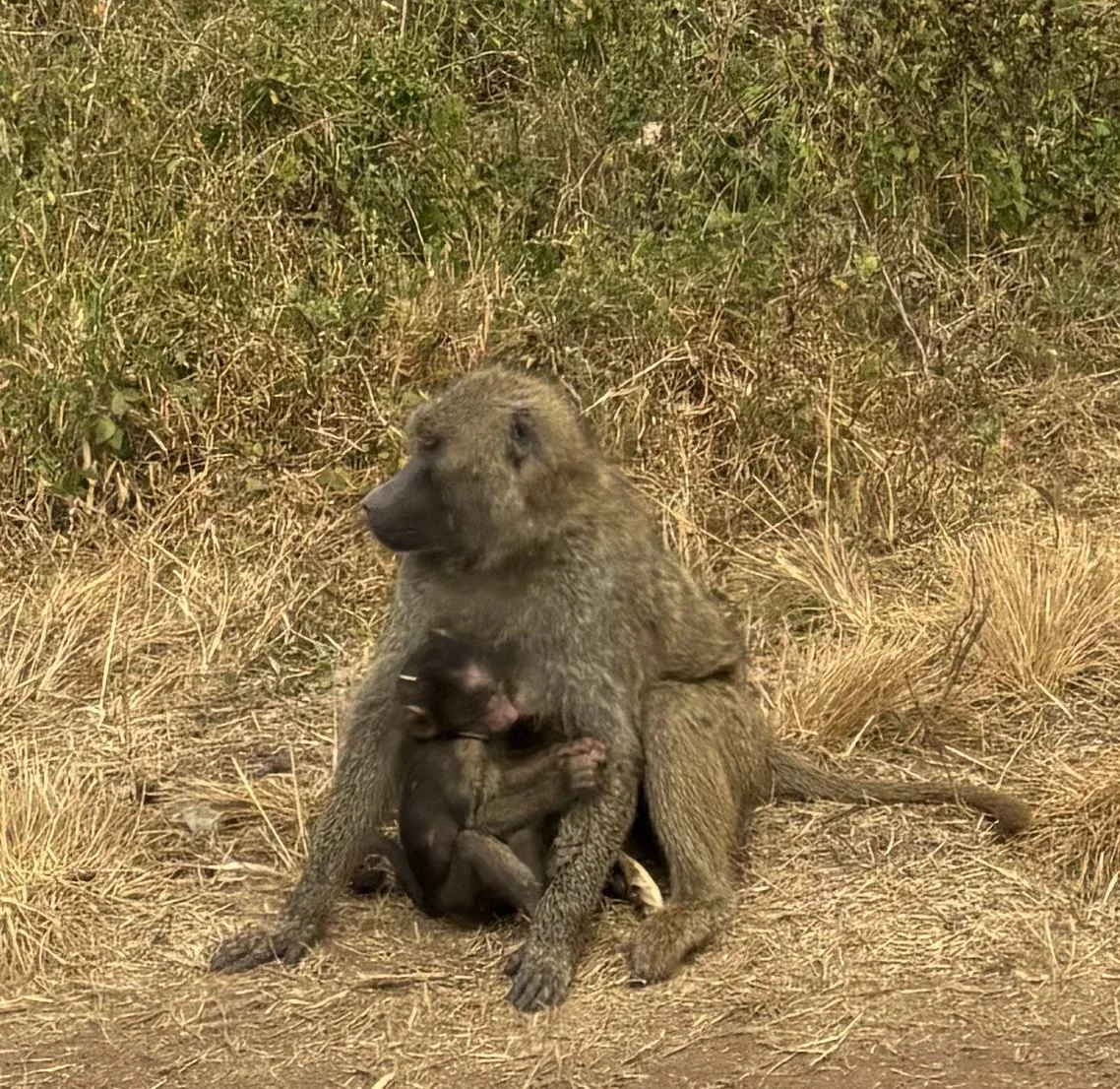
This mother baboon with her baby was part of a large baboon troop.
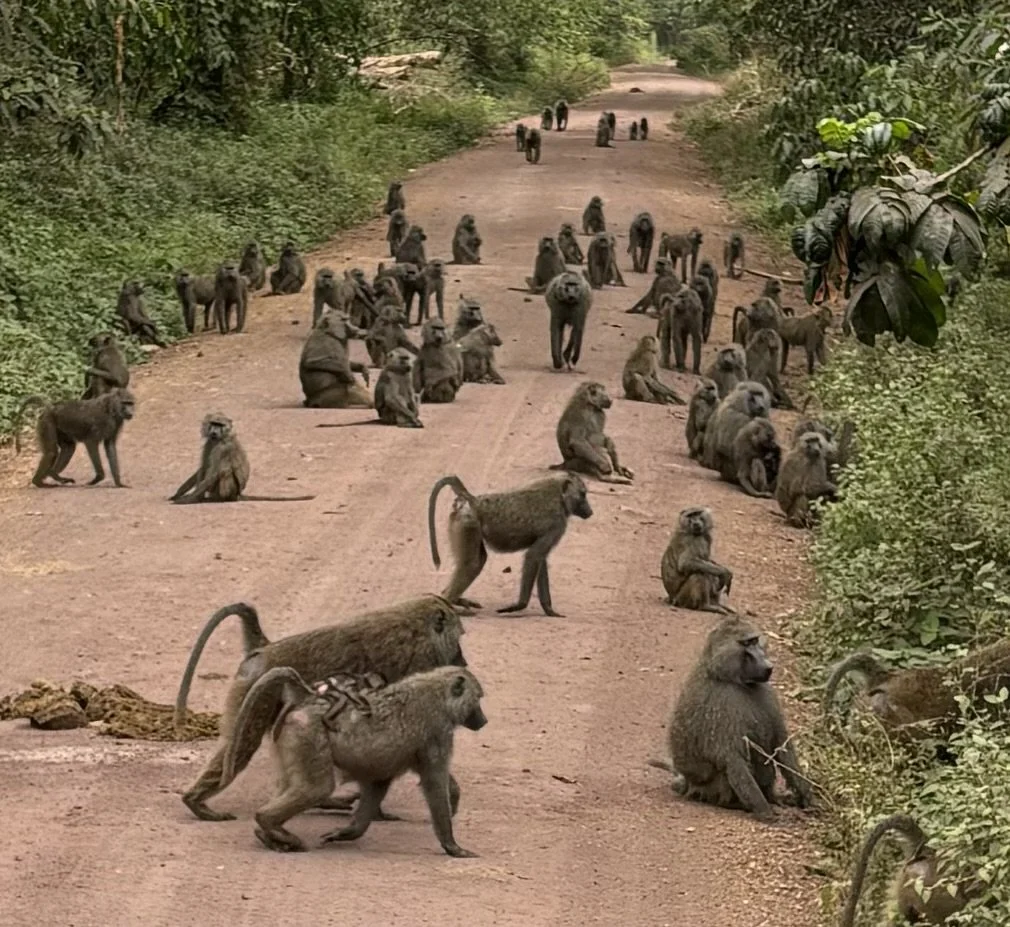
A troop of baboons blocking the road.
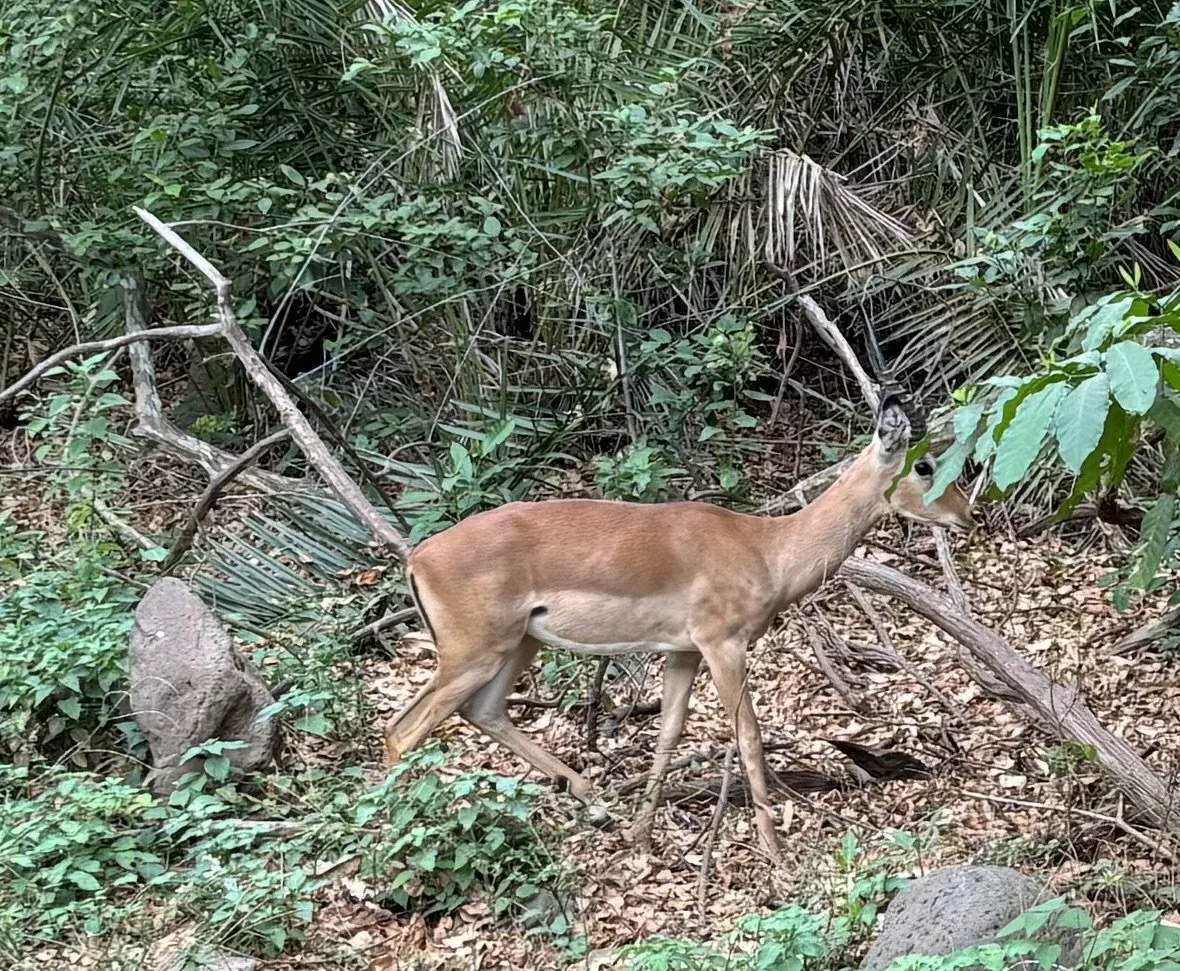
We saw several gazelles frolicking on the side of the road.
We left the park to have lunch at the Lake Manyara Sarena Safari Lodge. The lodge was designed with rooms that look like a Maasai village. The view of Lake Manyara was magnificent.
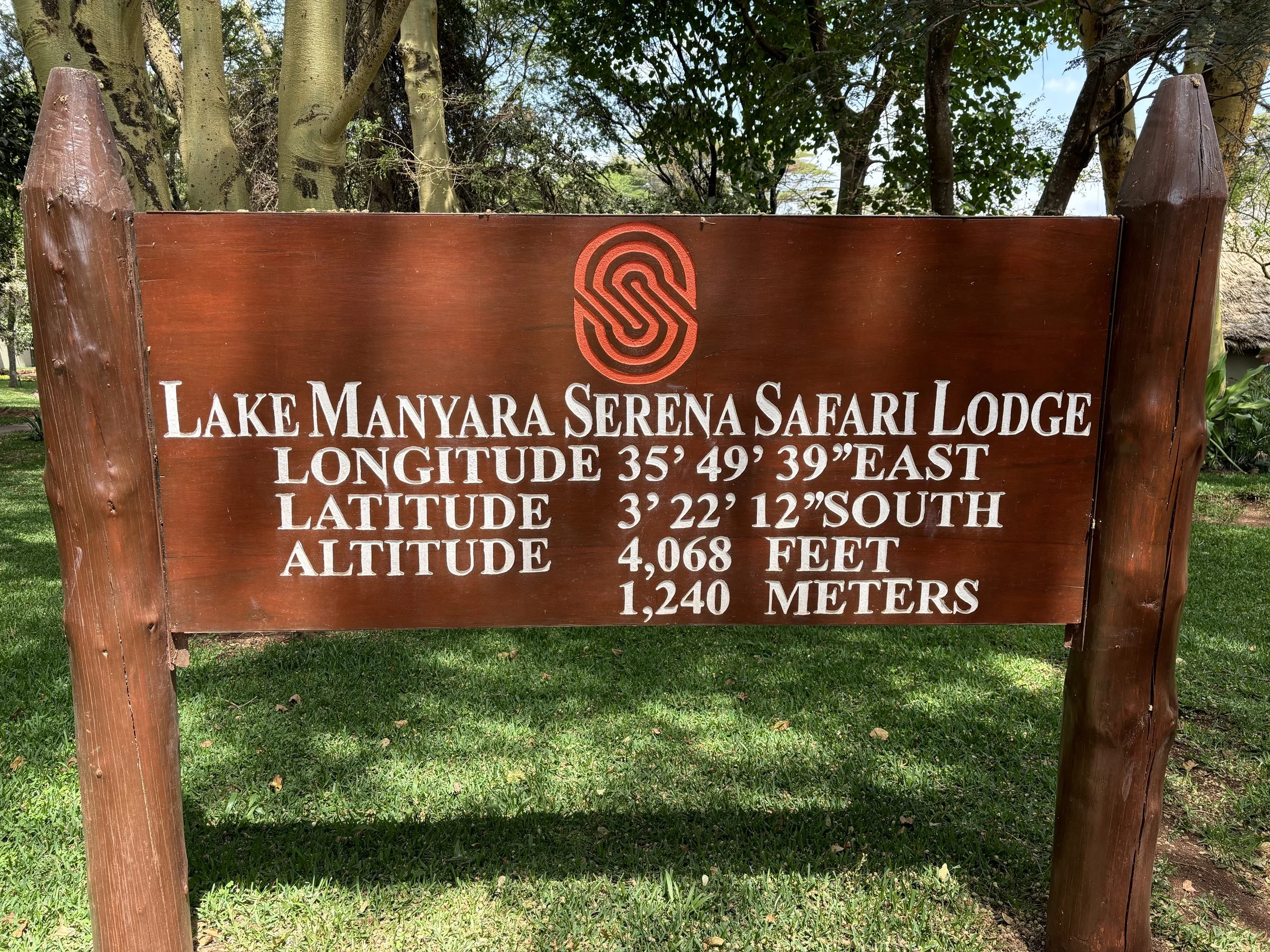
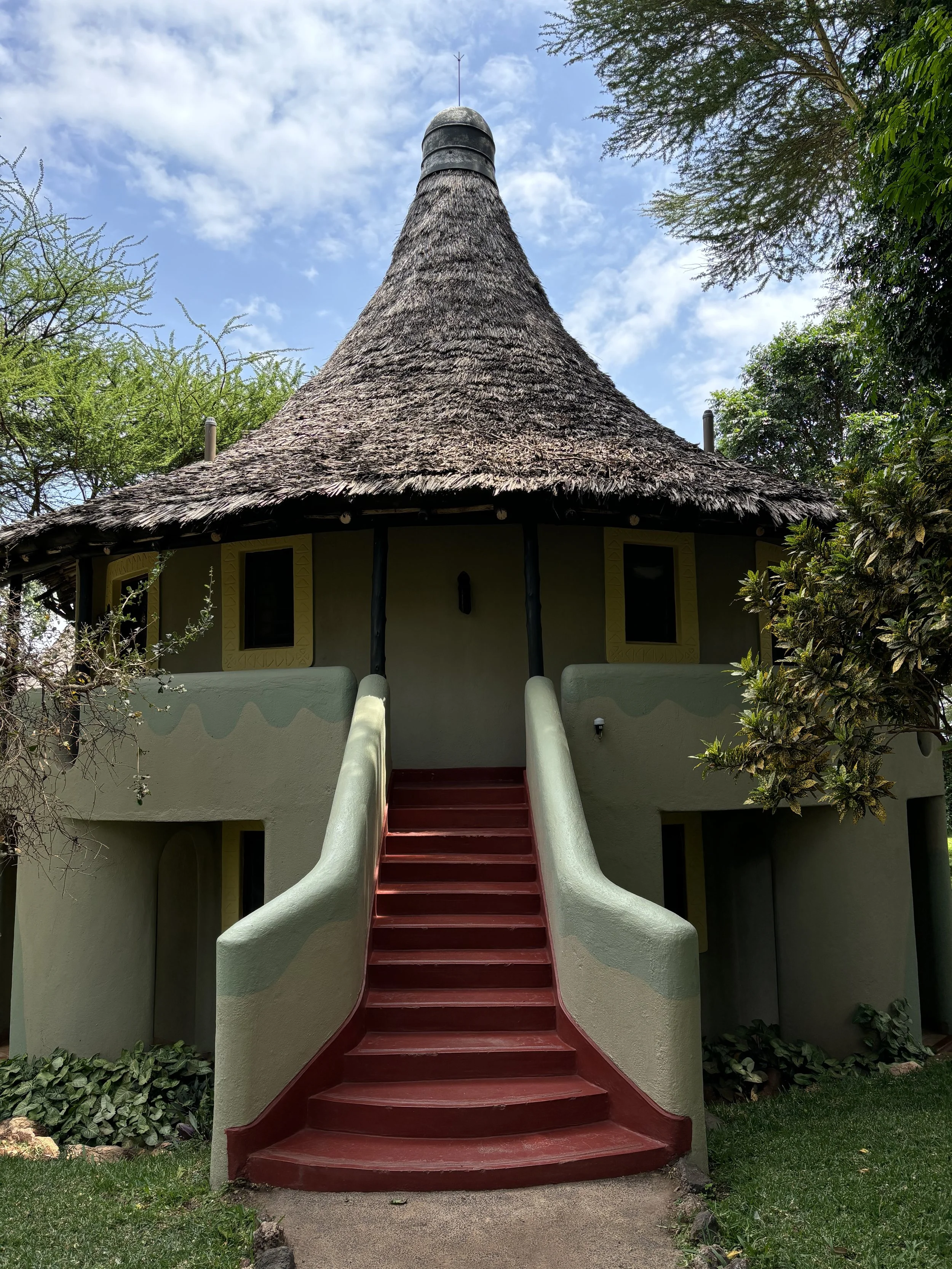
The hotel rooms are designed to look like a Maasai village.
After lunch we drive an hour to the Ngorongoro Crater. This is the largest unflooded intact caldera in the world. We traveled up a very steep and narrow dirt road to arrive at the Ngorongoro Serena Travel Logde. The hotel is built on the edge of the volcanic crater at 7,400 feet above sea level. We are are ever a mile high. On the way we saw zebras and giraffes.
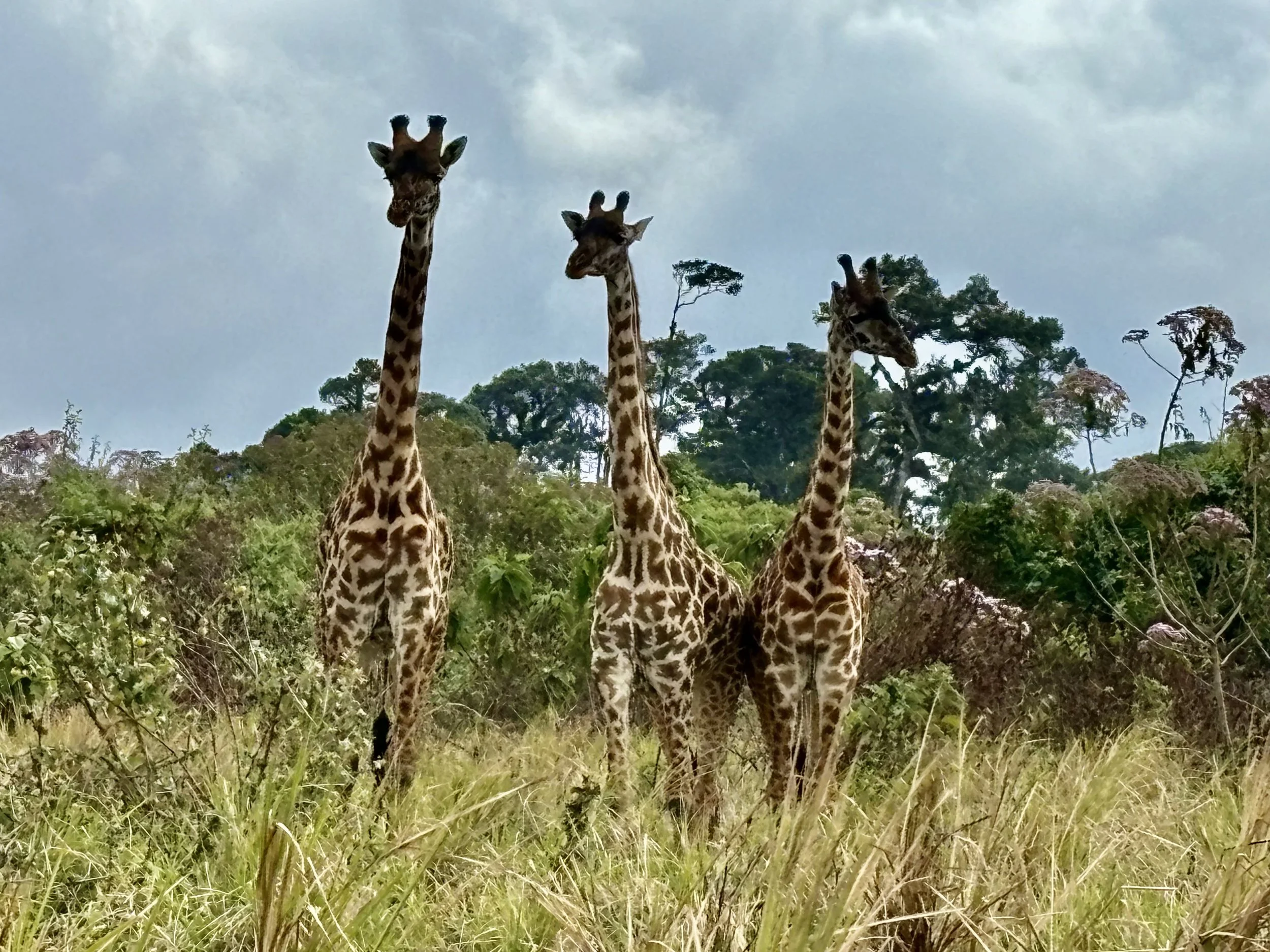
The second animal we saw of the Big Five is the giraffe.
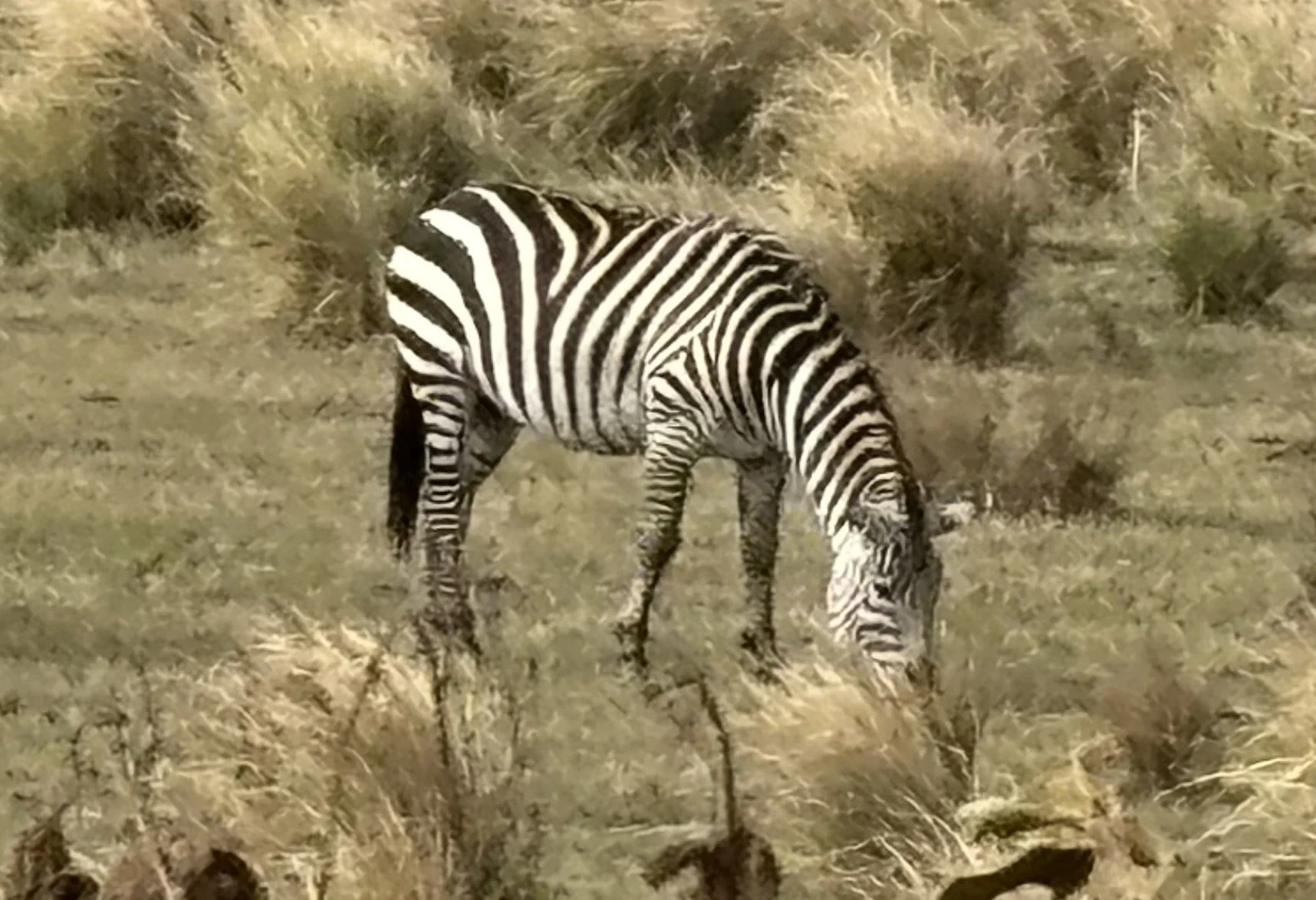
Our final animal siting of the day was the zebra. Every zebra’s stripes are unique as a person’s fingerprint.
The hotel has another magnificent view. This time the view is of the caldera which contains over 30,000 large animals. As we arrived at our hotel we were treated to a traditional Maasai dance. Tonight is our welcome reception and dinner.
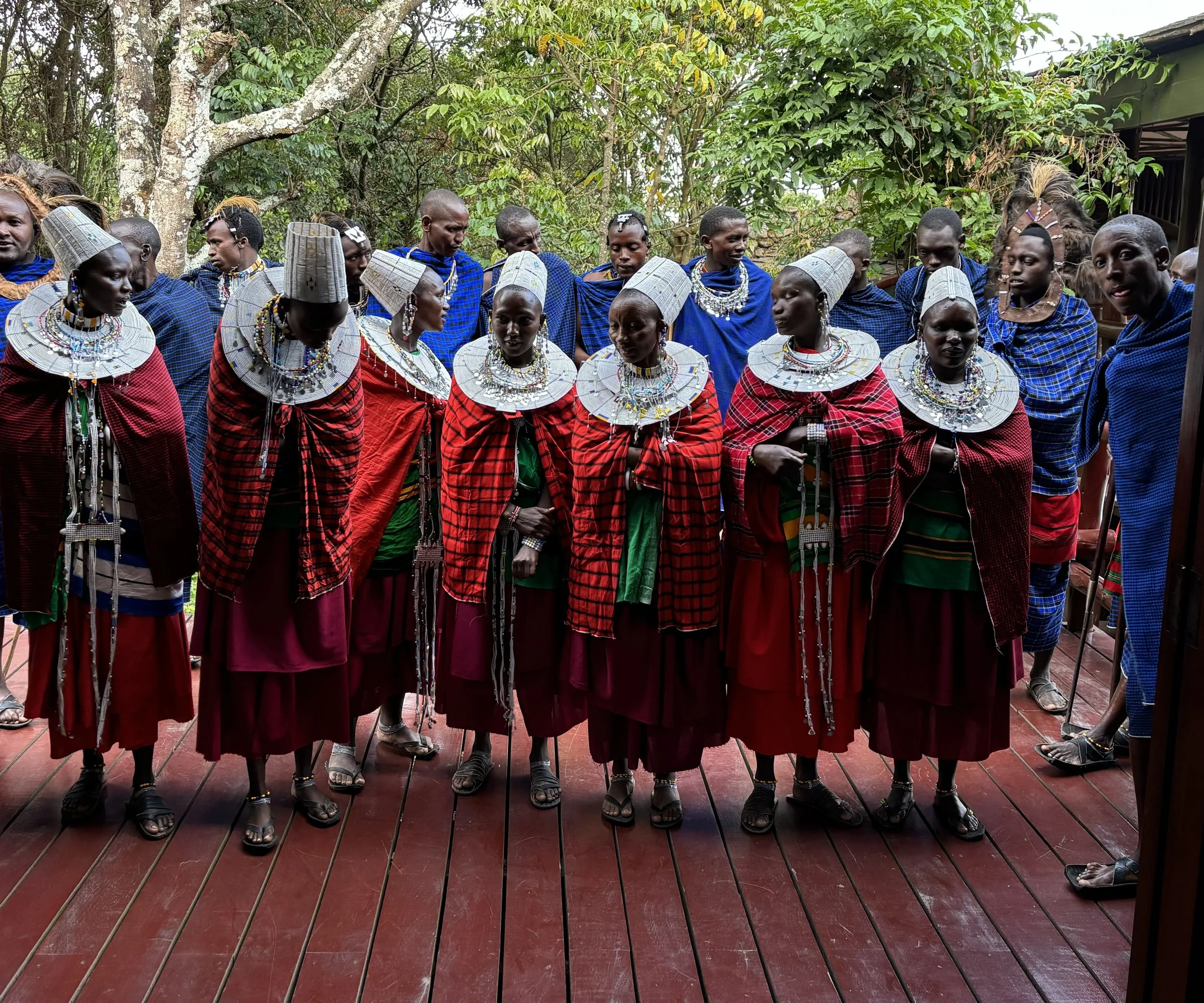
We were greeted at the hotel by a traditional Maasai dance.
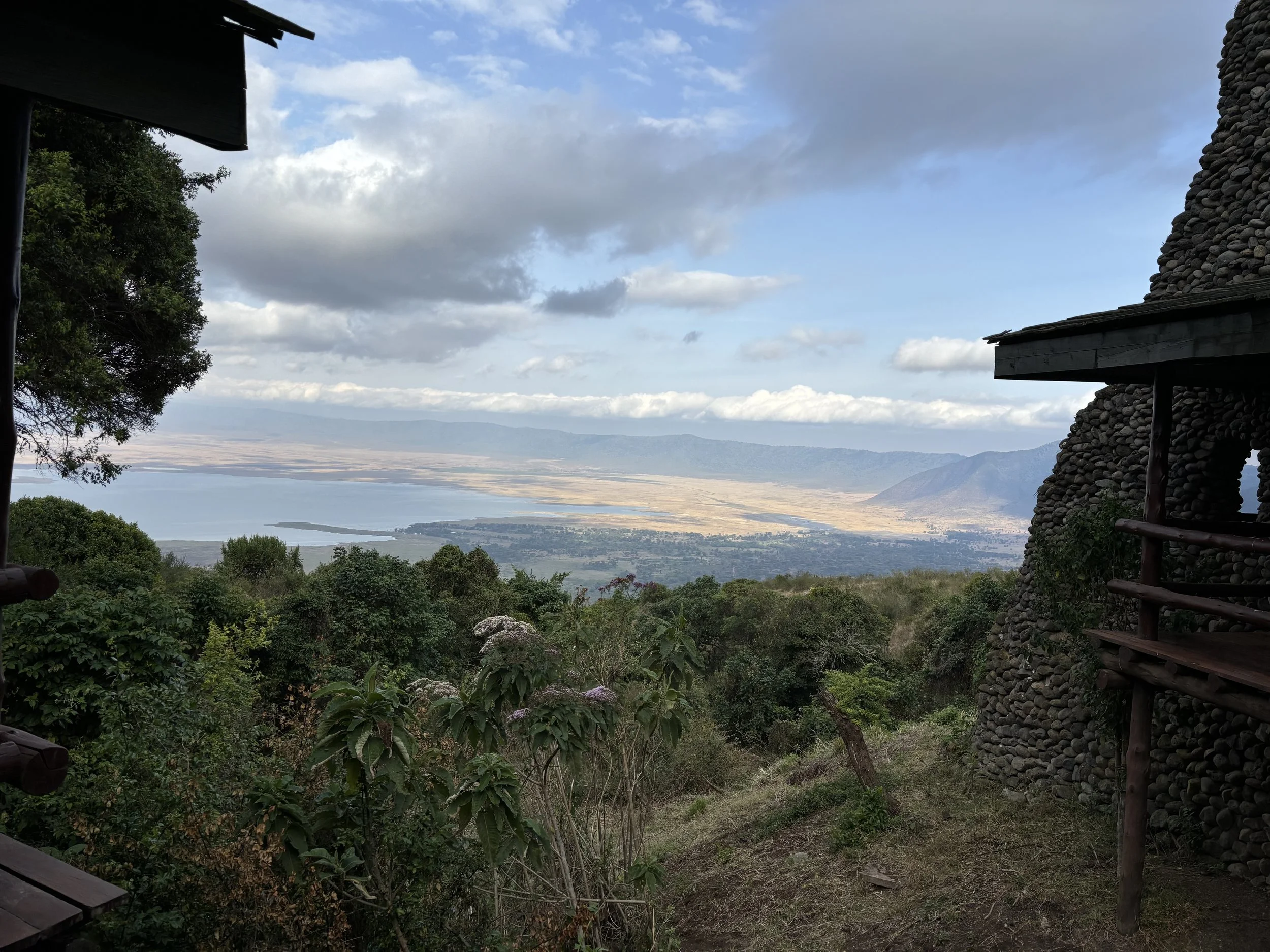
This is a view of the Ngorongoro crater from hotel. The caldera is 7,400 feet below.
Tomorrow we will be on our way at 7:00 am to view the animals in the caldera.