
Kenya and Tanzania - Day 4
On Monday we will explore the Ngorongoro Crater. This is the largest unflooded intact caldera in the world. A caldera is a large depression formed when a volcano erupts and collapses. It is 12 miles wide with a rim rising 1,600 feet above its floor. It has short grasslands, swamps, forests and a fresh water lake. The lake inspires continual migration of animals within the crater. This is our best opportunity to see the big five. The big five are buffalo, elephant, leopard, black-maned lion and the endangered species the rare black rhino. We might also see wildebeest, zebra and gazelles.
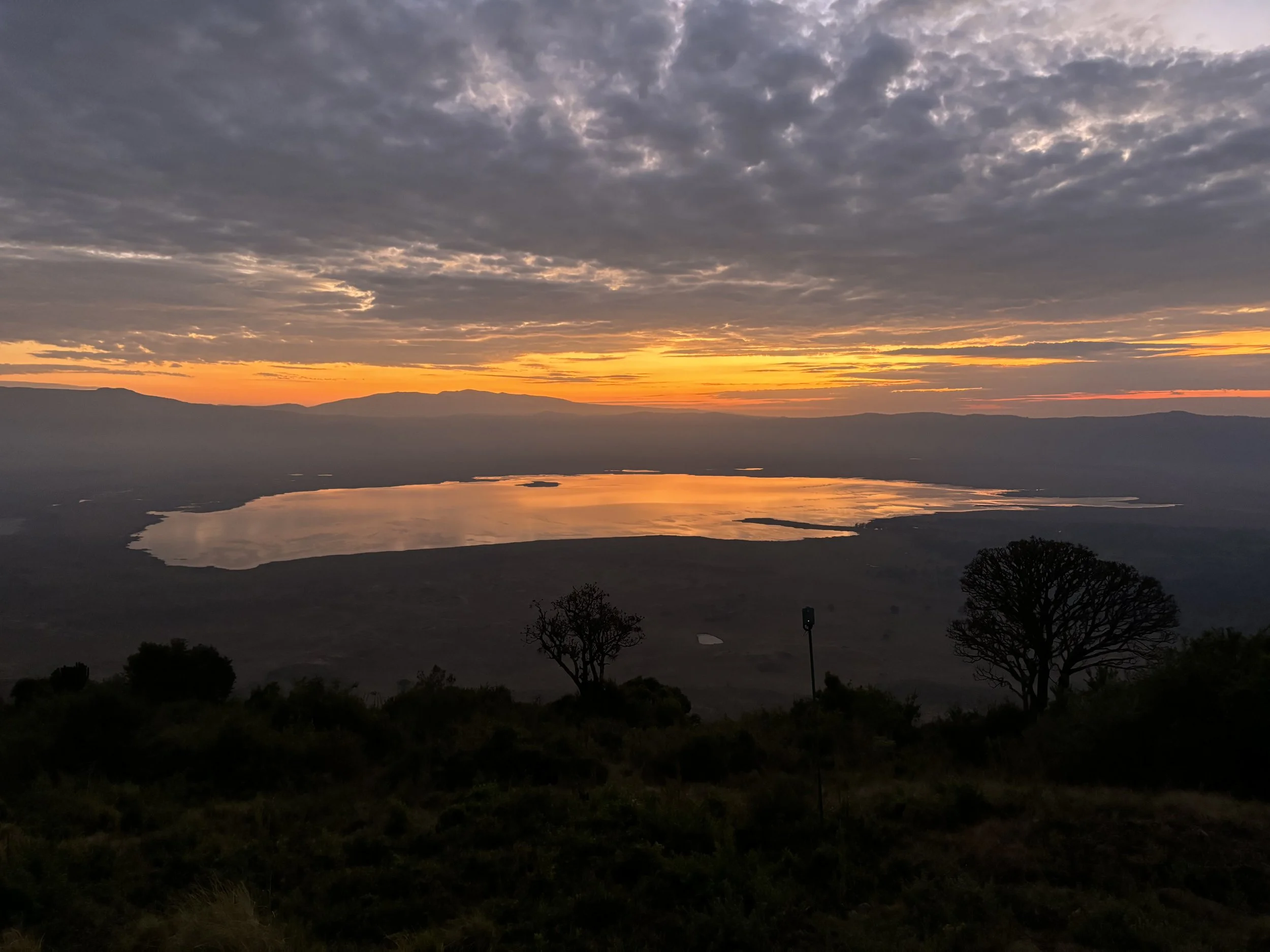
Watching the sunrise over the Ngorongoro Crater from the balcony of our hotel room.
Our Tauck group gathering on Sunday was pleasant with cocktails on the balcony and dinner in the only restaurant. There is a group of 12 traveling together. They are celebrating their father’s 80th birthday. He said he spent his 60th birthday doing a similar safari. Interestingly three of his group currently live in Hull, MA. That is the town in which I grew up. His son Mike built a house on Nantucket that is walking distance from Priscilla’s sister Rebecca’s restaurant 45 Surfside. He says the turkey sandwich is the best on the island. The only thing he doesn’t like is the name of the sandwich - The Tom Brady. He is a Philadelphia Eagles fan.
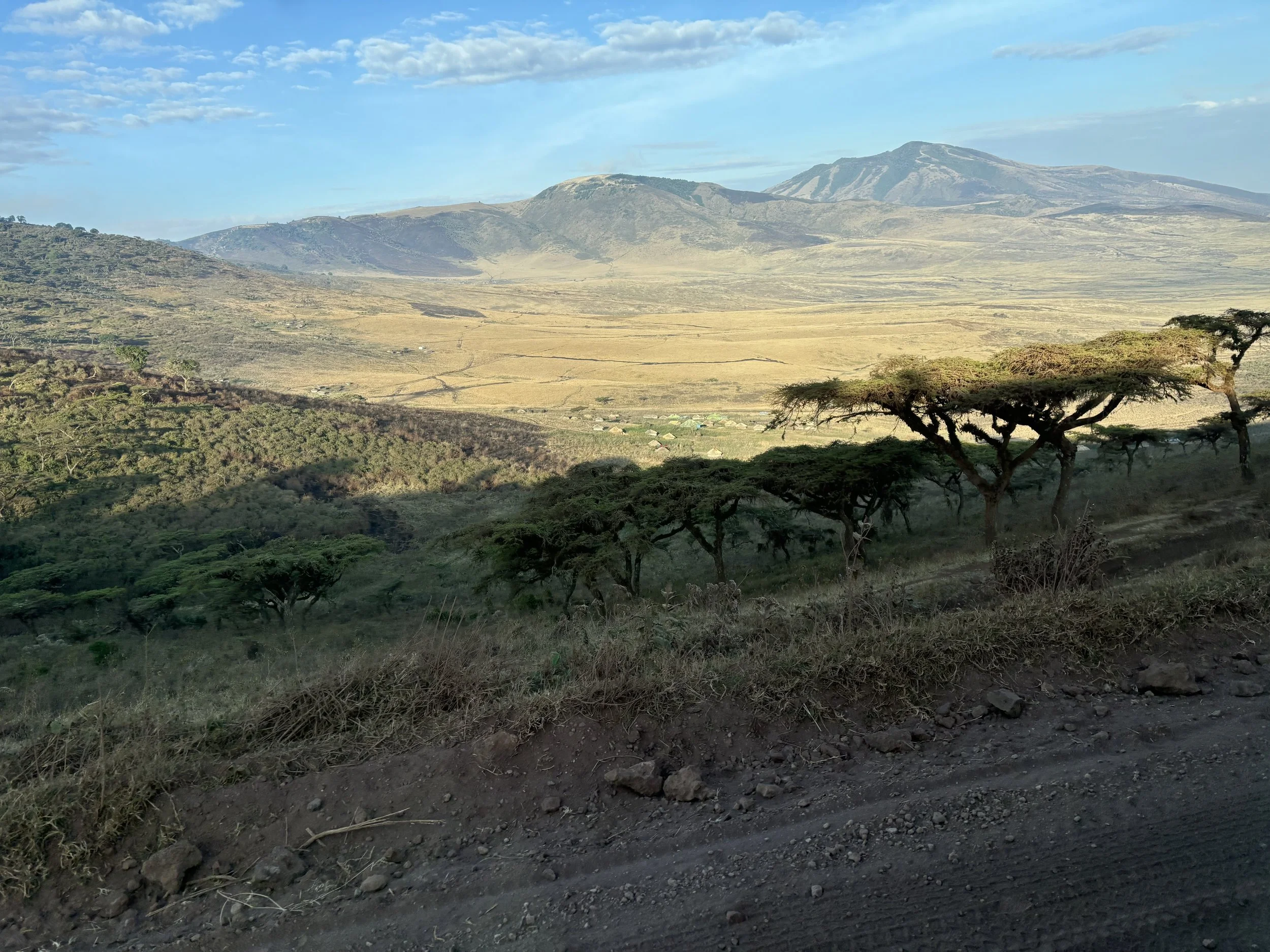
A birds’s eye view into the crater.
We were on our Land Rovers at 7:00 AM and bounced our way to the bottom of the caldera. We immediately started seeing many animals. The drivers talk on a CB radio to adviser each other regarding the types and locations of animals. It is all in Swahili but when the driver puts the pedal to the metal and we are airborne in our seats, we know we are about to see something good.
We passed several Maasai villages within the game park. Only the Maasai are allowed to live there. Maasai do not eat wild game. They only eat domesticated meat such as beef, lamb and goat. Therefore they are helpful in preserving the game park. The wealth of the Massai is measured in cattle, sheep, goats and donkeys. The more animals someone owns the richer they are. If they are rich they can have as many wives as they can afford. One MaasI chief has fifteen wives.
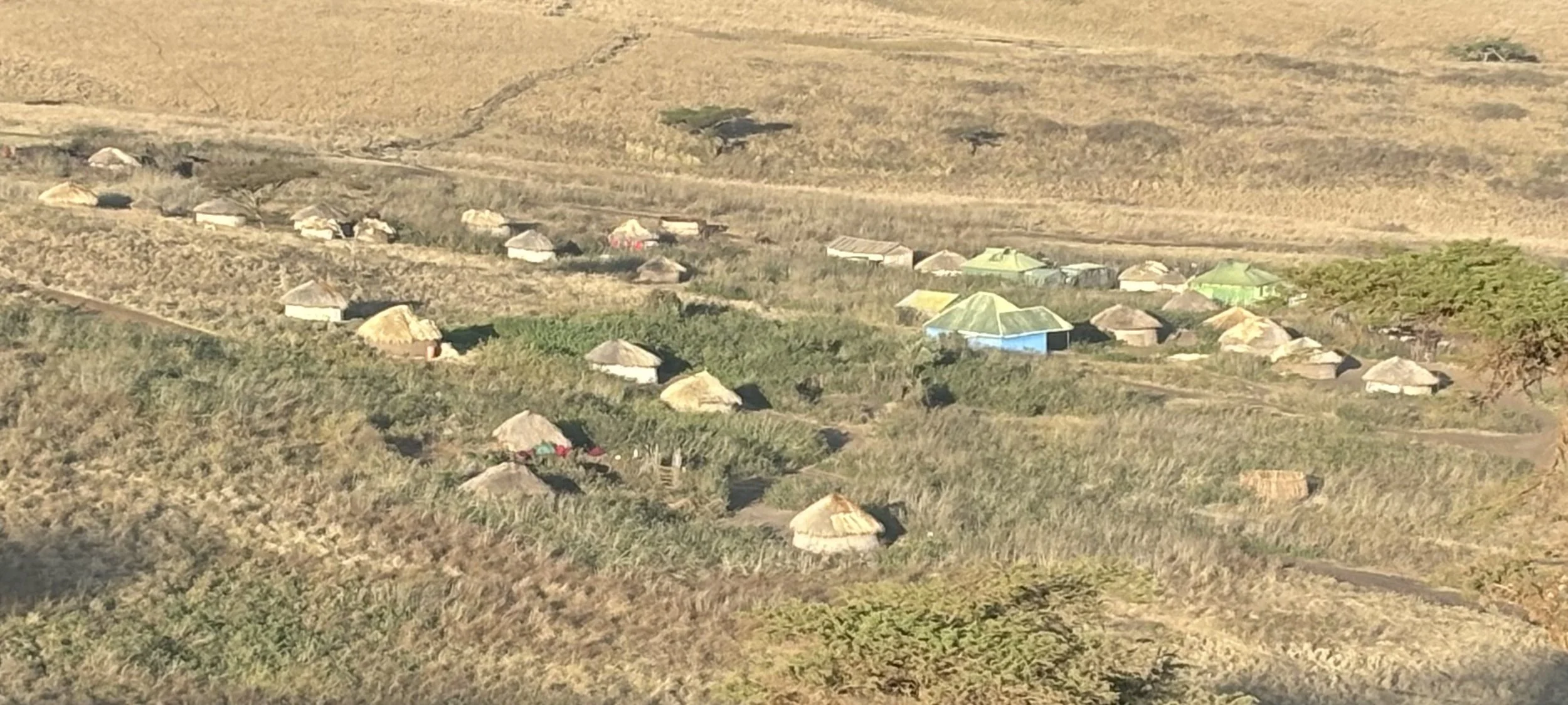
This Massai village is located on the crater wall.

This is Taryn Hottman our Tauck tour director. She is modeling the Maasai Shuka blanket. It is a colorful cloth worn by the Maasai people of East Africa. The shuka is made of thick cotton or wool and features bold patterns and bright colors, often red, blue, and black. She gave each Tauck guest their own Shuka blanket.
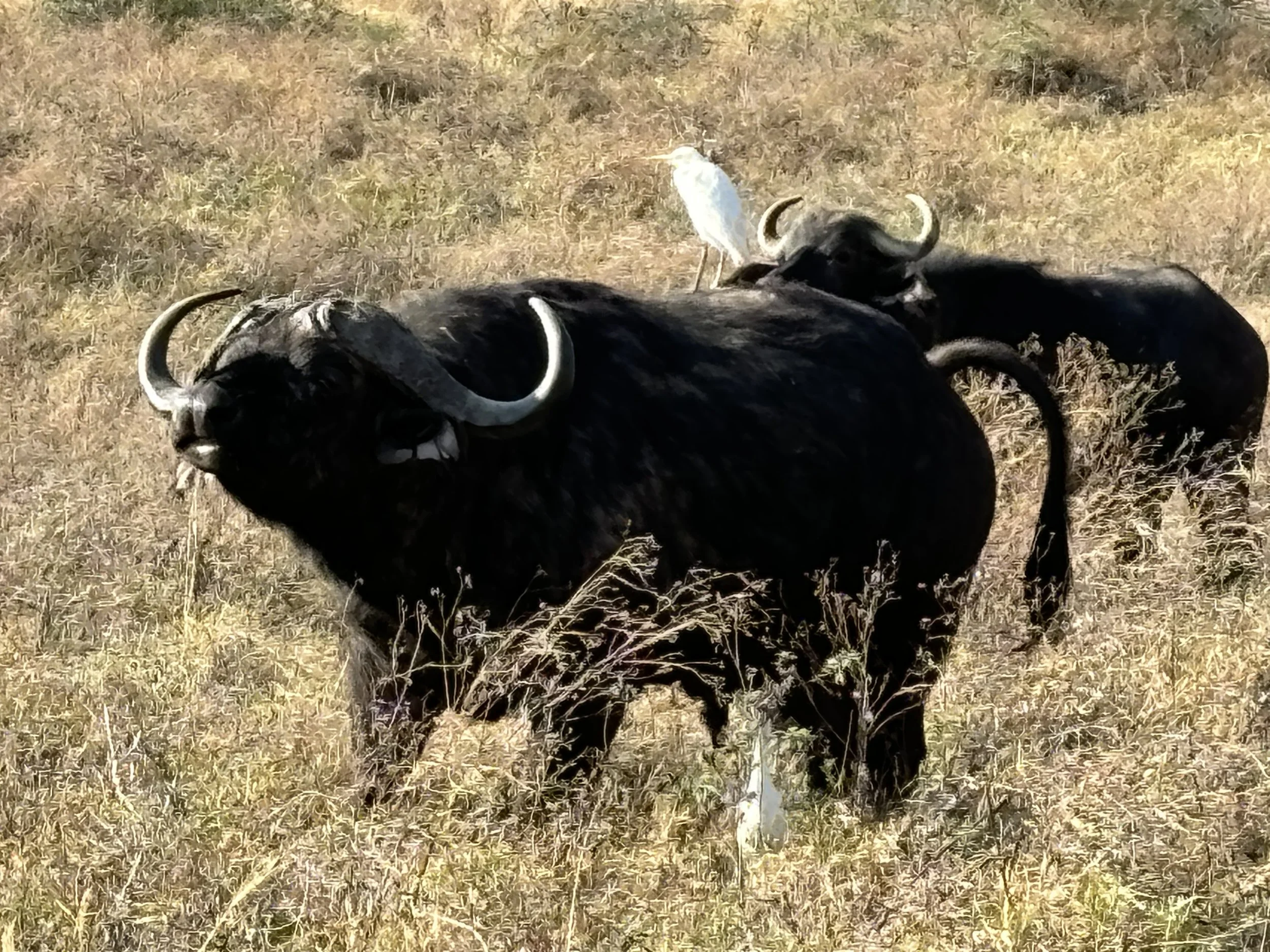
Our first animal siting of the day was the buffalo. This is one of the big five. I misspoke yesterday and included the giraffe in the Big Five. That was not correct. The buffalo is the second animal in addition to the elephant.
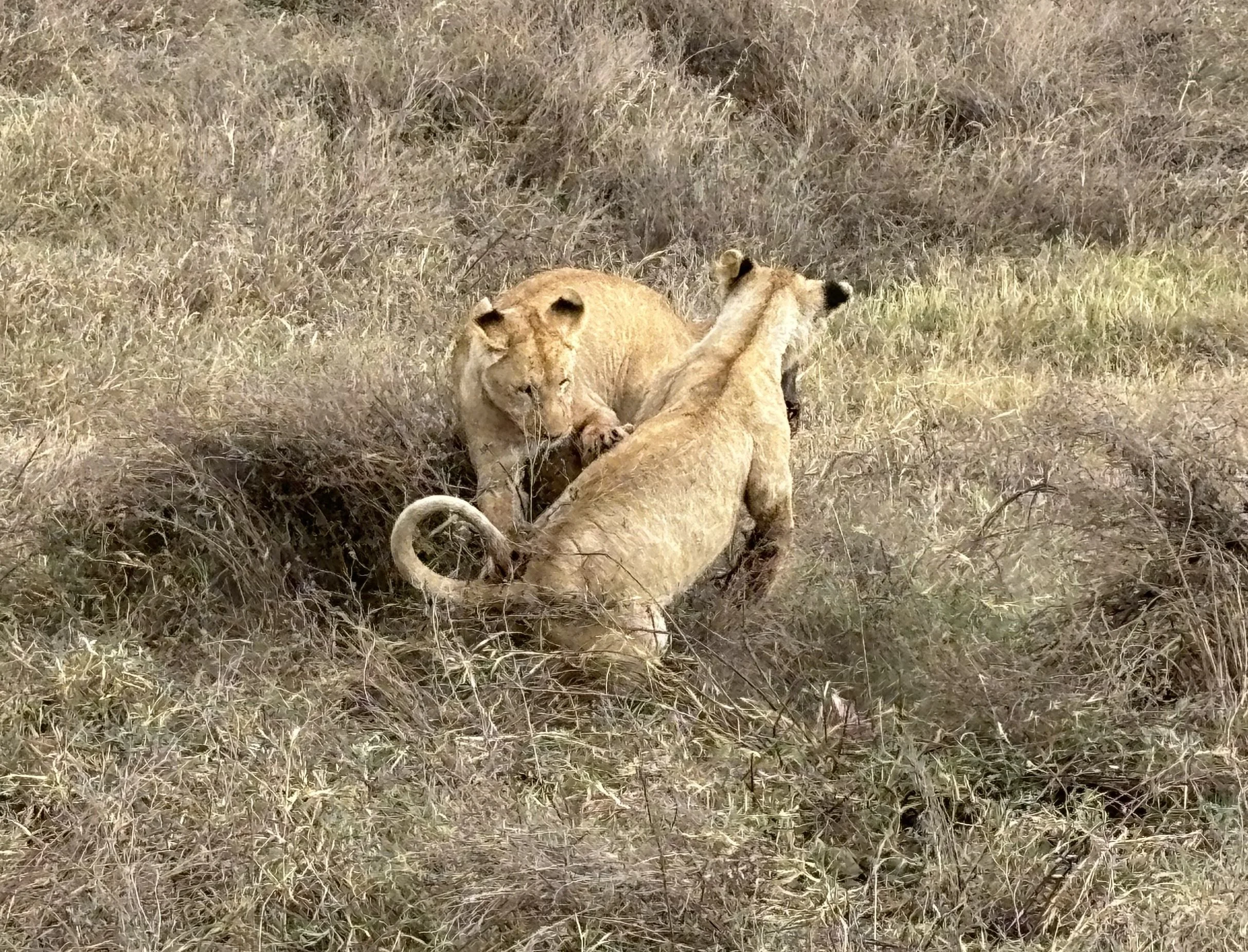
Our driver broke the speed limit getting us to our next animal siting - the lion. We saw lion cubs fighting over a kill.
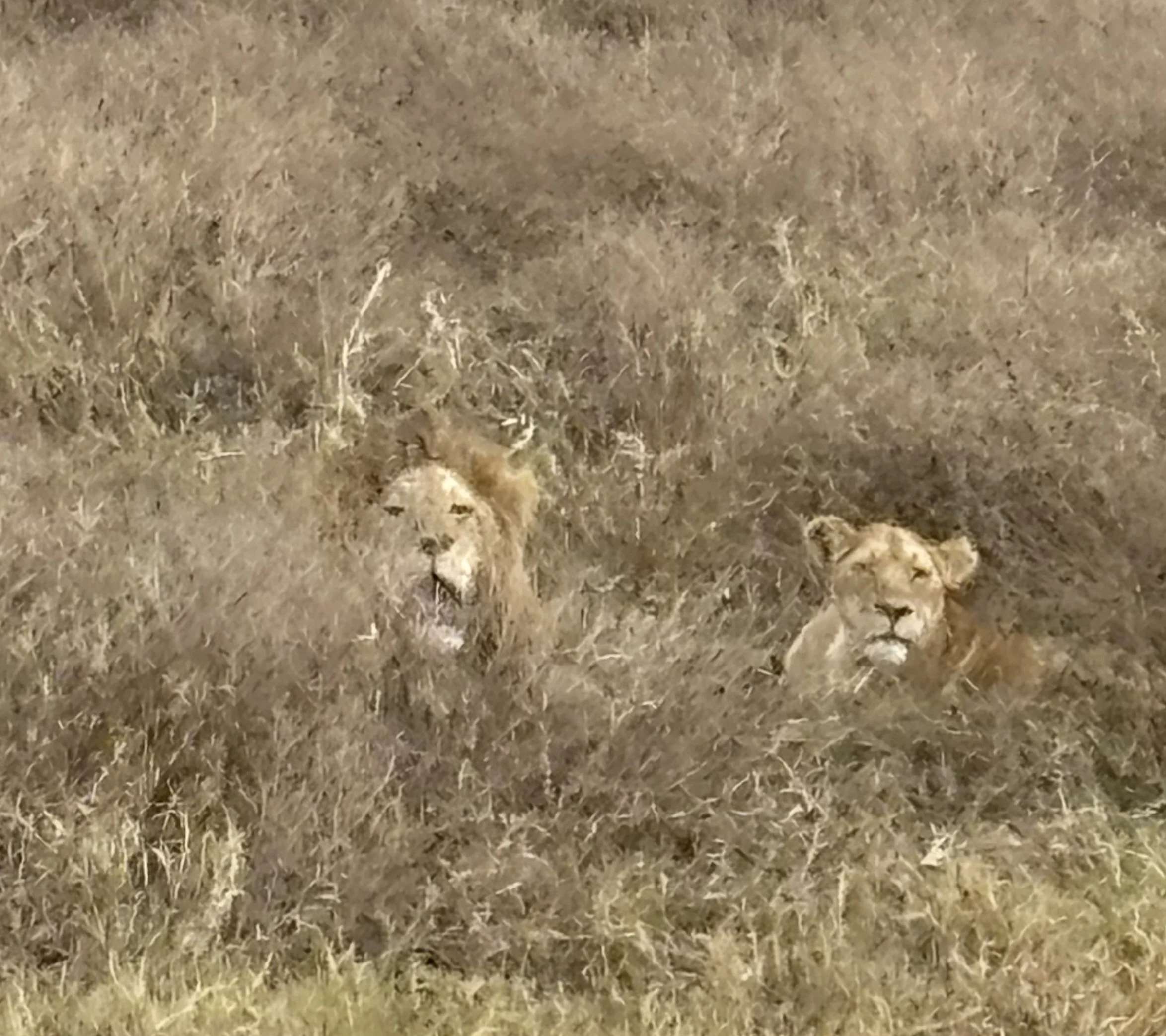
Mom and dad were keeping an eye on the cubs from a short distance away. This is number three of our Big Five.
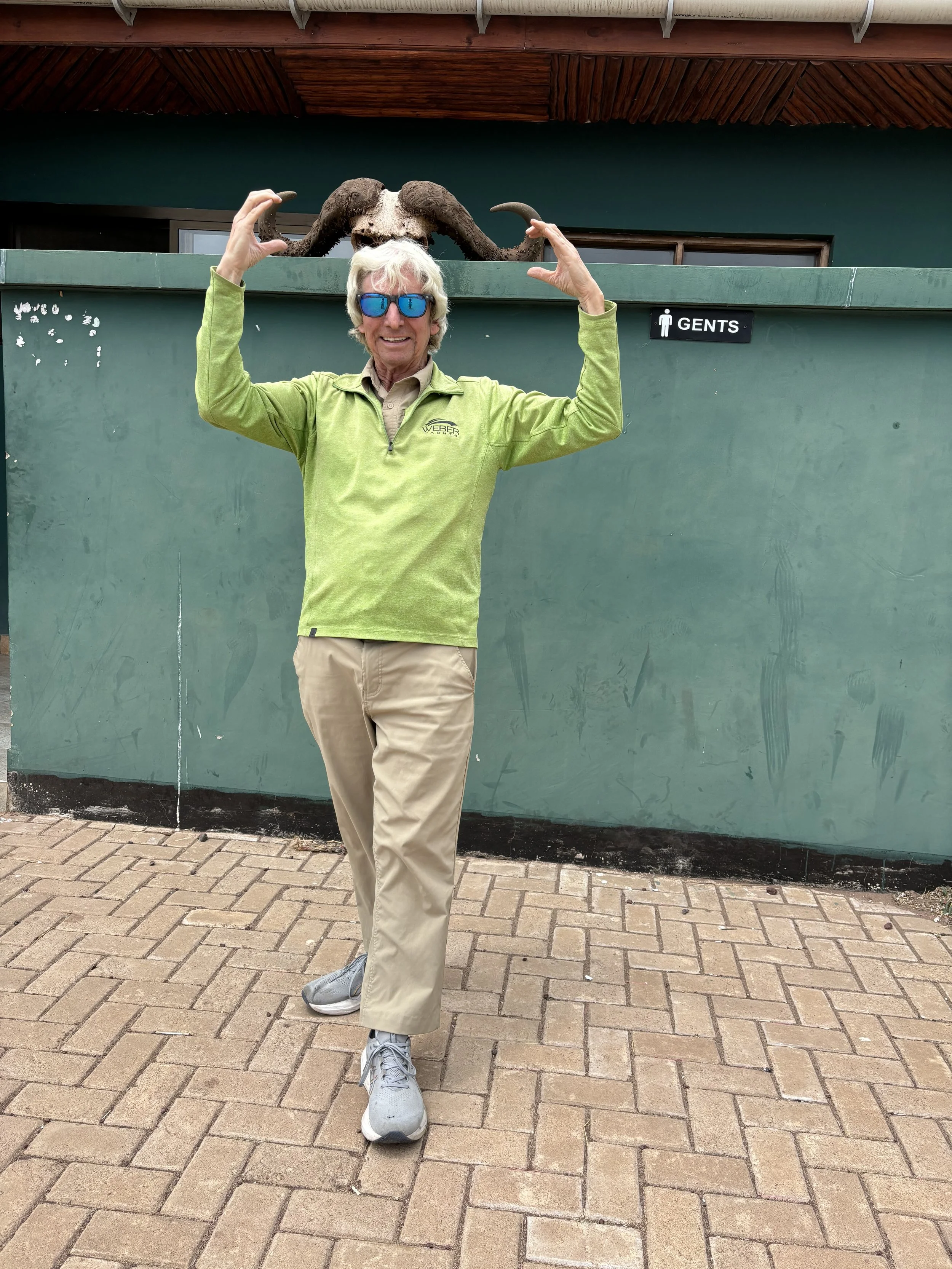
This animal needs no introduction as he models a pair of water buffalo horns.
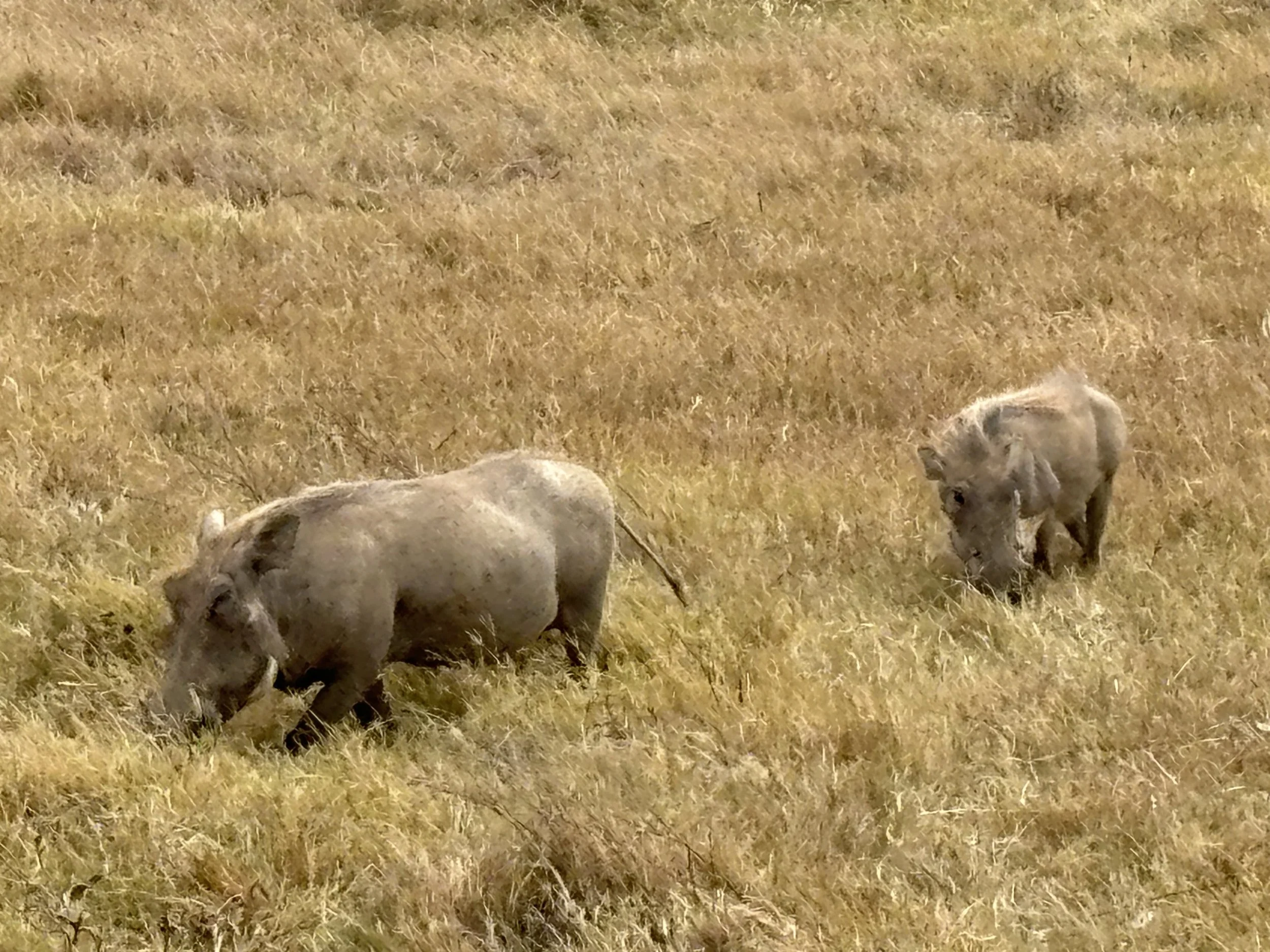
The next siting was a mom and baby warthog. The driver mentioned that warthogs were a member of the Ugly Five animals. I will research that and report back.
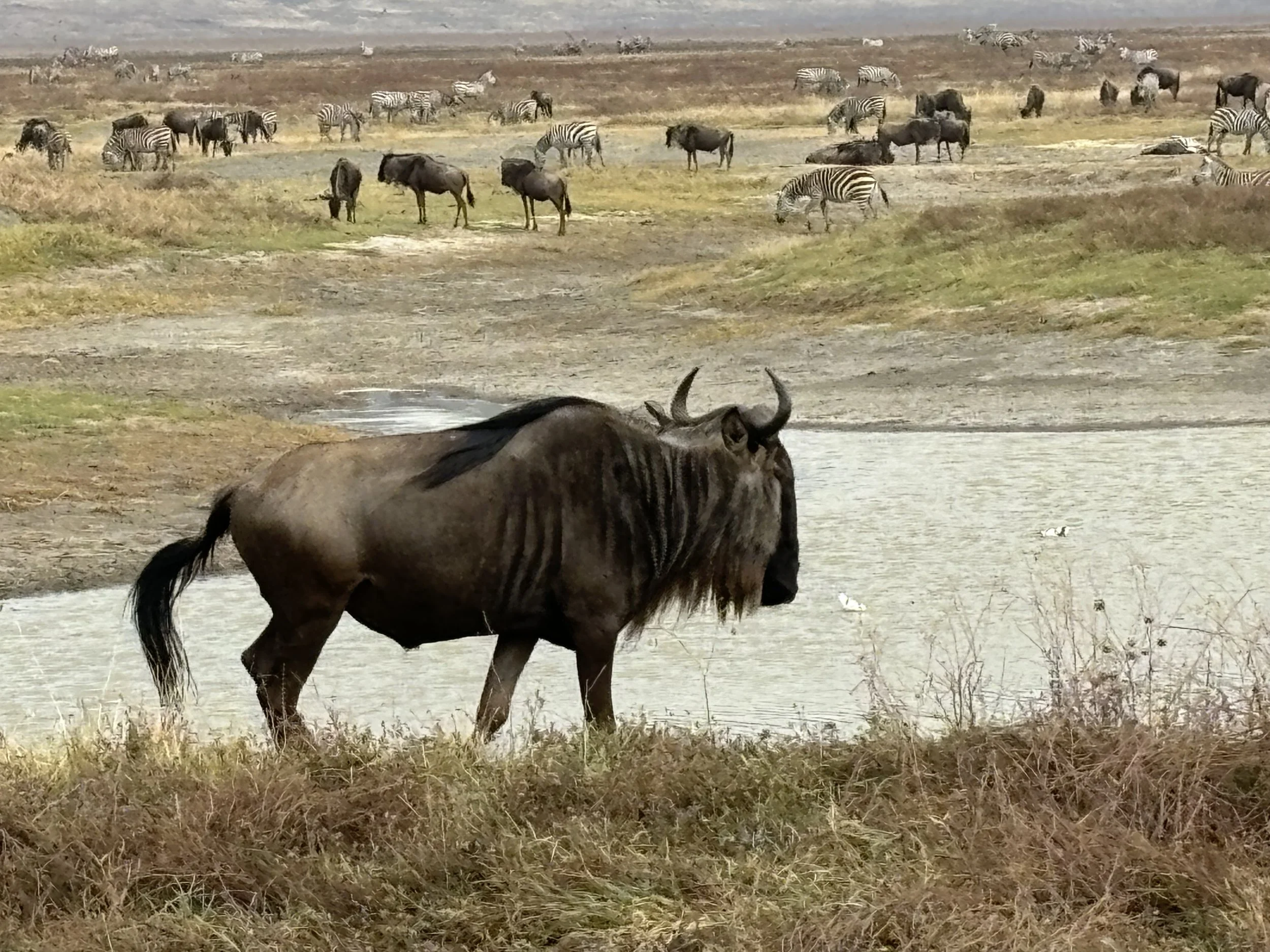
The next animal we saw was the wildebeest. There were several herds of wildebeest wandering about and blocking the roads.
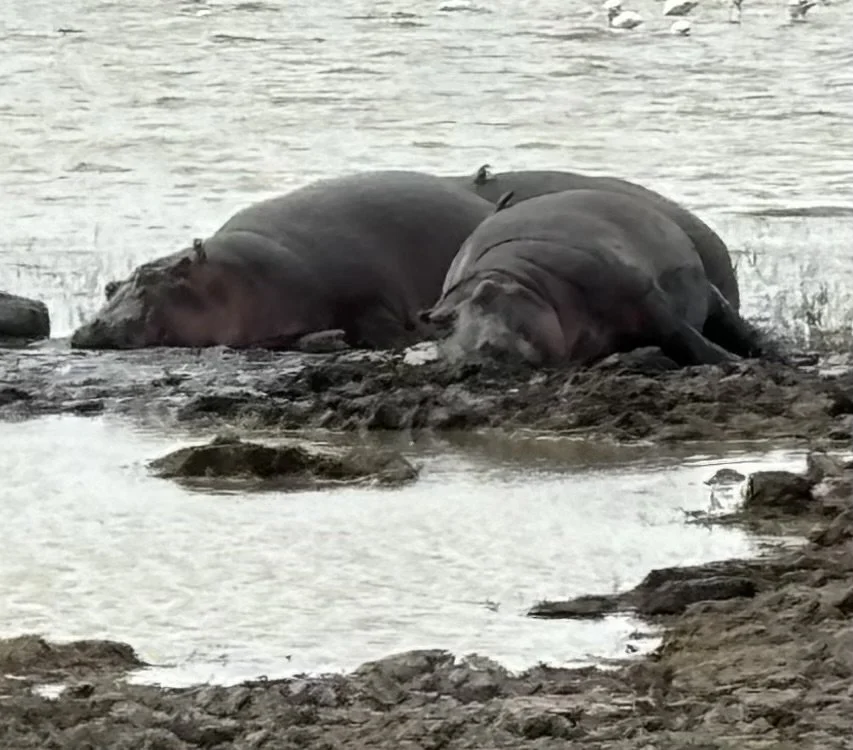
Our morning safari would not be complete if we didn’t see hippos. There was a herd of hippos wallowing in the mud in a place called hippo pond.
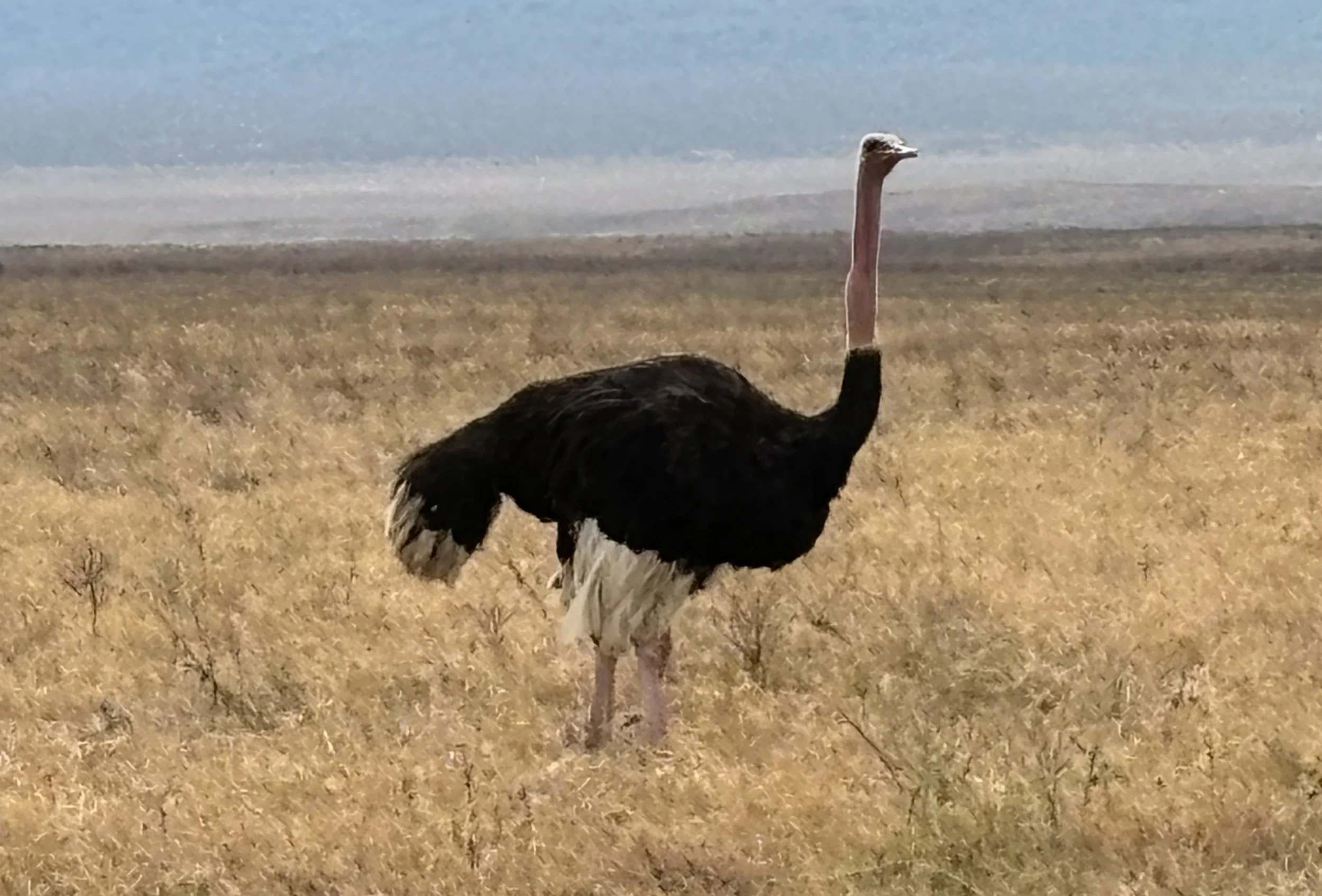
We saw dozens of bird species such as hawks, vultures, Guinea hens, flamingos and many more including this ostrich.
Our lunch was catered in the bush by the hotel. It was a very nice BBQ with a buffet under a tent with a bar and proper seating.
After lunch we returned to our safari lodge. We need to pack our duffel bags for our flight to the Serengeti. Our drivers are driving the Land Rovers to the Serengeti tonight. It is about a six hour drive on roads that are more bumpy than the ones we experienced today. Our large suitcases will be trucked to our hotel in Kenya. We will see our luggage again in three days.
The airport is in the middle of the Serengeti so when we land tomorrow morning our game drive will begin immediately.